Every skier knows the feeling: you finish a solid day on the mountain feeling great, then wake up the next morning barely able to walk down the stairs. According to James Spencer, a physical therapist based in Aspen, Colorado, that lingering leg ache is delayed onset muscle soreness (DOMS), and it strikes skiers of every ability level — not just beginners.
The quads do most of the work in skiing, and the lateral quad (the vastus lateralis) in particular fires constantly every time you turn. Better skiers often end up more sore, not less, simply because they load the muscle harder. The soreness itself comes from microscopic tears in the muscle fibres caused by repeated, intense loading — the same mechanism behind post-run or post-leg-day aches. Those microtears trigger swelling, which is what produces the pain, and DOMS can peak two to three days after you leave the slopes.
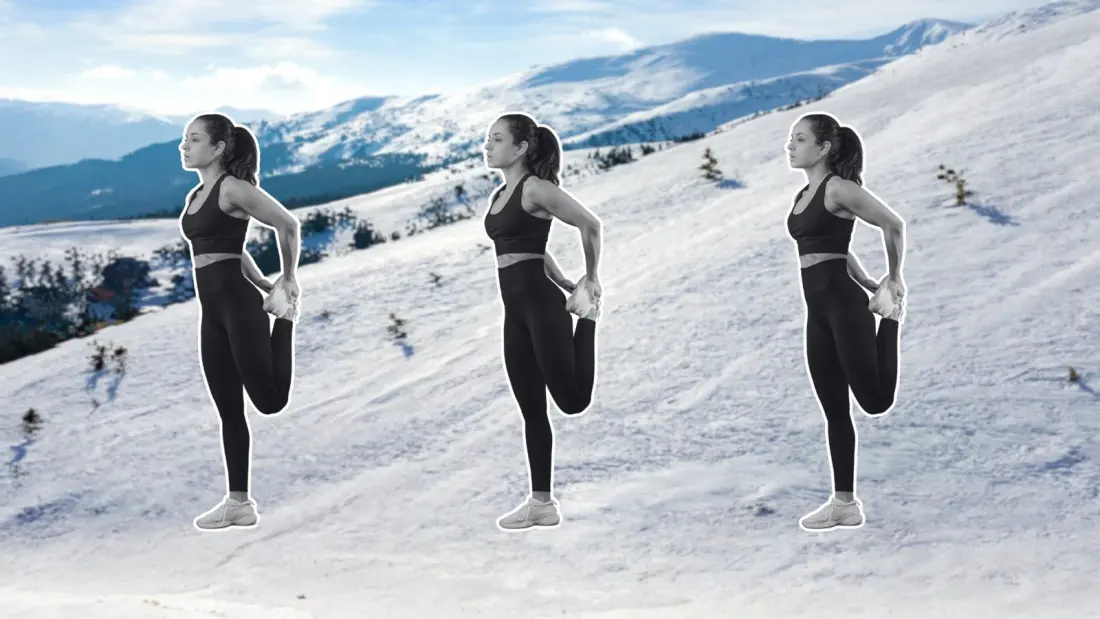
The honest cure is time, Spencer says — the fibres just need to heal. But there are ways to take the edge off. His two go-to stretches are simple classics done properly. First, a standing quad stretch: stand tall beside a wall or sturdy chair, pull your right foot toward your right glute with your right hand, keep the knee pointing straight down, and hold for 60 seconds (or split it into shorter rounds) before switching sides. Second, a half-kneeling stretch: step one foot forward, drop the back knee to the floor directly under your torso, then shift your weight forward to target the top of the back-leg quad, holding 60 seconds per side. Bonus tip: doing the kneeling version in a hot tub adds heat, which can further dial down the soreness.
If you want extras, Spencer suggests a couple of minutes of foam rolling — the front of the thigh from knee to hip, plus the sides where the vastus lateralis sits — or ten to fifteen minutes of very easy spinning on a stationary bike to help flush inflammation. Keep the resistance low; it's recovery, not a workout.
The longer-term fix is even simpler: build quad strength before the season. Wall sits, quad sets and squat variations (Bulgarian split squats and single-leg squats included) all help, and Spencer debunks the common claim that skiing itself is the only real preparation — off-season work on hamstrings, glutes, core and explosive jumping movements all count, and a stronger base means less soreness and fewer injuries.
For anyone booking a ski trip this winter, this is worth five minutes of your après-ski routine. Two stretches, done that evening, can be the difference between a second day on the mountain and a day spent wincing on the chairlift.