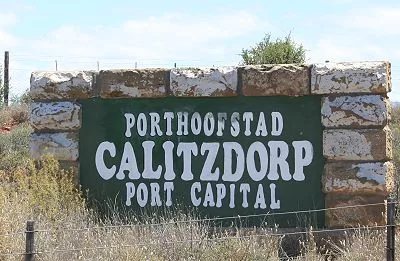
Calitzdorp, the little Klein Karoo town famous for port-style wine, has turned out to sit on something far stranger than vineyard soil. Researchers have confirmed that odd formations buried nearby are fossilised termite nests, dating back roughly 323,000 to 401,000 years — built by an extinct species that has been named Columnanidus calitzdorpensis after the town.
The story began quietly. A local artist spotted the strange shapes in the early 2000s, and for years people assumed they were ancient ovens used by early human communities. It was only in 2021, when a University of Cape Town team led by Dr Miengah Abrahams started investigating, that the real answer emerged: a previously undocumented type of termite trace fossil, described in the Journal of Quaternary Science.
Eight nests have been identified at the site so far, each about a metre deep and 65cm across, with chambers and tunnels still intact inside. Crucially, the fossils preserve the insects' architecture rather than their bodies. The team used CT scans to study the internal structure without breaking anything open.
So how does a termite nest survive hundreds of millennia? The answer is a process called calcretisation: minerals, including calcium carbonate, gradually built up in the surrounding sand and hardened the whole structure in place. What was once delicate clay and saliva construction became stone.
The find matters beyond its oddity. Because termite nests reflect soil and vegetation conditions, these fossils give scientists a snapshot of what the Little Karoo looked like in the Middle Pleistocene — a warmer, wetter or drier version of today's semi-desert, read through insect engineering. The UCT team also returned to town in October 2026 to hand a poster documenting the discovery to the Calitzdorp Museum, where one of the fossilised nests is now on display. More work is planned on similar fossilised termite and ant nests in the Northern Cape and around Ceres and Worcester.
For travellers, this is a neat excuse to linger in a corner of Route 62 most people breeze through. Calitzdorp already trades on port wine, hot springs nearby and classic Klein Karoo scenery; now there's a museum exhibit with a genuinely unusual scientific claim to fame — a piece of prehistoric architecture built long before Homo sapiens left Africa. Pair a tasting at a local port-style cellar with a stop at the museum, and you've got a quirky half-day itinerary in a town of a few thousand people.
It's also a reminder of how much history hides in dry country. The Karoo is one of the world's great fossil regions, and discoveries like this keep adding chapters — insect-made ones, this time. If road-tripping the Route 62 corridor, Calitzdorp makes an easy stop between Oudtshoorn and Ladismith, with the added satisfaction of seeing a fossil that was mistaken for a kitchen oven barely two decades ago.
Credit: Getaway South Africa