Eating out in Vietnam follows an unwritten rulebook, and most first-time visitors from the US break several of its rules before the first dish is even finished. None of these slip-ups will cause real offence, but knowing the basics makes the meal better and shows respect for a cuisine that sits at the heart of Vietnamese identity.
The biggest adjustment is ordering. Vietnamese meals are a group affair built around shared plates, a tradition embodied in the cái mâm, a round family tray placed at the centre of the table holding dishes for everyone to reach into. Ordering a single entrée for yourself is a Western habit that can feel oddly isolating at a Vietnamese table. The catch: not everything is communal. Appetisers are usually for the whole table, but a bowl of pho, with its herbs and dipping sauces seasoned to personal taste, belongs to one person only.
Timing trips up newcomers too. Kitchens send out each dish the moment it is ready, so your appetiser may arrive alongside someone else's main, especially in small eateries with limited equipment and counter space. Waiting politely for the whole table to be served before eating, as many Europeans and Americans do back home, misses the point. Starting on your dish as soon as it lands is perfectly acceptable.
Condiments are where the first ten minutes really go wrong. Vietnamese tables come loaded with dipping sauces, bean sprouts, limes, chilli, scallions and fresh herbs, and visitors either shy away from them or drown the dish. The rule chefs consistently give: taste the broth first, then season gradually. Chef Viet Hong Le of CieL says tasting first lets you catch the soul of the broth, while Peter Cuong Franklin of Anan Saigon recommends adding herbs bit by bit as you eat. If cha giò (fried egg rolls) arrive with lettuce, mint and basil, wrap the greens around the roll before dipping it.
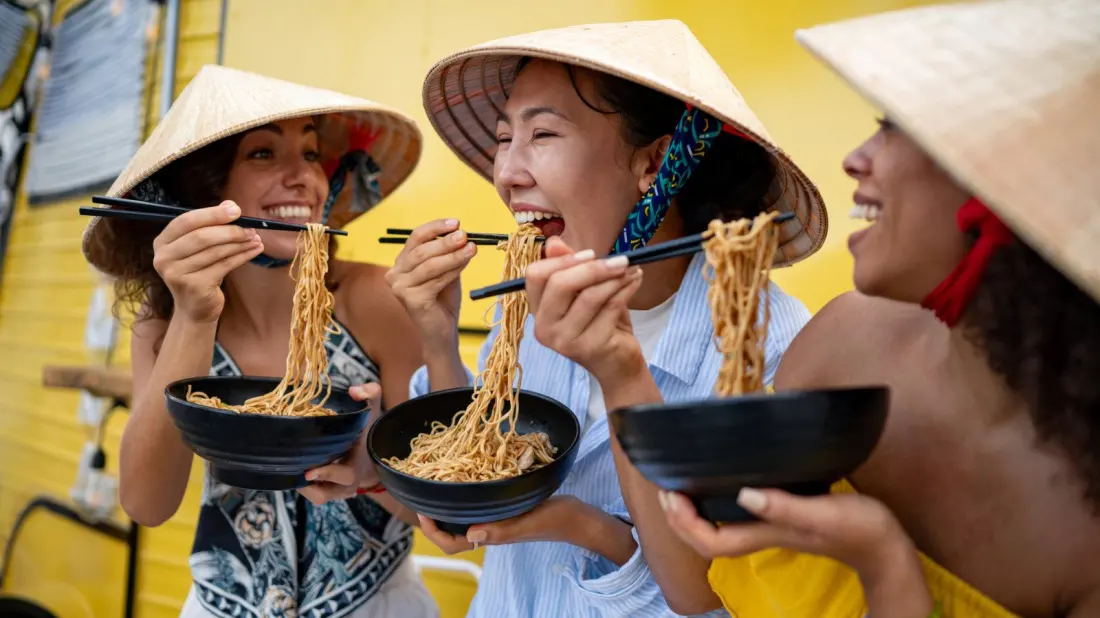
Chopstick manners round out the list. Sticking them upright in a bowl of rice or crossing them in an X is taboo — the latter is thought to bring bad luck. Chewing on them, tapping them against crockery, spearing food or pointing them at people all read as poor form. When sharing, never take food from a communal dish with the ends you've been eating from; flip your chopsticks around and use the clean ends, or use serving utensils where provided.
For travellers, this is less about avoiding embarrassment and more about eating the way the food is meant to be eaten. Vietnamese dishes are engineered for balance, and the rituals — shared plates, staggered arrivals, restrained seasoning — are part of the flavour. Learn them and you'll get more out of every bowl, whether at a street stall in Hanoi or a family-run place in Ho Chi Minh City. Source: Islands.