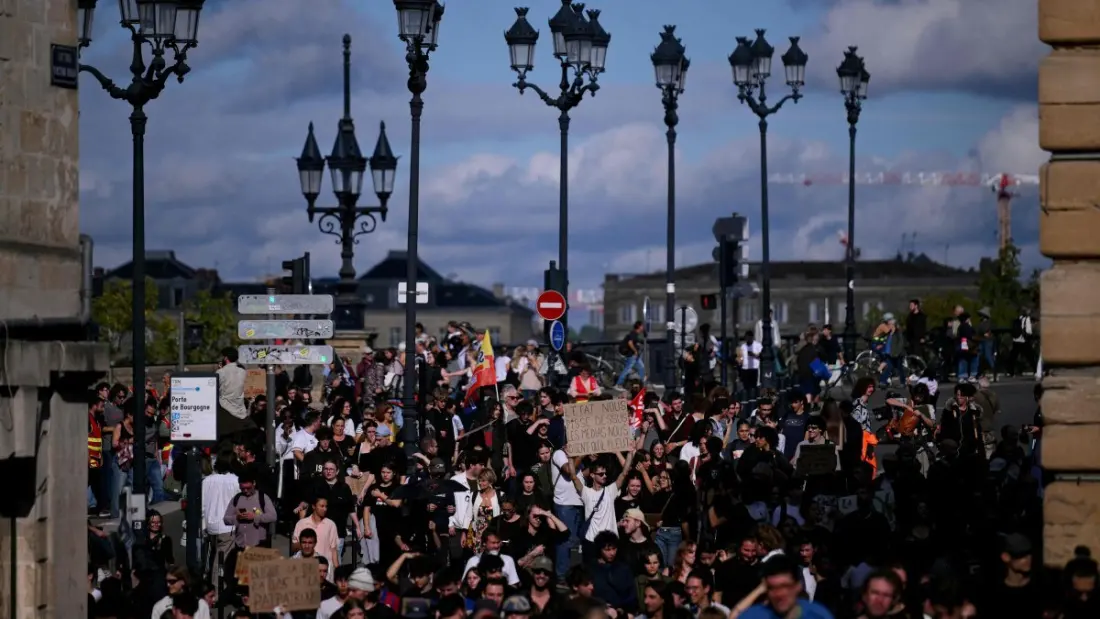
Tens of thousands of people marched across France on Tuesday in support of high school students demanding better conditions at the country's lycées, and the numbers are growing fast. The interior ministry counted around 161,500 demonstrators nationwide — more than double the turnout at similar rallies just days earlier — while organisers claimed closer to 480,000. With a presidential election six months away and a cost-of-living march planned for Saturday, the movement shows no sign of fading.
The protests began last month when teenagers blocked school entrances over absent teachers, run-down buildings and overcrowded timetables. A heavy police response backfired: injuries to students — including one teen who lost a hand and another who lost an eye — drew sympathy marchers into the streets. Police are now investigating 34 allegations of violence against demonstrators, and the education ministry says 147 school staff have been hurt. Government offers, including 3,000 substitute teachers for the worst-hit schools, have been rejected as too little.
Tuesday's action shut 214 schools and, according to the student union l'Union Etudiante, roughly 90% of universities nationwide. Beyond Paris, where 41,500 people joined two marches, crowds turned out in Lyon, Marseille, Nantes, Toulouse, Bordeaux, Strasbourg, Lens and Brest. Greta Thunberg appeared at a Saint-Denis march, and far-left leader Jean-Luc Melenchon walked with crowds in Paris. Students say blockades will continue past the late-October half-term break.
Most marches were peaceful, but there were flashes of trouble: cars were set alight near one Paris route and police fired tear gas there and in Lyon as masked youths tried to build barricades. A group of Indian tourists who strayed into the Paris march said they were initially frightened by the scenes but relaxed once it became clear the procession itself was calm.
For anyone travelling to France in the coming weeks, the practical takeaway is simple: check local news on the day, expect road closures and transport disruption around city centres on protest days, and give crowded marches a wide berth — especially the tail ends, where trouble has flared. Major sights, museums and restaurants usually stay open, but some schools, universities and public buildings may be shut, and police presence in central Paris and Lyon will be heavy. With another national demonstration set for Saturday and student actions planned after the school holidays, disruption could pop up again through autumn.