Two hundred years ago, on 28 February 1827, the first commercial passenger train in the United States began running. In 2027, the country's destination marketing organisation Brand USA wants travellers to mark the bicentennial the obvious way: by riding the rails instead of renting a car.
Most overseas visitors default to driving or hopping between airports, but America's long-distance trains offer something neither can — the chance to actually see the country you're crossing. Amtrak's flagship routes read like a geography lesson. The California Zephyr links Chicago to the San Francisco Bay Area over the Rockies and the Sierra Nevada. The Coast Starlight runs Seattle to Los Angeles along the Pacific coast. The Empire Builder heads from Chicago to the Pacific Northwest, with a stop at Glacier National Park and mile after mile of plains and mountains.
Even Route 66 has a rail-based reinterpretation. It's not a track-for-track copy of the Mother Road, but a Chicago-to-Los Angeles itinerary on Amtrak's Southwest Chief follows the historic corridor through the Southwest. There's a stop in Albuquerque for adobe architecture, green chile and Southwestern culture, then Flagstaff — the gateway to the Grand Canyon — before the journey wraps up in Los Angeles.
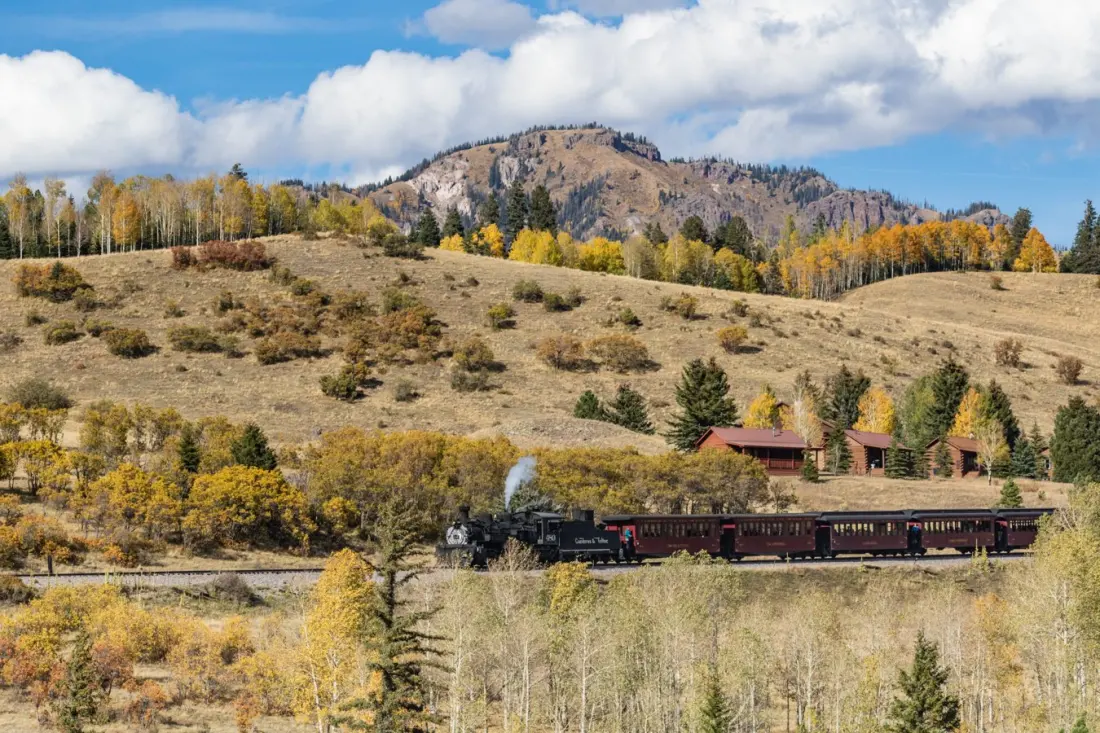
If you're more interested in railway history than scenery, 2027 is an obvious year to visit. Historic lines still run through Colorado's former mining country, Pennsylvania's Strasburg Rail Road operates in one of America's oldest railroad regions, and West Virginia's Cass Scenic Railroad climbs into the Appalachians on old logging tracks. Baltimore makes a natural starting point for the anniversary: it was home to the Baltimore & Ohio Railroad, and the city's National Museum of Railroad History & Innovation (the former B&O Railroad Museum) holds one of the country's major collections of railway artefacts, with bicentennial exhibitions planned for 2027.
There's a modern angle too. Amtrak's new Airo trains are expected on the Amtrak Cascades corridor between Seattle and Portland, bringing new equipment to the Pacific Northwest. For international travellers, that opens the door to a rail-first trip that strings together city breaks with wine country, mountains, forests and the coast.
Why it matters: if you've written off train travel in the US as slow or second-rate, 2027 gives you a reason to reconsider. The long-distance routes can replace a draining drive or a dull flight with the trip itself, and pairing one big cross-country route with a heritage line or a museum stop makes for an itinerary that most visitors never attempt. Rail isn't the fastest way across America — but in the bicentennial year, it might be the best one.