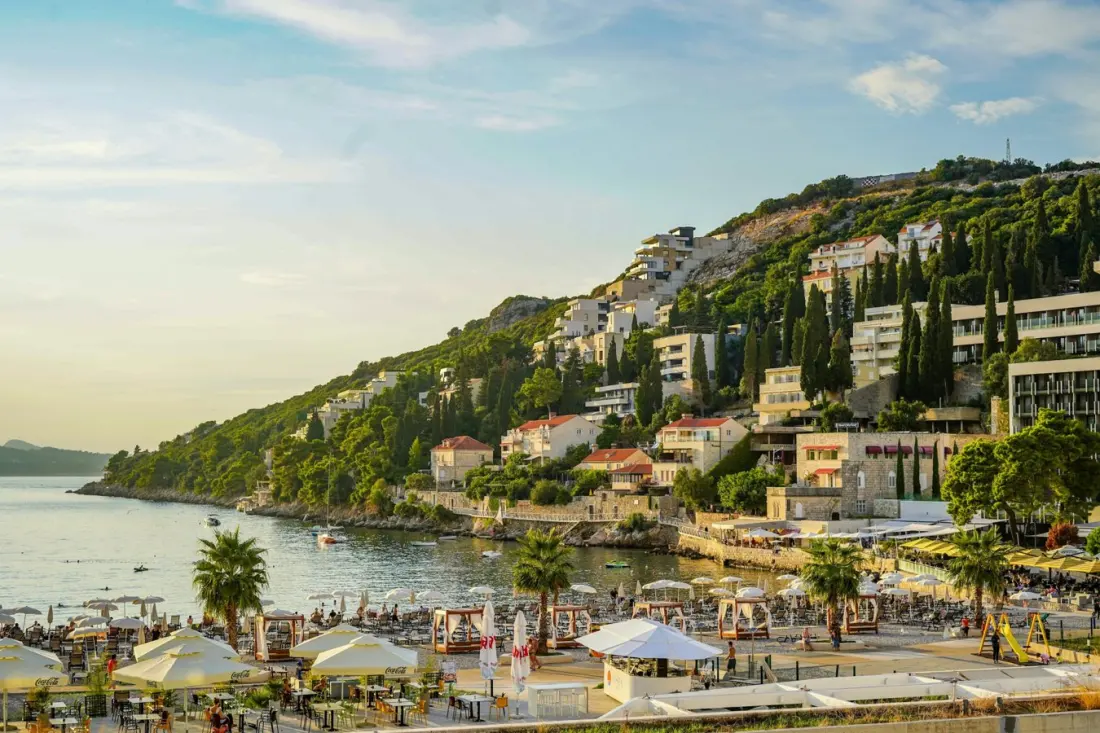
A 60-kilometre stretch of Croatia's southern coast is about to get a lot busier. From the Dubrovnik littoral down to Konavle, roughly 5,000 new tourist beds are in the pipeline, tied to projects including Tri Sestrice, the Resort in Cavtat and the long-awaited redevelopment at Kupari. The catch: nearly all of it feeds onto a single artery, the Adriatic Highway, which already seizes up in summer — and every road eventually funnels into Dubrovnik itself, a city that is still packed with visitors even in October.
That last point matters more than it sounds. Many of the autumn arrivals are there precisely because they've dodged the peak-season crush, and locals can see what happens when the numbers climb. In Župa dubrovačka — a municipality of around 8,000 residents and roughly the same number of beds — Mayor Marko Miloslavić argues tourism has effectively hit its ceiling and that tourist zones need to be revisited in the spatial plans.
The loudest warning has come from civil engineer Tomislav Paviša, who wrote an open letter to local and national authorities arguing that the wave of new resorts threatens the drinking water supply. With dry spells getting longer, he says the region needs a dedicated body of hydrogeologists, hydrologists and hydraulic engineers to safeguard spring sources and guard against pollution as urbanisation accelerates.
Local leaders are split. Dubrovnik Mayor Mato Franković was unavailable for comment, but Konavle's mayor Božo Lasić points to conditions already imposed on investors: a new western entrance to Cavtat, a water reservoir sized for the next three decades, and full compliance with environmental standards. Nikola Knežić, mayor of Dubrovačko primorje, insists water can be drawn from three directions — Doli's wells, the Oko spring near Ston, and Slano via Banići — and says the infrastructure can sustain golf courses and new capacities alike.
Why should travellers care? Because this is the tension behind every Dubrovnik holiday right now. The region is betting big on more resort rooms, golf and year-round tourism, while the essentials — one congested road, a strained water table, a thin seasonal workforce — lag behind. For visitors, the near-term picture is mixed: more choice and upgraded resorts like Kupari are coming, but summer traffic along the Adriatic Highway will likely get worse before it gets better. Travelling in shoulder season (May-June or September-October) remains the smarter play, though even October Dubrovnik is busy. Anyone who loves this coast as it is may want to see the quieter villages of Konavle and the Župa dubrovačka bays before the building cranes multiply.
The investors say the projects are on schedule — some flagged as being of national interest. Critics counter that the real national interest is water, environment and the quality of life of the people who live there year-round. How that argument resolves will shape what a holiday in southern Croatia looks like for the next decade. (Total Croatia)