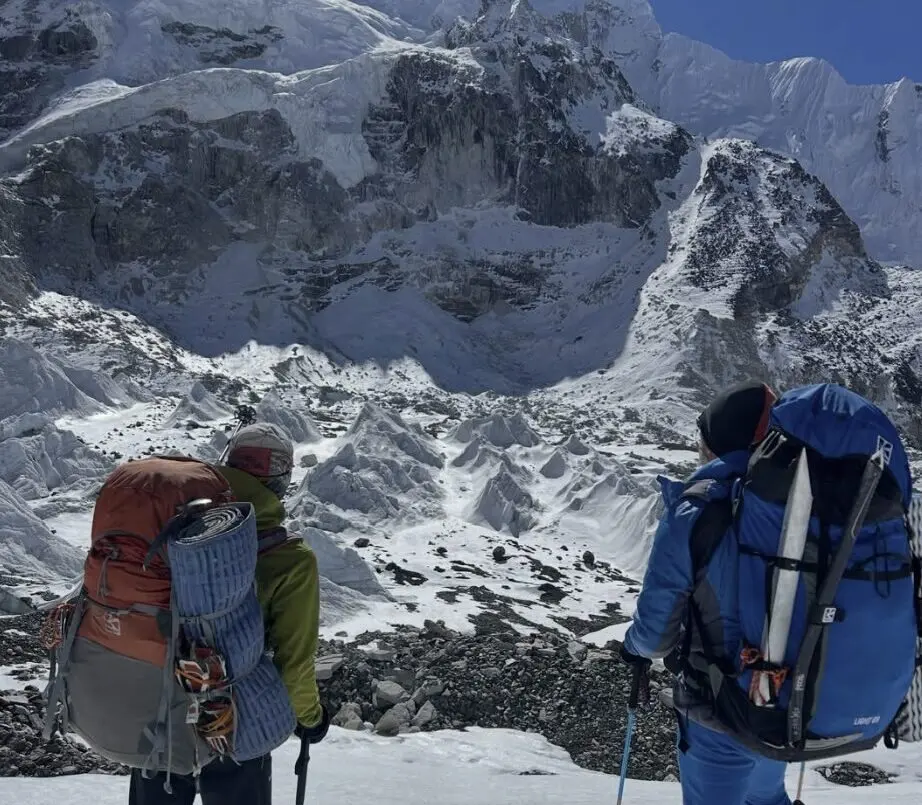
Autumn on Everest is rarely straightforward, and a Russian expedition led by Andrei Vasiliev is finding that out fast. The team has arrived in Nepal's Khumbu Valley and set up its base for the season — not on the glacier itself, but in the village of Lobuche, a comfortable move that skips the usual tent camp on the ice. Base camp was in place by October 2.
Their first acclimatization rotation went less smoothly. Clear skies tempted them onto the Nuptse Shoulder, but heavy fresh snow blocked progress. Vasiliev reported they could climb no higher than 5,650 metres — roughly 300 metres above Everest Base Camp, and still well short of Camp 1 on the standard route, which typically sits at the top of the Khumbu Icefall between 5,950 and 6,000 metres.
The plan here is unusual on two counts. First, the team holds a permit for a route other than the normal South Col and Southeast Ridge line, which is why more than a thousand climbers queue up the same way each year: there simply are no easy alternatives. Second, they'll climb without supplemental oxygen, in keeping with their reputation for demanding, old-school tactics. This autumn climb is officially a warm-up for their main objective — an alpine-style expedition in spring 2027 — but they still intend to attempt the summit this season, whether by a new line, a variation, or an existing route.
The weather isn't cooperating. Forecasters see storms developing over southern Nepal and pushing toward the high mountains. Evidence came from nearby Ama Dablam, where a Sherpa fixing ropes filmed thick fog and deep snow swallowing the route — a warning sign the Nepal National Mountain Guide Association circulated widely. Any summit window this fall will need careful timing.
For the travelling reader, this story is a snapshot of what the Khumbu looks like in autumn: a season when clear mornings can flip to heavy snowfall without much warning, and when Everest is climbed by a handful of specialist teams rather than the spring crowds. If you're trekking to Everest Base Camp or Lobuche in October or November, these reports matter — route conditions, avalanche risk, and flight delays to Lukla all swing with the same weather systems the climbers are watching. And even if you never leave the trail, following an expedition attempting Everest by an unorthodox line, oxygenless, adds a layer of drama to a valley most visitors see only as a walkway.
Bottom line: a serious team is on the mountain early, the snow is deep, and the autumn forecast looks unsettled. Watch how this unfolds — it may shape where they point their efforts in 2027.