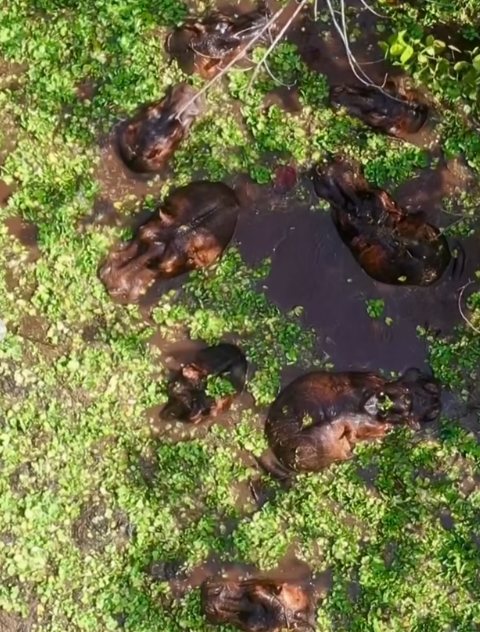
Off the coast of Guinea-Bissau lies the only place on Earth where hippos live in seawater on an almost permanent basis. The Bijagós Archipelago, a group of 88 islands formed from the ancient delta of the Geba and Corubal rivers, is home to a population of common hippos that move between freshwater lagoons, mangrove channels and the Atlantic itself.
These are not marine mammals — they still need freshwater to drink and graze mainly on grasses rather than aquatic plants. But the islands' mix of tidal flats, estuaries and coastal lagoons has let them adapt to a saltwater world. Orango Island is the best-known spot to see them, with hippos resting in lagoons by day and moving onto land to feed as temperatures cool.
The wildlife story goes well beyond hippos. Green turtles nest on islands including Poilão, and the archipelago shelters African manatees, dolphins, crocodiles, sharks and rays. Its mudflats feed hundreds of thousands of migratory birds travelling the East Atlantic Flyway. The area's importance was formalised in 2025, when the Omatí Minhô coastal and marine ecosystems were inscribed on the UNESCO World Heritage List, adding to the Bolama-Bijagós Biosphere Reserve (designated 1996) and protected areas such as Orango Islands National Park and the Urok Islands Community Marine Protected Area.
Conservation here comes with complications. Hippos raid flooded rice fields, threatening harvests in communities that depend on agriculture — research published in Oryx found electric fencing can be an effective deterrent. The biosphere model aims to balance wildlife protection with the fishing, farming and gathering traditions of island residents. Pollution, oil exploration, infrastructure development and climate change all loom as pressures on a coastline where mangroves, estuaries and tidal flats depend on connections between land, rivers and ocean.
For travellers, this is a genuinely different African wildlife experience. Forget game-drive vehicles and open savannah: exploring the Bijagós means travelling by boat through mangrove channels, watching tides transform the landscape, visiting island communities, and spotting animals along beaches and lagoons. It's one of West Africa's least-known corners, and the chance to watch a hippo in coastal waters is a sight you won't find anywhere else.