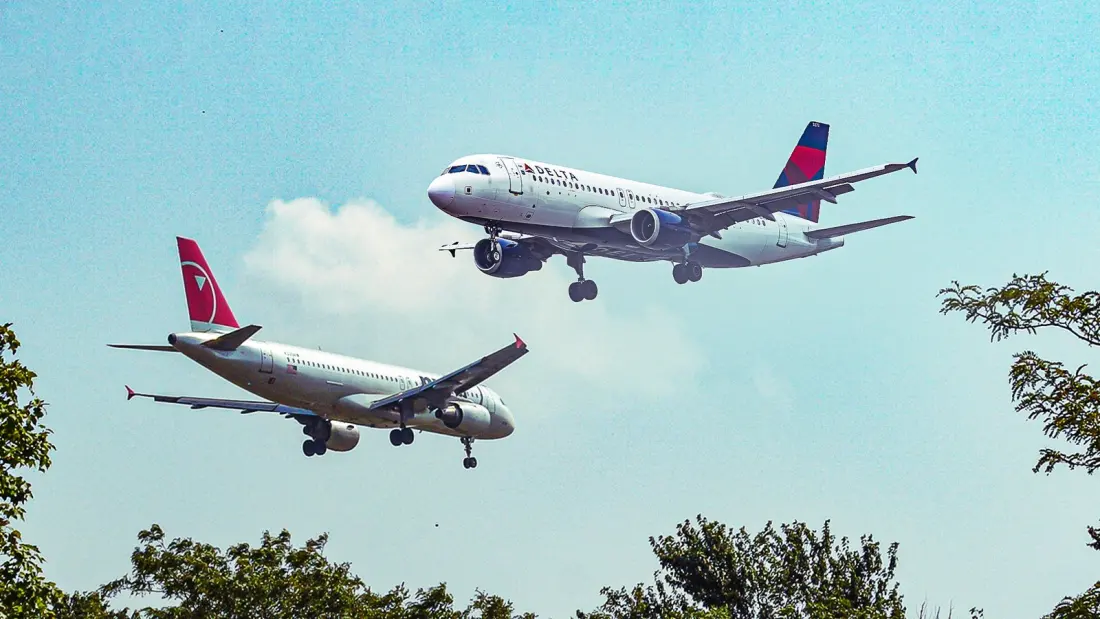
Thousands of passengers board Delta Air Lines jets every day without realising the aircraft they're on was built for a rival that stopped flying in 2010. According to fleet data cited by Simple Flying, Delta still operates 38 former Northwest Airlines A320-200s, 35 of which carry tail numbers ending in the letters 'NW' — a quiet tribute to the airline Delta absorbed in 2008.
These aren't museum pieces in disguise. The airframes date back 23 to 35 years, but their cabins have been refitted with modern seatback screens, WiFi and updated lighting, so most flyers never suspect they're on a jet built when Northwest was still an independent carrier. Renovating interiors in San Salvador and Minneapolis between 2015 and 2018 helped camouflage the age. One survivor, the roughly 35-year-old N325US, still works domestic routes through Detroit and Minneapolis — cities that were Northwest strongholds before the merger.
Why keep them? Money, mostly. Delta owns these planes outright and has long since finished depreciating them, so ownership costs are minimal. Swapping a tail number is cheap paperwork in theory, but it means inspections, new airworthiness certificates and avionics checks — grounding active jets for a cosmetic fix gains passengers nothing. Meanwhile, deliveries of replacement A321neos have been slowed by Pratt & Whitney engine recalls, 10% US tariffs on European-built aircraft and seat certification delays, giving the old Northwest jets a new lease on life. A 2020 plan to retire ten of them was reversed once domestic leisure travel rebounded in 2021.
The backstory matters for aviation fans: Delta was a Boeing loyalist until fuel prices above $100 a barrel pushed it into an April 2008 all-stock merger with Northwest, whose Airbus fleet became Delta's entry point into European hardware. Today Airbus makes up more than half of Delta's 1,005 mainline aircraft — 545 jets — making Delta America's largest Airbus operator, ahead of American Airlines' 500. It's also the only US carrier flying both the A350-900 and A330-900, with 189 more Airbuses on order.
There's a fun stat gap here for travellers: in an Upgraded Points survey of 1,010 flyers, 91% said they never check a plane's age before booking, yet 64% would pay extra for a newer jet — and most assumed Delta ran the youngest fleet when it actually ties for the oldest at an average of 15 years. If cabin freshness matters to you, a quick tail-number check before booking can reveal whether you're drawing a 1990s-era A320 or an A321neo.
Either way, you'll likely be comfortable: the A320 fuselage is about seven inches wider than a 737's, allowing 18-inch economy seats instead of 17.2-inch ones. And with safety concerns addressed — Delta quietly replaced auxiliary power unit seals linked to cabin fume incidents across most of its A320-family fleet by late 2025 — those ghost registrations from a vanished airline will keep flying domestic routes for a while yet.