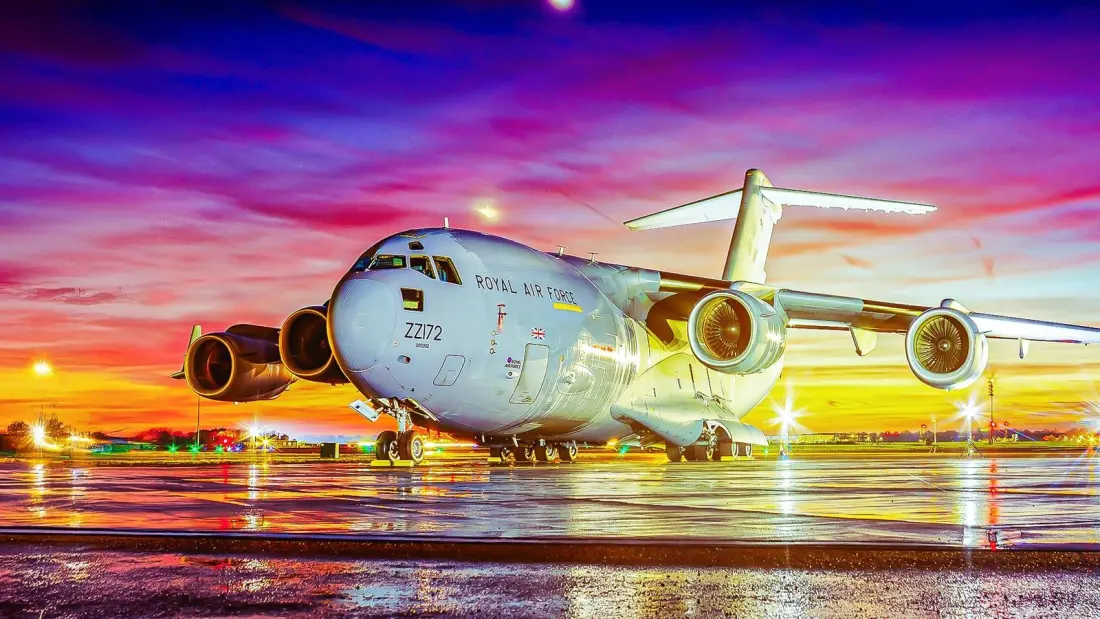
The Royal Air Force once dotted the globe with airfields; today just a handful remain, and several sit in genuinely astonishing places. A recent rundown of the seven most remote RAF-linked bases doubles as a map of far-flung territories that adventurous travellers can actually reach — from the Scottish islands to the Falklands.
Closest to home is RAF Lossiemouth in the Scottish Highlands, the only active RAF station left in Scotland since Leuchars closed in 2015. It's one of the UK's two Quick Reaction Alert sites, home to four Typhoon squadrons and three Poseidon maritime patrol squadrons. Nearby, on Benbecula in the Outer Hebrides about 60 miles from the mainland, a now-unmanned radar station keeps watch over North Atlantic approaches and Russian aircraft heading down from the Arctic. Both sit in parts of Scotland most tourists never get to — wild, windswept, and well worth the detour.
Further afield, RAF Gibraltar has guarded the Mediterranean's entrance for roughly 300 years and still serves as a staging point for RAF flights to Africa and the Middle East. Its airport is famous for the road that used to cross the runway; a tunnel under it finally opened in 2023, though pedestrians can still walk across. RAF Akrotiri in Cyprus, retained by Britain when the island became independent in 1960, is the busy hub for Eastern Mediterranean operations — Typhoons based there have intercepted Iranian missiles and drones in 2024 and 2025.
Then things get seriously remote. Diego Garcia, in the British Indian Ocean Territory 6,000 miles from the UK, is leased to the US Navy for 99 years and hosted B-52 and B-2 bomber deployments in 2025. Ascension Island's Wideawake Airfield sits mid-Atlantic, roughly 4,000 miles from both the UK and the Falklands, run jointly with the US Space Force — it's the vital refuelling stepping stone that keeps the Falklands connected.
The most remote of all is RAF Mount Pleasant in the Falkland Islands, some 8,000 miles from Britain. Opened in 1985, six years before most of today's travellers were booking flights, it keeps a permanent Typhoon detachment alongside a Voyager tanker and an A400M, with around 1,000 to 2,000 British personnel across the South Atlantic garrison. Crucially for visitors, it's also the Falklands' lifeline to the UK: scheduled RAF flights run between Brize Norton and Mount Pleasant twice weekly, via Ascension. With flights from Argentina off the table, that route — or connections through Chile — is how nearly everyone gets there.
For travellers, these bases matter in two ways. Some are tourist destinations in their own right: Gibraltar and Cyprus are mainstream holiday spots with military history woven in, while Ascension and the Falklands are bucket-list expeditions where the airbase is literally the gateway. Others shape the character of the places around them — Lossiemouth and Benbecula anchor remote corners of Scotland where you can watch Typhoons scream over spectacular coastline. Either way, the story of these bases is the story of some of the world's hardest-to-reach islands, and why they're connected at all.