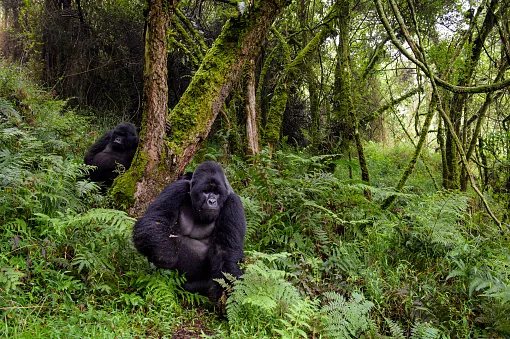
A wild gorilla encounter sits near the top of many travel wish lists, and for good reason — but where you trek, and how, matters as much as the sighting itself. Mountain gorillas survive in just a handful of forests, and your permit fee is part of what keeps them there.
The core population lives in the Virunga Massif, a chain of volcanic mountains shared by Rwanda, Uganda and the Democratic Republic of Congo, with a second major population in Uganda's Bwindi Impenetrable National Park. Numbers have climbed after decades of protection: roughly 1,000 mountain gorillas now exist worldwide, including 604 in the Virunga Massif. Still endangered, they need secure forest, disease protection and communities with a stake in their survival.
Rwanda's Volcanoes National Park is the best-known option. Treks start with a briefing at Kinigi headquarters before you head into bamboo and volcanic slopes with guides and trackers — anything from a short walk to hours of steep, muddy hiking. You get a maximum of one hour with a habituated family, and group sizes are tightly capped. Permits cost US$1,500 per person for international visitors, the minimum age is 15, and Rwanda has announced plans to expand the park by 23% to give the growing gorilla population more room. Its annual Kwita Izina naming ceremony, where 22 baby gorillas were named at the 2026 event, has become a symbol of the country's conservation-first tourism model.
Uganda offers two parks and often better value. Bwindi Impenetrable National Park is split into four trekking sectors — Buhoma, Ruhija, Rushaga and Nkuringo — with hikes of two to seven hours depending on where your assigned family is. Further south, Mgahinga Gorilla National Park is smaller and quieter, issuing only about eight permits a day. Uganda caps groups at eight visitors per family, enforces a 10-metre minimum distance, bans flash photography and prohibits eating, drinking or smoking near the gorillas.
The DRC's Virunga National Park is the one to strike from your list for now. Its gorilla numbers have grown to more than 380, up from 286 in the 2015/16 census, but the park's own site states that gorilla and Nyiragongo treks are closed until further notice as of 19 September 2026. The UK Foreign Office advises against all travel to North Kivu, where the park sits. Check official updates and government advice, not old guidebooks.
Wherever you go, the rules exist for the animals, not the tourists. Skip the trek if you have a cold — respiratory illnesses can be fatal to gorillas. Stay where your guide puts you, keep your voice low, take all rubbish out with you, and book licensed operators, local porters and community-run lodges so your money spreads beyond the permit. A great trek isn't the one with the closest photo; it's the one where the gorillas barely notice you were there.
Credit: Getaway South Africa