A late-August flash flood killed two hikers, swept away nearly every footbridge across Bright Angel Creek and destroyed a big chunk of the Grand Canyon's water infrastructure. A second flood a few weeks later knocked out the emergency repairs crews had just built. The park is open — but if you're heading below the rim this autumn, your trip will look different.
The closures hit the canyon's most famous routes hard. The North Kaibab Trail is shut in its entirety, as are Phantom Ranch, Bright Angel Campground and both Colorado River footbridges. South Kaibab is closed below Tip-Off, and Bright Angel Trail only remains open from the South Rim down to the River Resthouse. The August 29 flood wiped out 40 percent of the old Transcanyon Waterline between Phantom Ranch and the North Rim, along with key intake infrastructure.
The bigger problem for hikers is water. The park is under Stage 4 water restrictions, and there is currently no potable water anywhere in the inner canyon. Guides are blunt about what that means: carry all the water you'll need, and then carry more than you think, because it can still be hot, dry and sunny deep in the canyon even as rim temperatures cool. Dave Logan of Four Season Greens' advice applies year-round, disaster or not — know exactly where your reliable water sources are, check their status right before you hike, and bring a treatment method.
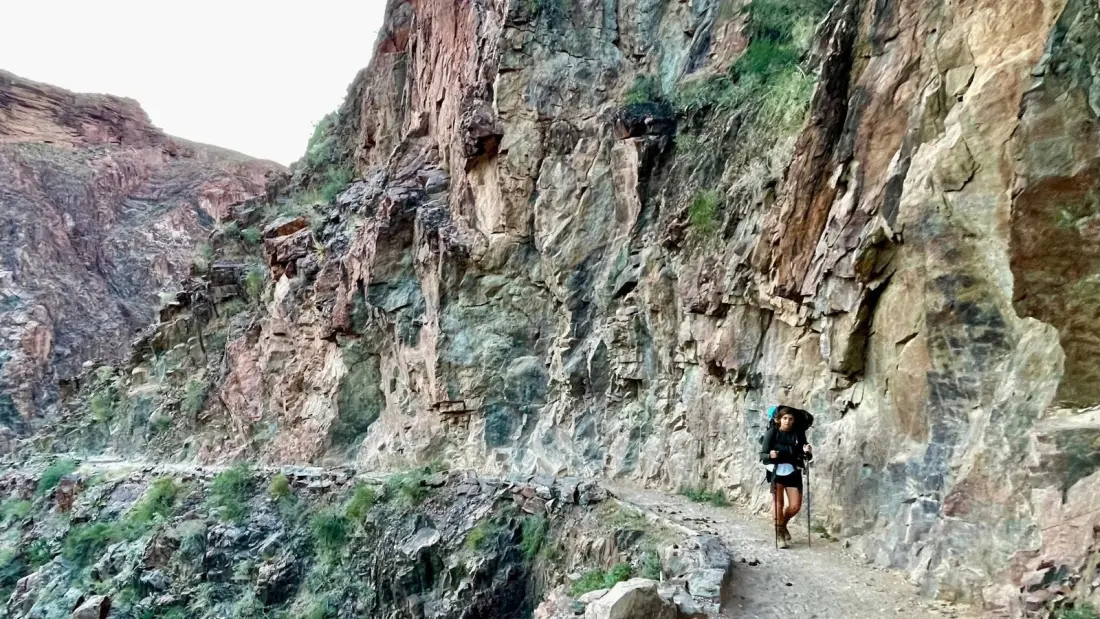
Open doesn't mean normal, either. Heavy monsoon rains have caused erosion, washouts and rockfall across the park. One section of the Hermit Trail has washed out completely, forcing scrambles around the designated route. As Discovery Treks' Adam Henry put it, a passable trail is not the same thing as an easy one — and there's no such thing as an easy hike below the rim regardless.
Local operators don't want you to cancel, though. Rim-based visits and day hikes on unaffected trails are still very much on. But if your plan involved the Corridor trails or a rim-to-rim crossing, don't just swap in whatever permit is available — the less-maintained backcountry routes are a serious step up in difficulty and risk, and not interchangeable with a cancelled itinerary. The National Park Service suggests an honest assessment of your fitness, experience and ability to self-support with food and water before committing.
There's a human angle too: thousands of people live and work in the park, and with no municipal water supply, trucked-in water is what keeps residents in their homes. Being self-sufficient — bringing your own water, planning meals, booking services in Tusayan, Williams or Flagstaff instead of relying on the rim — eases pressure on the community as well as on you. And since conditions are changing week to week, check current closures with the park and call the Backcountry Information Center shortly before you set out.