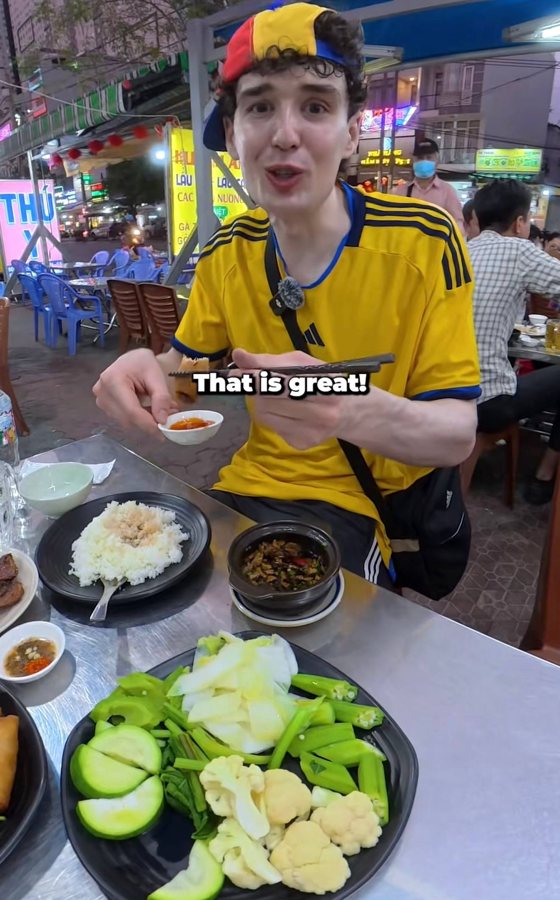
When Robert Berg sat down at a plastic-stooled street eatery in Ho Chi Minh City, the Swedish travel and fitness creator did something most visitors never dare: he skipped the pho, skipped the banh mi, and told the waiter to bring whatever the kitchen did best.
The gamble paid off spectacularly, and the resulting video has struck a chord precisely because it flips the usual tourist script. Instead of hunting down the dishes every guidebook mentions, Berg outsourced the entire meal to a local — a low-stakes experiment any traveller can copy on night one.
The waiter opened with kho quet, a southern Vietnamese classic rarely seen on Western radars. It's a thick, savory-sweet reduction of fish sauce and sugar simmered to a glaze, then loaded with pork cracklings, dried shrimp, shallots, garlic and chili, served bubbling in a clay pot alongside boiled calabash gourd, broccoli and okra. Berg called it the Vietnamese home-cooked meal it genuinely is — intimidating at first sniff, but addictive once you start dunking the fresh vegetables into the sauce.
Next came chicken feet, a dish that stops many Western diners cold. Berg admitted to a moment of shock before discovering the appeal: chewy, crispy skin and crunchy cartilage, tied together by a dipping sauce good enough to make him declare that "dipping sauce can save any dish."
The fried course was cha gio — spring rolls stuffed with minced pork, wood-ear mushrooms, glass noodles and carrots, wrapped in rice paper and fried golden. Fresh herbs and sweet-and-sour sauce on the side, a bowl of steamed rice drizzled with leftover kho quet, and a glass of iced tea completed the table. Berg gave the whole spread a thumbs-up and urged fellow travellers to try the same hands-off approach.
There's a reason the meal worked so well. The waiter hadn't just picked random dishes; the table mirrored a traditional Vietnamese family dinner — one bold, rustic dip balanced by clean boiled greens, something crisp and fried, plain rice, and condiments throughout. That balance of rich flavours against fresh vegetables and dipping sauces is the backbone of the cuisine, and a good server can express it in four dishes better than any menu translation.
Viewers also noticed something else: the waiter spoke fluent English through the whole video. Comment sections lit up over it, and it reflects a real shift in Vietnam's service industry, where English ability is increasingly expected in tourism jobs. For travellers, that means the "order whatever you recommend" gambit is more feasible than ever, even at humble roadside spots.
The appeal here isn't a specific restaurant — it's a travel tactic. Street-side eateries with steel tables and low stools are where Vietnam eats, and handing ordering over to staff cuts through decision fatigue and language barriers while almost guaranteeing you eat like a local rather than like a tourist. Come hungry, stay open-minded, and let the waiter run the table.