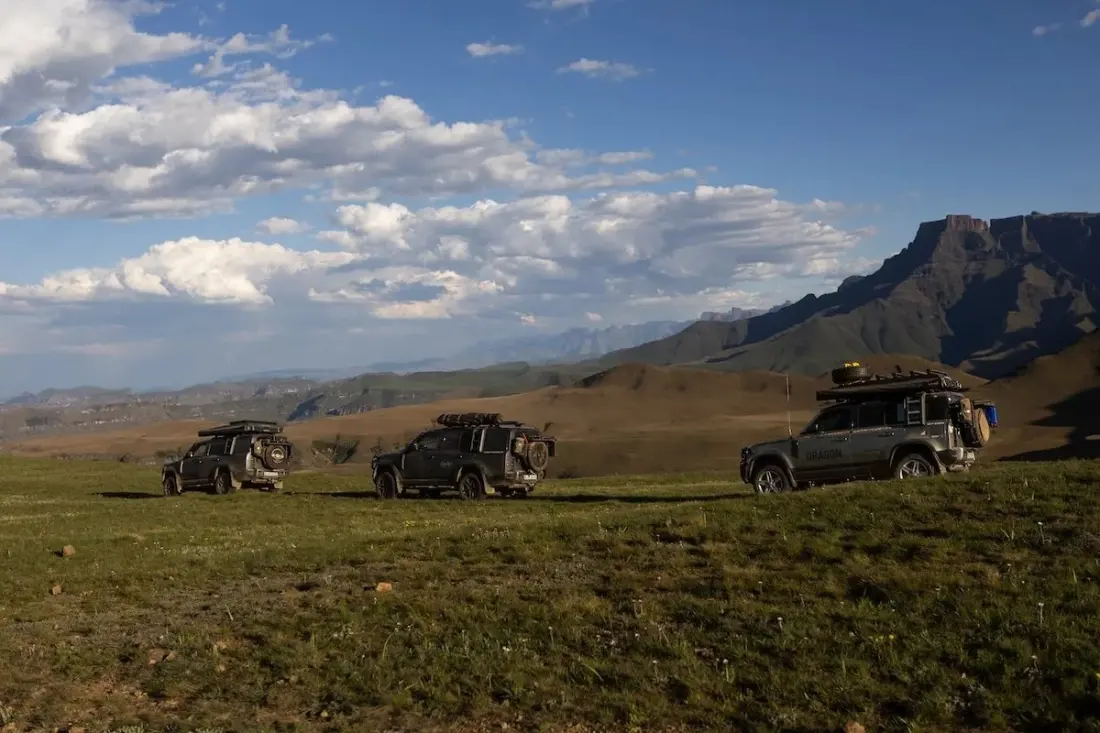
High in South Africa's Drakensberg, near the Lesotho border, there's a climb like nowhere else on the continent. The Dragon's Tail Via Ferrata on Sentinel Peak is the only route of its kind in Africa: a fixed line of cables and rungs bolted into the rock, letting regular hikers scale a 3,165-metre mountain that would normally demand serious alpine skills. Getaway magazine's Oliver recently joined the attempt as part of the Kingsley Holgate Foundation's 44th expedition, 'Following the Dragon', and his account is a proper introduction to one of the country's most dramatic corners.
The concept has an unusual origin story. Via ferrata — Italian for 'iron way' — was born in the First World War, when Italy fought a mountain campaign through the Dolomites and both armies hammered ladders and cables into vertical limestone to move troops. When the war ended, the hardware stayed, and the idea spread worldwide. The Drakensberg version lets you clip in with two carabiners and haul yourself up slopes close to 3,000 metres, with sheer drops into the valleys below. It starts from Witsieshoek Mountain Lodge, which hires out helmets, harnesses and lanyards, welcomes day visitors, and can arrange a 4x4 transfer to the Sentinel car park to save your legs.
The route to Tugela Falls — the highest waterfall in Africa — offers three options: the via ferrata, the famous two chain ladders bolted to the cliff face, or a steep scramble up Beacon Buttress Gully. The writer's group got weathered off after the first via ferrata section, when lightning rolled in and guides called for the escape route — a sensible reminder that the escarpment's 'Dragon's Breath' mist and thunderstorms demand respect and a rain jacket. Some team members made it to the falls anyway via the chain ladders, filling the expedition's ceremonial calabash, which has travelled with every Holgate journey since 1993.
There's more to the area than climbing. The team's route started at Golden Gate National Park, where 200-million-year-old Massospondylus eggs — the world's oldest known dinosaur embryos — were excavated from the same sandstone cliffs. In June 2025 the park opened the R120 million Kgodumodumo Dinosaur Interpretation Centre, named after a beast of Basotho legend, packed with full-scale models and interactive exhibits. The broader expedition runs a Defender 130 convoy the full length of the Drakensberg escarpment, from Limpopo's Iron Crown to the Eastern Cape Highlands, pairing the adventure with malaria prevention, eye-care clinics and conservation education for schoolchildren along the way.
For travellers, this is a compelling add-on to any KwaZulu-Natal or Free State trip: a genuine adrenaline climb, an iconic waterfall, world-class palaeontology and mountain lodge country all within reach of each other. Go with a guide, check the forecast, and allow the full seven hours for the Sentinel hike.