The animals most likely to ruin a holiday aren't the ones Hollywood warned you about. Sure, sharks make the list — but a plant-eating hippo kills roughly 500 people a year in Africa, and a snail you could pick up off a beach can be fatal in the time it takes to smoke a cigarette.
Take the inland taipan, which lives in Australia's semi-arid outback. It's not the world's deadliest snake by body count (that honour goes to the saw-scaled viper), but its venom is the most toxic of any snake, and a single bite carries enough of it to kill more than 100 adults. Then there's the hippo: herbivorous, surprisingly quick in bursts, and fiercely territorial. Bulls can weigh around 4,000kg and are known to charge boats and kayaks, especially when calves are nearby. Cape buffalo — nicknamed "black death" — reportedly kill more hunters in Africa than any other creature, charging at up to 35mph and even attacking moving vehicles when wounded.
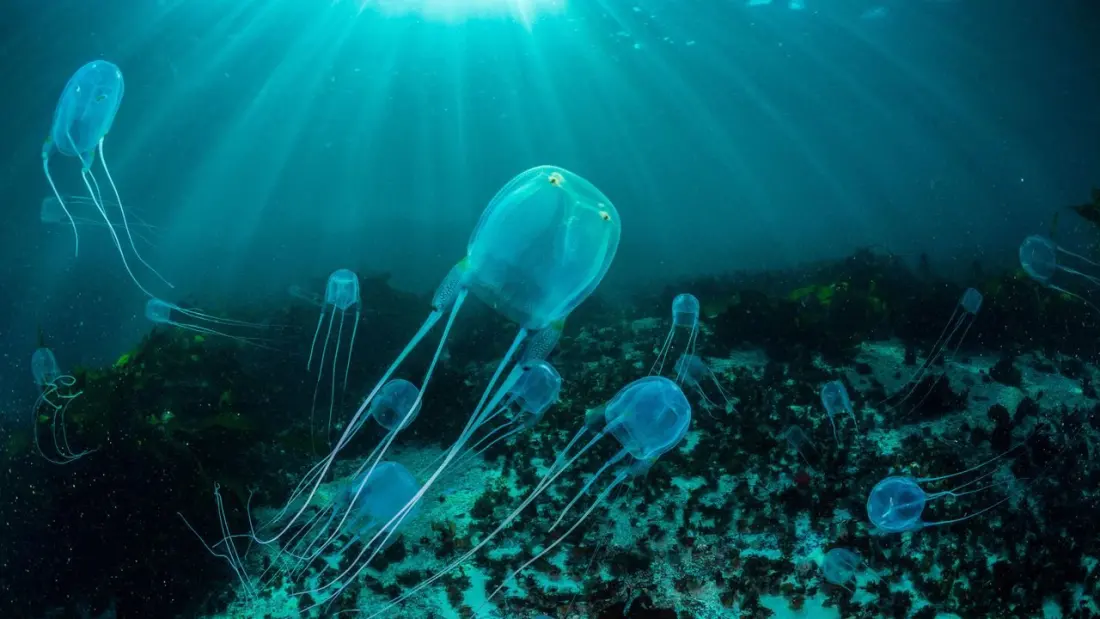
The aquatic dangers are quieter. Cone snails, with their pretty marbled shells, lurk in warm shallows from the Caribbean to Hawaii and Indonesia. Their harpoon-like teeth deliver a conotoxin with no antivenom; the nickname "cigarette snail" tells you how fast things go wrong. Box jellyfish, nearly invisible in Indo-Pacific waters north of Australia, carry up to 15 tentacles apiece — each up to 10ft long — and are considered the most venomous marine animals on earth; some victims die of shock or heart failure before reaching shore. Saltwater crocodiles, found from India and Vietnam to northern Australia, grow up to 23ft and deliver a bite pressure around 3,700lb per square inch — roughly 18 times what a human jaw manages on a steak.
A few others worth knowing about. The golden poison dart frog, barely two inches long, lives in a small patch of Colombian Pacific rainforest; enough toxin sits under its skin to kill 10 grown men, and touching it is enough to cause harm. Black mambas, in southern and eastern Africa, are the fastest snakes on earth at 12.5mph, and bites are near-100% fatal without antivenom within 20 minutes. Pufferfish kill mainly at dinner tables: fugu is only legal when prepared by licensed chefs in Japan, yet accidental deaths still occur most years — its tetrodotoxin is up to 1,200 times more poisonous than cyanide.
And the small stuff matters most of all. Tsetse flies, common in central sub-Saharan Africa, spread sleeping sickness; there's no vaccine, so wear neutral colours (they're drawn to blue and dark shades) and permethrin-treated gear in remote areas. But the mosquito is the real killer — its bites spread malaria, dengue, yellow fever, Zika and more, sickening an estimated 700 million people and killing over 700,000 each year. More than half the world's population lives at risk from mosquito-borne disease, which makes repellent and nets the most important travel kit you'll pack.
The takeaway isn't to stay home. It's that risk on holiday usually comes from creatures you'd never suspect — and from skipping basic precautions — rather than from the ones you've seen in films.
Via Condé Nast Traveller UK