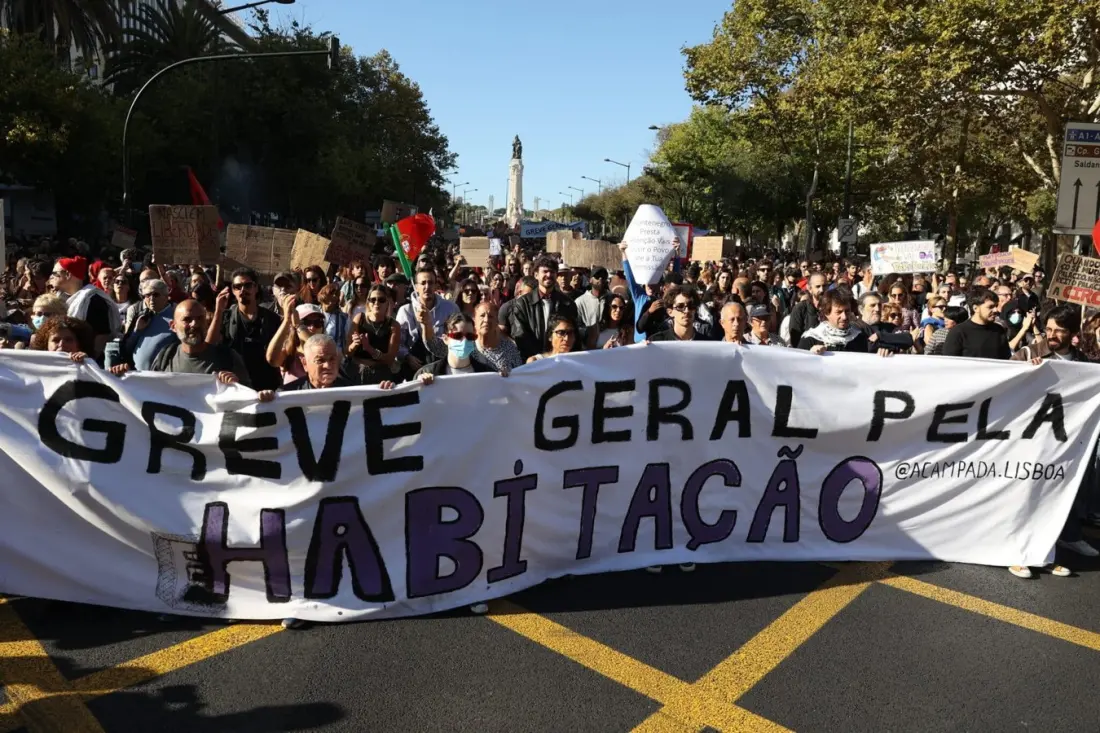
Lisbon's central Rossio Square has become the focal point of a growing protest movement, with tents pitched in the square and thousands of demonstrators marching through the city's main arteries. For anyone with a trip to Portugal planned, it's worth understanding what's happening and how it might affect your visit.
The protests, organised under the 'Acampada de Lisboa' movement, began in Porto on 10 October and quickly spread to Lisbon and other cities. On 24 October, demonstrators marched from Marquês de Pombal down to Rossio Square under the slogan 'We have no home, so we set up tents!' — a pointed response to soaring rents, property speculation and a shortage of affordable housing that has squeezed locals out of their own capital.
Portugal's Public Security Police (PSP) have taken a notably measured stance. They say their priority is protecting the right to peaceful assembly, and their approach centres on dialogue and mediation rather than confrontation. Traffic units and rapid intervention teams have been mobilised, but so far the Lisbon marches have remained peaceful — a contrast to scenes elsewhere in Europe, where French police made 135 arrests during nationwide cost-of-living protests, Brussels saw tear gas deployed, and Madrid hosted both a 25,000-strong pension march and a housing camp in its 28th day.
The political stakes are rising too. Opposition figures from the Left Bloc, the Communist Party and Livre have joined the marches, accusing Prime Minister Luís Montenegro's government of inaction — and even of policies that could worsen speculation. Left Bloc leader José Manuel Pureza suggested the mobilisation could force changes to the government's rental measures, much as public pressure shifted the debate on proposed labour laws.
For visitors, the practical takeaway is simple: the protests are a real phenomenon in central Lisbon and Porto, but they're not currently targeting tourists or disrupting the airport, trains or the main sightseeing districts in any systematic way. You may encounter street closures, crowds or a detour around Rossio and Marquês de Pombal on demonstration days, and a city centre camp with tents in Rossio is likely to remain a visible fixture. Check local news or the PSP's announcements on the day, build in extra time if you have onward travel, and expect a heavy but low-key police presence in the centre. Travellers with longer stays may also notice the context behind the movement: Lisbon's short-term rental boom has helped push rents beyond the reach of many residents, a tension that shapes the city's mood — and its neighbourhoods.
The bigger picture matters too. Portugal's protests are part of a wave rolling across Europe this autumn, driven by housing costs and the wider cost of living. Demonstrations of this kind can flare up quickly in major capitals, so it's sensible wherever you travel to keep an eye on local coverage and have a flexible plan for city-centre sightseeing.