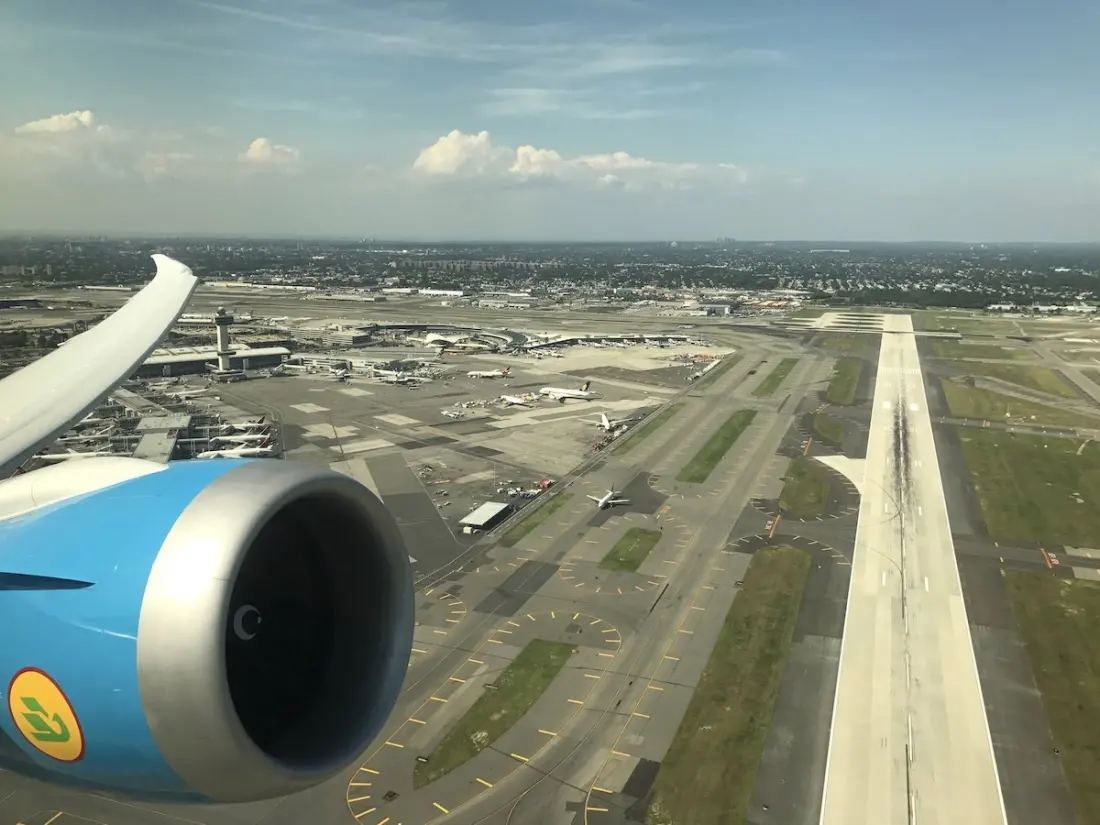
The worst US air travel disruption since 9/11 reportedly traces back to something remarkably small: an FAA technician whose main job was opening a door. Last Friday, American airspace went into a nationwide ground stop for more than four hours after routine telecom work at a remote air traffic control radio site in southern Arkansas went wrong — and new reporting suggests almost nobody was watching.
The work itself sounds mundane. L3Harris, a government contractor, was swapping out a decades-old router as part of a broader project replacing old copper telecom lines with fiber. Under the previous system, contractor maintenance at FAA facilities was treated as a "request" that needed FAA approval before proceeding. But a March 2025 memo flipped that dynamic: contractor work became a "notification" that would proceed automatically if the FAA didn't process it in time — a change explicitly aimed at speeding things up and cutting delays in approving vendor maintenance.
The timing matters. That memo landed just weeks after Elon Musk's Department of Government Efficiency (DOGE) oversaw hundreds of layoffs at the FAA, reportedly the biggest single-year layoffs in the agency's history. Per CNN's reporting, the few FAA liaisons responsible for reviewing these notifications face thousands of them, and in this case L3Harris gave only a few days' notice — meaning no meaningful risk assessment happened before a router swap that ended up knocking out communications nationwide.
The paper trail gets messier. FAA Administrator Bryan Bedford insists the contractor was monitored and a risk assessment was done. The union representing FAA employees tells a different story: the technician was "only there to unlock the door," had no instructions to assist, and was never asked to conduct a risk assessment. An FAA spokesperson then appeared to contradict Bedford, saying escorts aren't present while contractors work on L3Harris equipment.
The political response hasn't clarified much. Transportation Secretary Sean Duffy used the fallout to push a $50 billion air traffic control modernization ask; President Trump blamed the Biden administration while praising the FAA's performance. The union, meanwhile, pins it squarely on reduced oversight and risk assessment — cuts made on the assumption that nothing going smoothly meant the oversight was unnecessary.
Why should travellers care? Because this wasn't a freak storm or an airline IT outage — it was a policy choice about how much scrutiny contractor work gets inside the systems that keep planes separated in the sky. Four hours of nationwide grounding stranded passengers across the country, and until the oversight gap is genuinely fixed, the same fragility remains. If you're flying in or through the US, delays from infrastructure work are now a live risk worth building into your plans: book connections with slack, know your rebooking rights, and don't assume a ground stop can't happen again. Accountability, so far, looks thin on the ground — and the systems affected are the ones every flyer depends on.