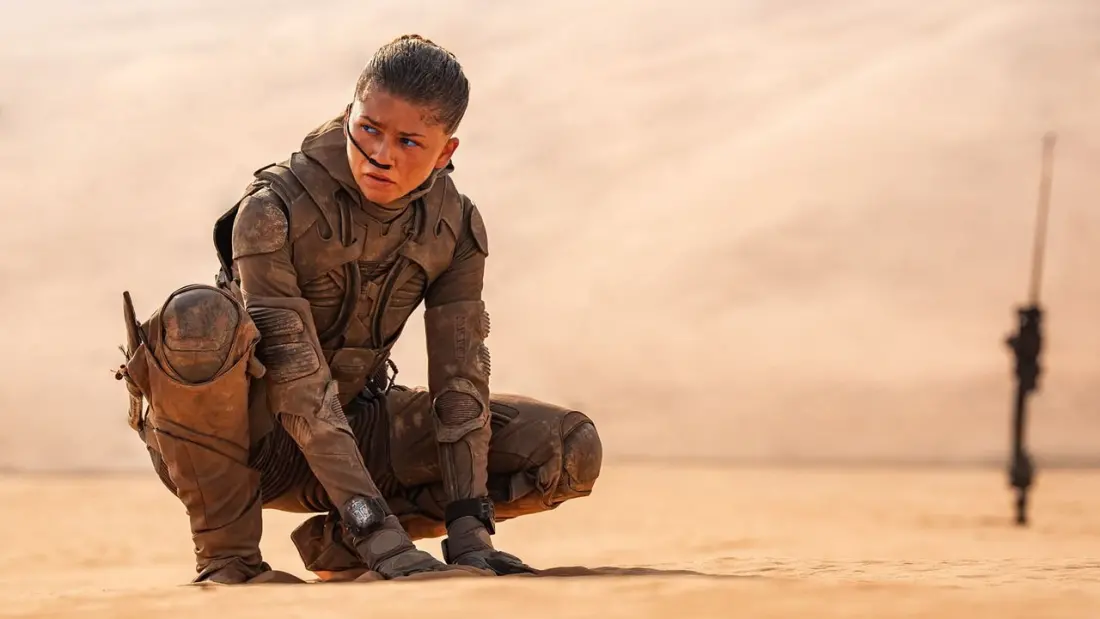
Denis Villeneuve's Dune: Part Three lands in cinemas on December 18, 2026, closing out a trilogy that took a decade to make. But the film's fictional worlds are all grounded in very real, very visitable places — and the crew has been lifting the lid on exactly where they shot.
The wetland planet of Enfeil, where desert-born Fremen soldiers see rain for the first time, was filmed at Ingólfshöfði Beach in Iceland. This cape and nature reserve, rising nearly 250 feet above black sand, had reportedly never been used for a film shoot before — even though puffin tours run there every summer. Production designer Patrice Vermette says director Denis Villeneuve wanted an endless flat black surface with low clouds and a sliver of sun on the horizon; the Canary Islands were considered, but Iceland won.
Arrakis itself, as in the first two films, is stitched together from twenty different locations in the UAE's Liwa Desert, near the Saudi border. Cinematographer Linus Sandgren compares the dunes to those of Lawrence of Arabia, describing copper and beige sands whose wind-rippled patterns change every night. For Part Three the crew pushed deeper into the desert than ever before, working in temperatures that peaked around 120°F. A handful of other Arrakis scenes were shot in Al Ain, the UAE's 'Garden City', including on the plateau of Jebel Hafeet, the region's only real mountain. That location doubles as both the site of Alia Atreides's brutal executions and a tender scene of Chani playing with her children.
Not everything was shot on location. Budapest hosted four production facilities — NFI Studios, HungExpo, Korda Studios and Waberer — where much of the Enfeil battle was staged. The team erected a LED screen wall roughly 65 feet tall and more than 470 feet long, described as the largest of its kind ever built, with cranes needed to move props around it.
Finally, brief flashes of the Atreides home planet Caladan come from the Kråkenes region of northwestern Norway, where green cliffs meet the cold Norwegian Sea. Fans of an Easter egg should look out for a Norwegian pine tree in Alia's meditation room on Arrakis — the only pine on the entire planet, planted as a nod to the family's roots.
For travellers, this is a ready-made route map: a black-sand beach you can visit on a puffin tour, a desert where the dunes genuinely rewrite themselves overnight, a mountain road with views over an oasis city, and a moody Norwegian coastline. Few film locations are this accessible — most of them you could realistically see in a single Gulf-plus-Iceland itinerary, or as separate trips. Adventurous types who want the Liwa experience should know it demands serious heat preparation, while Iceland's Ingólfshöfði is a seasonal excursion best paired with a south-coast road trip.
Story reported by Condé Nast Traveler.