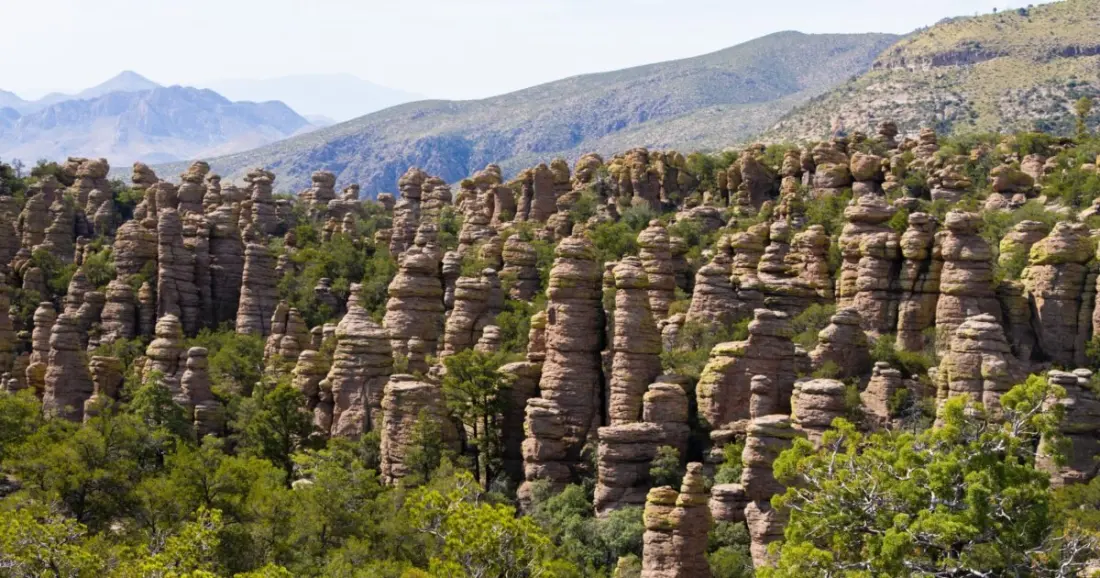
Arizona has quietly gained a fourth national park. On October 20, Chiricahua - a 12,000-acre stretch of southeastern Arizona famous for its riot of stone spires - was upgraded from national monument to national park, becoming the 64th park in the US system and the first new addition since 2020.
The draw here is geology. Around 27 million years ago a volcanic eruption left behind fields of rhyolite hoodoos and impossibly balanced rocks, which is why the area has long been nicknamed the "Wonderland of Rocks." Sitting in the Chiricahua Mountains about 120 miles east of Tucson, the site sits where desert, grassland and forest overlap, so the wildlife list is unusually long: black bears, whitetail deer, white-nosed coatis, the local Chiricahua fox squirrel, western box turtles, and - for birders - the elegant trogon, one of the most sought-after birds in the country. It's also a certified dark-sky destination for stargazing.
There's history layered on top. The area is recognised as the homeland of the Chiricahua Apache, and it has held protected status as a national monument since 1924. The redesignation passed Congress with bipartisan backing from Arizona's delegation before being signed by President Trump.
Now the practical question: does the new title mean anything on the ground? In short, not much - at least not immediately. There's no extra federal funding attached and no stronger legal protections than the monument already carried. The visible changes are new signage and rebranded materials. Interior Secretary Doug Burgum framed the move as a way to put a national spotlight on the site and boost local economies, though he was notably silent on budgets.
What the title does reliably deliver is attention. When New River Gorge in West Virginia got the same upgrade, visitor numbers and surrounding-area tourism climbed noticeably. More visitors means more people with a stake in the place - which, in the long run, may be worth more than a line item in a budget. For travellers, it also means the window to see Chiricahua before the crowds catch on is right now.
If you go, think hiking, birding and night skies rather than big visitor centres or shuttle systems - this remains a small, quiet park. Plan at least a half day on the trails among the spires, and consider pairing it with Tucson or the other southern Arizona attractions to make the drive worthwhile. Details and trail info are at NPS.gov/chir.