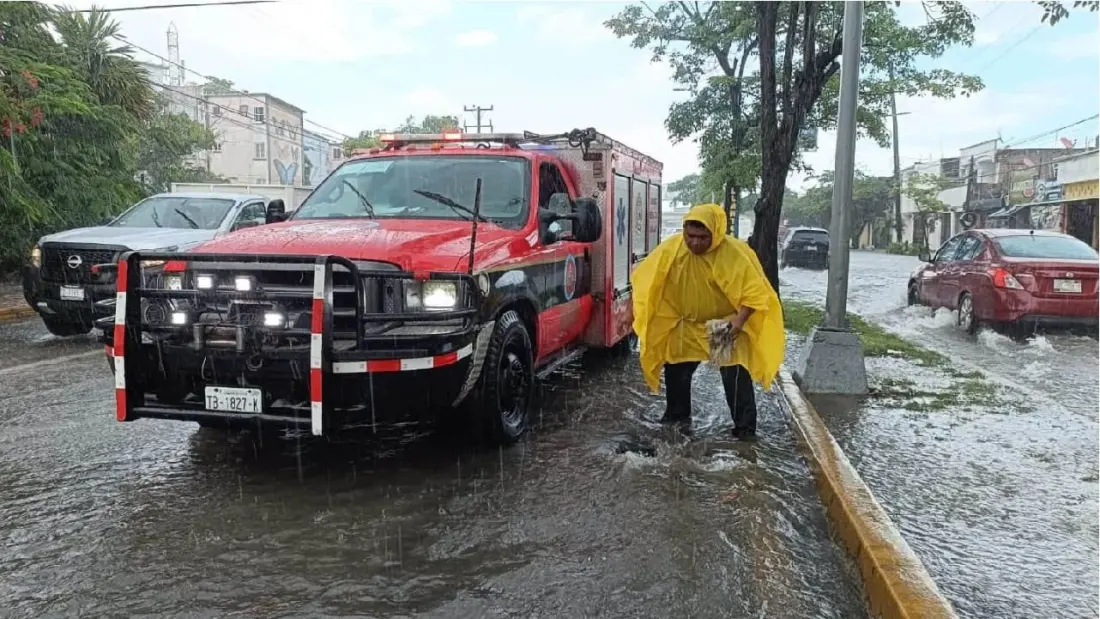
Cancun spent Wednesday under water. Cold Front No. 6 swept across Mexico's Yucatán Peninsula, dumping hours of heavy rain on the city and leaving some streets flooded to a depth of nearly half a metre.
State Civil Protection said the front, interacting with a low-pressure trough and an upper-level trough, would bring very heavy localised rain to Tabasco and heavy rain to Campeche and Quintana Roo. In Cancun, the areas around Suyaxchén, Yaxchilán and Chichén Itzá avenues were among the worst hit, with crews working to clear drains and firefighters using chainsaws to remove trees that had fallen across roads. Gusts reached up to 50 km/h, strong enough to bring down trees and advertising signs. Stranded motorists and pedestrians wading through flooded streets became a common sight through the afternoon.
The warnings weren't limited to Cancun. Authorities issued alerts for a long list of municipalities, including Isla Mujeres, Puerto Morelos, Cozumel, Playa del Carmen, Tulum, Bacalar and Felipe Carrillo Puerto, where the community of Santa Maria Poniente also found itself under water. The good news: officials reported no deaths or injuries.
If you're planning a Cancun or Riviera Maya trip in the coming weeks, this is a useful reality check. Cold fronts — locally called 'nortes' — roll through the region regularly from late autumn into winter, and when one meets warm Caribbean moisture, the result can be a day of intense downpours and localised flooding rather than the postcard sunshine the region is known for. Hotel zones and beach days can be affected, but storms like this usually pass within a day or two.
A few practical takeaways. If you're staying in downtown Cancun rather than the hotel zone, be aware that low-lying streets can flood quickly, so keep an eye on local weather alerts and consider adjusting plans for airport transfers on heavy-rain days. Avoid walking or driving through standing water, and expect possible power or transport hiccups in smaller towns further south. Travel insurance that covers weather disruptions is worth having in shoulder season. None of this should put you off — the region's infrastructure handles these events routinely — but packing a rain layer and building some flexibility into your itinerary is smart during the norte season.