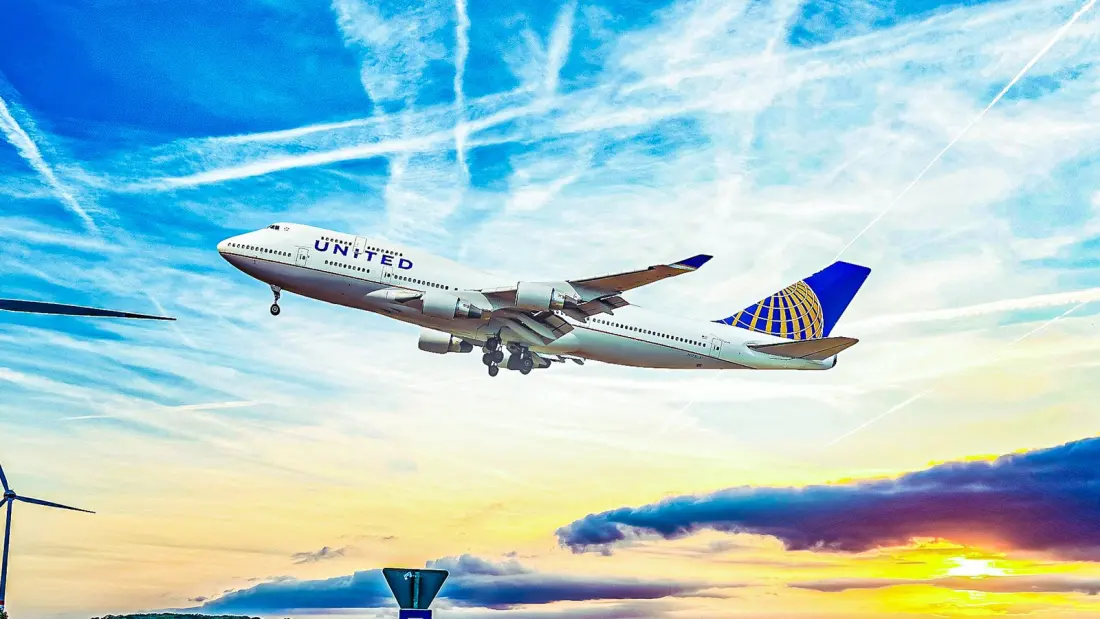
For its first two decades, the Boeing 747 needed three people up front. Alongside the captain and first officer sat a flight engineer — a systems specialist who watched engine parameters, shuffled fuel between tanks, tracked hydraulics, electrics and pressurisation from a panel packed with hundreds of gauges and circuit breakers. The 747-400, which entered service with Northwest Airlines on 9 February 1989, ended all that and proved the world's biggest passenger jet could fly safely with just two pilots.
Boeing didn't invent the idea on the jumbo jet. The 757 and 767, which entered airline service in the early 1980s, had already shown that digital avionics could absorb much of the third crew member's workload. Even earlier, the Lockheed JetStar became the first two-pilot quadjet in 1961, and the BAe 146 — entering service in 1983 — was the first commercial passenger four-engine jet certified for a two-pilot flight deck. What made the 747-400 a milestone was scale: it extended the two-crew philosophy to the jumbo-jet category for the first time.
The numbers behind the change are striking. Boeing swapped the analogue instrumentation for six CRT screens — primary flight, navigation and systems displays — and cut the count of lights, gauges and switches from roughly 971 on the 747-300 to just 365, a drop of more than 60%. The key technology was EICAS, the Engine Indication and Crew Alerting System, which continuously monitored engines and aircraft systems and flagged anything abnormal directly to the pilots. It was effectively described at the time as an electronic flight engineer.
Importantly, automation didn't just dump the engineer's tasks onto two already busy people. Boeing redesigned the aircraft so computers handled the routine monitoring, while pilots supervised and made the judgement calls when something went wrong. A 1981 US Presidential Task Force had already endorsed two-crew operations for advanced aircraft, clearing the regulatory path. NASA research from the era also flagged the trade-off: new questions around pilot workload, training and over-reliance on automation came with the glass cockpit.
Why should a traveller care? Every modern airliner you fly on today — from a short-haul A320 to an A380 — descends from this shift. Two-crew operations also changed airline economics on long-haul routes, trimming crew costs and helping make widebody international travel the mass-market product it is. And if you ever snag a seat on a preserved 747-400, knowing that its cockpit was the moment jumbo jets went digital makes the visit a lot more interesting.
For anyone curious about how the flight deck went from three seats and a wall of dials to two pilots and screens, the 747-400 is the hinge point — the aircraft where the flight engineer's career as a regular airline crew member effectively ended.