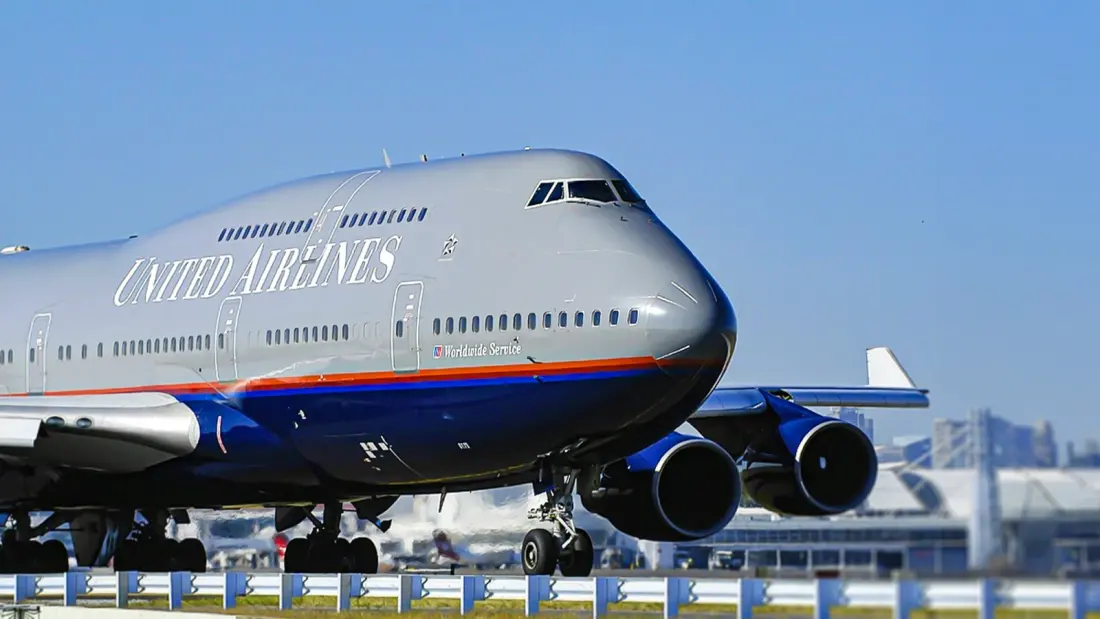
For nearly five decades, the Boeing 747 was the flagship of American long-haul flying. All three big US legacy carriers — American, United and Delta — flew the jumbo jet, yet each ended its love affair with the type at a different time. By the end of 2017, none of them carried passengers on a 747 anymore, and the reasons why explain a lot about how international air travel has changed.
American's fling with the 747 was the briefest. It operated 19 aircraft across the 747-100, 747-200C and two long-range 747SPs, drawn in by the jet's ability to carry roughly twice as many people as a Boeing 707 at much lower seat-mile costs. But the 1970s oil crisis and the arrival of smaller widebodies made filling all those seats hard, and American shifted toward cargo before bowing out of 747SP flying in 1994.
United, by contrast, made the 747 part of its identity. Its first 747-100 arrived in June 1970, flying San Francisco to Honolulu that July — the very route on which it said goodbye nearly 47 years later. United inherited 747SPs with its 1985 purchase of Pan Am's Pacific routes and ran the -100, -200 and -400 across a sprawling Pacific network. When retirement came, it came fast: announced in March 2016, accelerated to late 2017. The last international flight landed in San Francisco from Seoul on October 29, 2017, and a farewell re-creation of the first Honolulu route sold out in 90 minutes.
Delta's story came in two acts. It bought 747-100s in 1970, found them too big for its network, and handed them back to Boeing by the mid-1970s. Then the 2008 merger with Northwest brought 16 747-400s — 403-seat workhorses on transpacific routes — back into the fleet. Even those couldn't beat twin-engine economics, and Delta's final revenue 747 flight, DL158 from Seoul to Detroit, departed on December 19, 2017. One of the retired -400s is now on display at the Delta Flight Museum in Atlanta, which is worth a look if you're passing through.
Why did the queen of the skies fade? In a word: flexibility. Aircraft like the Boeing 777, 787 and Airbus A350 deliver similar range with two engines instead of four, burning less fuel and needing less maintenance. Instead of funnelling hundreds of passengers onto one giant plane a day, airlines could fly smaller aircraft more often, or serve thinner routes entirely — a logic that now extends to the A321XLR. The 747 still earns its keep hauling freight and in government service, but for passengers its successors won on economics.
For travellers, this is more trivia than grievance: the twinjet era means more direct routes to more cities, often at lower fares. But if you want a taste of jumbo nostalgia, aviation museums in Atlanta and Seattle, plus occasional farewell charters, are where the 747 story lives on.