Slip into a cafe in Chefchaouen or Casablanca and you might think the rules are the same as back home: order your usual, sip, go. In Morocco, that assumption can get you off on the wrong foot within minutes. A recent guide to Moroccan cafe culture flags five common slip-ups tourists make almost immediately — most of them completely innocent, but easy to sidestep with a little know-how.
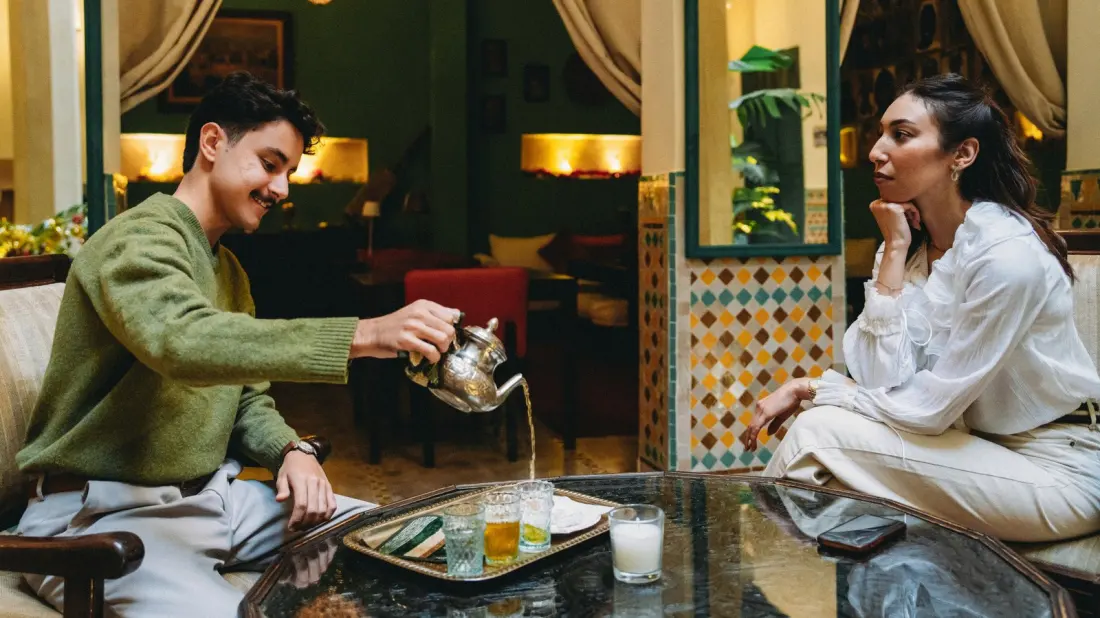
The biggest one is refusing mint tea. When a server greets you with a cheerful "Salam alikoum" and a hot glass of the national drink, poured from a dramatic height, that's not a sales pitch — it's a welcome. Turning it down can read as rude, since offering tea is deeply woven into Moroccan hospitality. Even a single polite sip does the trick if mint isn't your thing.
Coffee orders trip people up too. Don't expect every local cafe to serve vanilla lattes. Most Moroccan coffee drinkers go black — "kahwa kahla" in Darija or "café noir" in French — typically a small espresso-style shot. If that's too intense, ask for a "nous nous" (literally "half-half"), an off-menu mix of equal parts coffee and milk. And note that coffee usually comes sweetened; if you want it plain, say "sans sucre" in French or "bla soukkar" in Arabic.
Timing matters as well. During Ramadan, when many Muslims fast from sunrise to sunset, daytime cafe options thin out — visitors are encouraged to eat discreetly, and the city truly comes alive at iftar, the sunset meal. Day-to-day, many shops and cafes pause or quiet down during the five daily calls to prayer (adhan), roughly before sunrise, early afternoon, mid-afternoon, sunset and night. A quick check of prayer times helps you plan cafe stops without arriving at a shuttered door.
Two more pieces of etiquette: keep public displays of affection low-key. Holding hands is generally fine, but kissing and cuddling in public are seen as disrespectful. And finally, slow down. Cafe life in Morocco is a ritual, not a caffeine stop — conversations stretch over an hour or two, and lingering is the point. Rather than treating a cafe as a quick pit stop on a medina walking route, do as the locals do: order, sit, watch the street, and let the afternoon happen.
For travellers, this is less about rules and more about getting the best out of the experience. Morocco's cafes are among the best free seats in the country for people-watching, whether you're in Marrakech's medina, the blue lanes of Chefchaouen, or the artier corners of Casablanca. Accept the tea, order a nous nous, time your visits around prayer and Ramadan schedules, and treat your coffee as an event rather than a transaction — you'll fit in faster and enjoy it more.