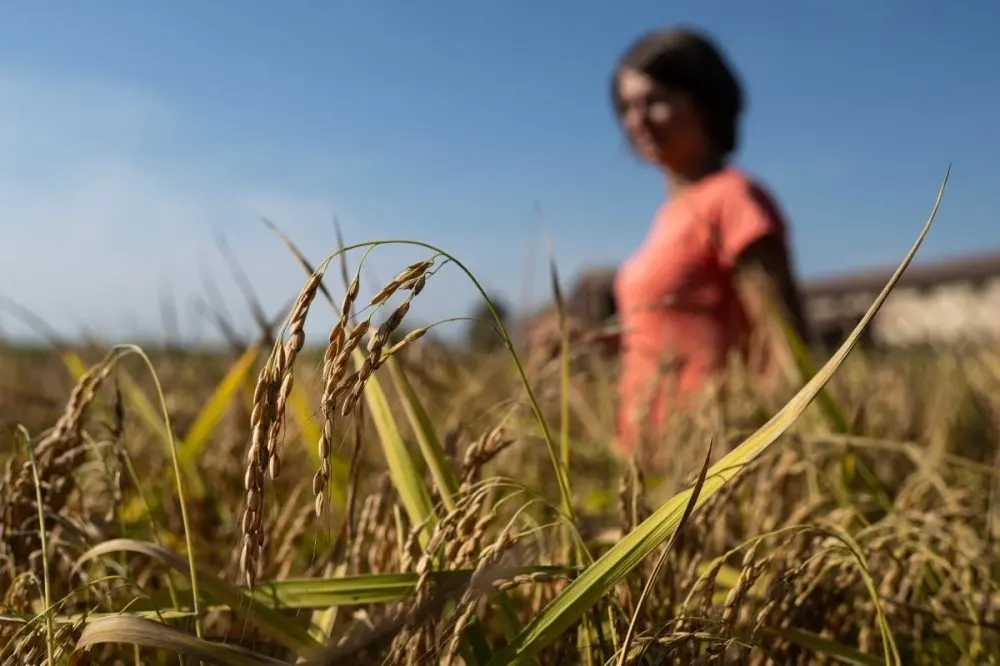
Between Milan and Turin, on the Vercelli plain where monks first turned marshland into paddies four centuries ago, farmer Alice Cerutti is quietly reversing the equation. At her family's Cascina Oschina farm in Crova, she has returned roughly a third of the 110-hectare property to woods and wetlands, planting more than 10,000 native trees — oaks, alders, ash, hornbeams — around natural springs. The result: butterflies, dragonflies and rare birds have moved back in, including the black-tailed godwit, now recorded nesting at the only known Italian site, in her wetlands.
The setting matters. Italy is Europe's biggest rice producer, but the sector is under real pressure: cheaper Asian imports, rising costs and increasingly brutal droughts. Farm group Coldiretti reckons around a quarter of this year's rice crop could be lost to heat. Many growers are switching to dry-seeding to save water, but agronomists warn that flooding paddies is what recharges the aquifer beneath the Po basin — and that abandoning it risks turning one of Europe's most fertile plains into, in the words of one agronomist, a desert.
Cerutti's approach is the opposite. She keeps her fields flooded early, grows red and black rice alongside historic varieties like Carnaroli Classico and Arborio Classico, and uses no chemical fertiliser at all. Instead, about 1,200 sheep graze between harvests, leaving organic matter that feeds the soil. The old varieties yield less than modern ones, but they cope far better with drought and heat — Carnaroli Classico even has bristle-like awns thought to shield the grain from temperature extremes.
There's an economic trade-off, and she's honest about it. Giving up paddies means lost income, so she plans to make up the difference by welcoming schools and researchers and by opening guest accommodation on the farm, which holds EU-certified protected area status. Buyers in Britain, Dubai and the US already pay for her chemical-free Carnaroli, and the story has landed just ahead of a UN biodiversity summit pushing the "30x30" goal of protecting 30 percent of the world's land and oceans by 2030.
Why should a traveller care? Because this is agritourism in its most literal form: a working rice farm an hour or so from both Milan and Turin where you'll soon be able to stay overnight, walk woods that didn't exist a decade ago, and eat rice grown on the same fields you're looking at. Fellow farmers think Cerutti is crazy, she says. Food travellers, birdwatchers and anyone who likes their risotto with a side of conservation will disagree. Her neighbours' skepticism aside, migrating birds across the wider rice belt have fallen 80 percent in 15 years — places like this are the counterweight, and they're opening their doors. — Malay Mail Life