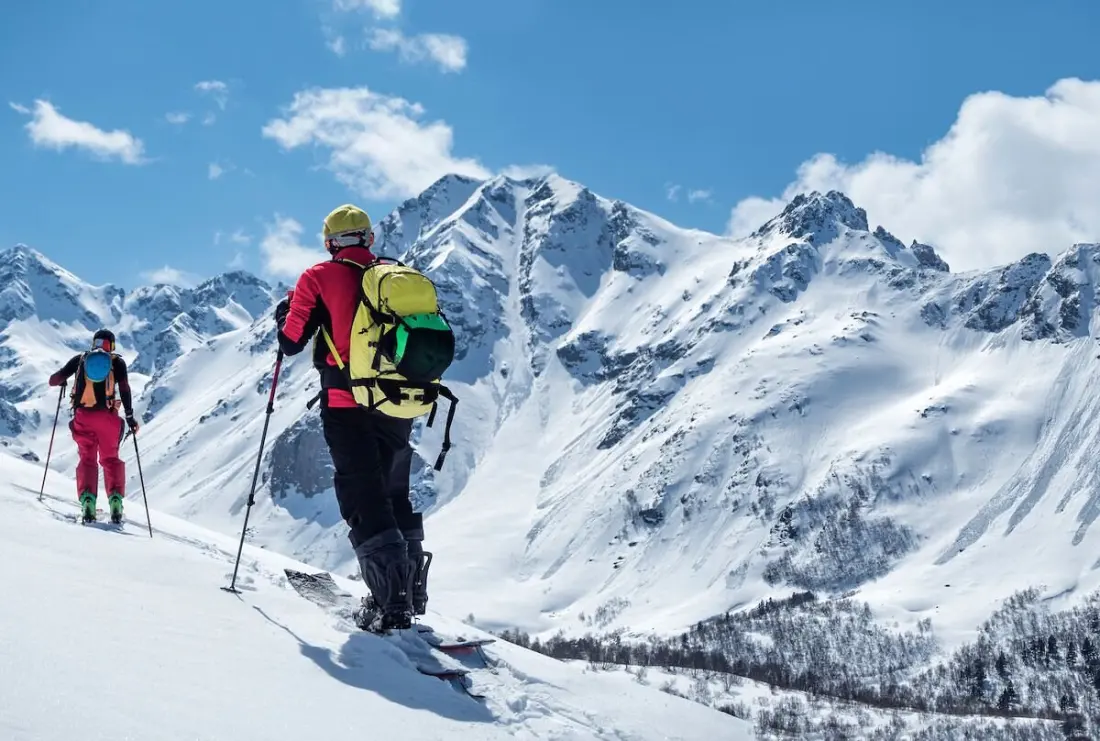
Every ski town has that storyteller at the bar, spinning tall tales of powder lines far beyond the resort boundary. The reality of earning those turns, according to one Colorado-based splitboarder with two decades of experience riding everywhere from Kyrgyzstan to northern British Columbia, is less about bravado and more about preparation — the right kit, the ability to read an avalanche forecast, and the maturity to turn around when conditions look wrong.
A splitboard is a snowboard that splits lengthwise into two skis for the uphill climb, with skins attached to the base for grip, then rejoins into a single board for the ride down. Getting the setup right matters: the author favours the Arbor Landmark Camber, a lightweight, sustainably built board, paired with either softboot bindings like the Spark R&D Arc ST (easy snap-lock transitions, forgiving for beginners) or a hardboot setup using K2 Mindbender BOA alpine touring boots — heavier on the foot but lighter in the pack on the climb.
The safety kit is non-negotiable. A beacon, shovel and probe must be carried by everyone in the group, and anyone who doesn't know how to use them stays at the trailhead. Specific picks include the Backcountry Access Tracker 3 beacon at $349, the Dozer 1T shovel with a T-shaped handle (easier to grab at awkward angles during a rescue), and a 300mm probe. For avalanche terrain, an airbag pack like the Deuter Alproof 42 — around $1,100 — can keep you nearer the surface if you're caught in a slide.
Beyond the essentials, the author's packing list covers a 32-litre winter pack (anything under 25L won't fit your skins at transition), collapsible trekking poles with baskets, a reliable headlamp such as the Black Diamond Spot or the brighter updated Storm line, and a layering system: the Black Diamond Solution 2.0 hoody with NASA-inspired aerogel insulation for stops and ridgelines, and the Access Down 2.0 for cold mornings. Outerwear picks run to Outdoor Research Hemispheres bibs and shell, Anon's magnetic-lens M4S goggles, the sub-$200 Anon Oslo WaveCel helmet, and Oyuki Sencho Gore-Tex mittens that stay warm without turning your hands into sweatboxes on the climb.
Why should a traveller care? If you've ever looked at the untracked slopes beyond a ski resort and wondered how people get there, splitboarding is the answer — and it's more accessible than it looks, provided you invest in the gear and take an avalanche course (the author recommends an AIARE fieldbook for trip planning). The real value here is the checklist itself: it's a full shopping and prep guide for a first overnight or day tour, with price points at every level, from the $349 beacon to the $599 Burton Tourist boots that double for resort riding.
Just remember the author's golden rule: no beacon, shovel and probe, no backcountry. No exceptions.