Dawn on the Tortuguero canals is the postcard version of Costa Rican wildlife tourism: glassy water, a heron lifting from the reeds, howler monkeys roaring somewhere out of sight while everyone on the boat fumbles for a camera. But a new feature from Howler Costa Rica argues the country's animal encounters are only as good as the choices travellers make around them.
That matters here more than almost anywhere. Costa Rica protects roughly a quarter of its national territory through parks, reserves and refuges, and tourism revenue has helped make a standing rainforest worth more than a cleared one. Book a naturalist guide in Corcovado or a locally owned lodge near the Osa Peninsula and your money directly supports families whose livelihoods depend on intact forest and protected nesting beaches.
The country rewards patience over box-ticking. Corcovado National Park, often called one of the most biologically intense places on Earth, hosts tapirs, peccaries, all four monkey species, macaws and the occasional wildcat — access is deliberately managed, so go with an authorised guide and respect group limits. In the misty cloud forests of Monteverde, resplendent quetzals appear during breeding season, but good guides talk about habitat and behaviour rather than promising sightings. Watch your feet, too: leafcutter ants, basilisk lizards skimming across water and slow-moving sloths reward anyone walking quietly.
Coastal encounters run on a tidal rhythm. Tortuguero is famous for sea turtle nesting, while Ostional Wildlife Refuge draws crowds for the arribadas — mass nesting events of olive ridley turtles in their thousands. Both are extraordinary, especially with kids, but the rules are non-negotiable: never touch a turtle, block its path, use bright lights on nesting beaches, or join tours that treat nests as photo props. On the Pacific, humpback whales from both hemispheres pass through at different times of year; the operators worth booking slow down, keep their distance and never chase a whale or separate a mother from her calf.
Care matters most in casual moments. Capuchins near beach towns and coatis patrolling car parks look habituated and friendly, but feeding wildlife makes animals sick, draws them into traffic and teaches them to approach people. The piece's sharpest line: a monkey that ignores you isn't a disappointing sighting, it's a healthy one.
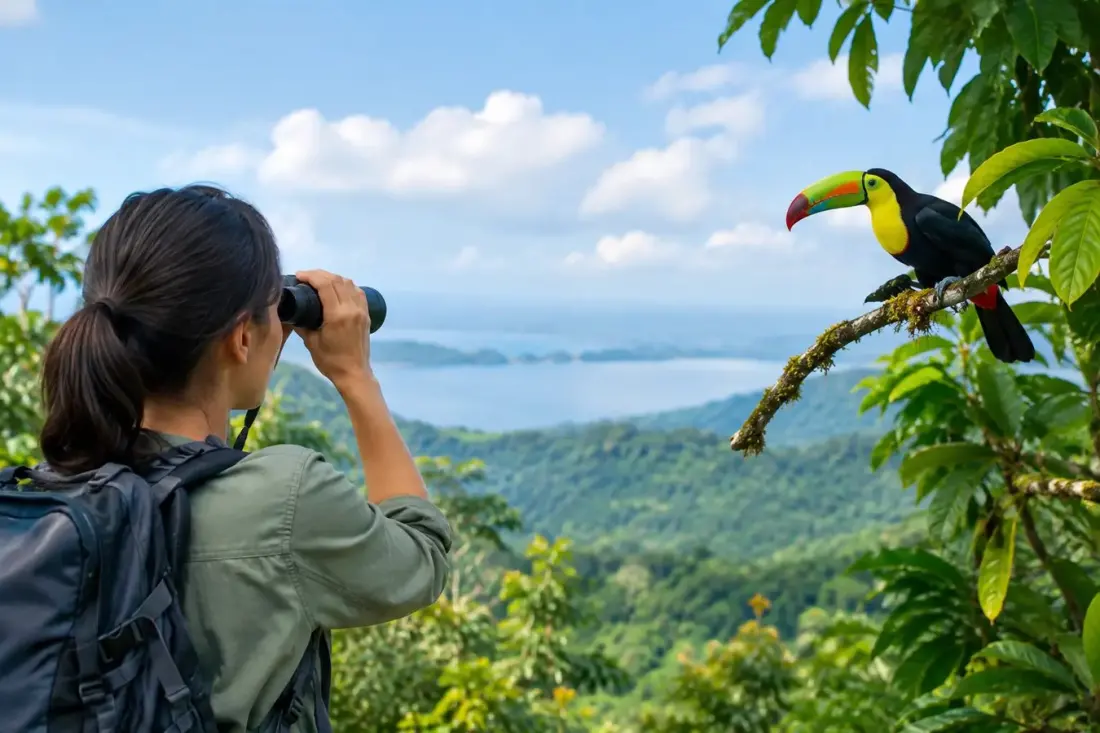
Before you book anything, ask operators pointed questions. How close do they get to animals? Do they feed or call wildlife? Are guides trained naturalists? Be wary of anywhere offering hands-on contact with wild animals — a genuine sanctuary minimises handling, and if a baby sloth is being passed around for photos, walk away. For photography, use a zoom lens, stay on trails and skip the flash.
The framing throughout is simple: Costa Rica's biodiversity isn't scenery arranged around a holiday, it's a living system with limits. Travellers who respect those limits often come home with something better than a perfect shot — and a reason to defend the place they visited.