Roughly 900 Vietnamese people live in Israel — long-term residents, workers, agricultural trainees, students and Vietnamese-Israeli families — spread across a country where Hebrew and English dominate daily life. Around 8,000 kilometres from home, their biggest worry isn't distance but drift: the slow fading of language, customs and memories across generations.
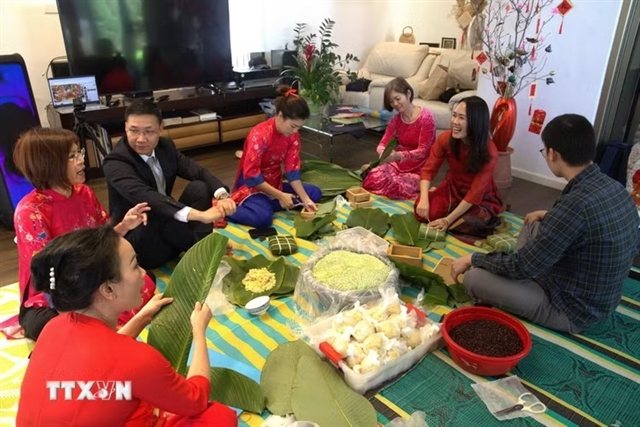
Their answer is everyday culture rather than grand gestures. Kitchens carry the load: bánh chưng and bánh tét sticky rice cakes, nem rán spring rolls and home-style soups appear far beyond Lunar New Year, evoking family and past Tết celebrations. Food has also become a bridge to the host society. In Be'er Sheva, in the Negev Desert, a restaurant called Hà Nội, Việt Nam offers a taste of home, while Nem Việt in Haifa introduces locals and visitors to Vietnamese cuisine.
Community infrastructure is new but growing fast. The Association of Vietnamese People in Israel, founded in March 2025, organises gatherings and celebrations of Tết and the Mid-Autumn Festival, giving children from multicultural families a chance to experience their heritage. Solidarity extends beyond festivals: members visit the sick, help those facing financial hardship, and share safety information during periods of heightened security tension. When floods or disasters hit Vietnam, the community raises money for relief back home.
The real challenge, community members say, is the next generation. For kids in Vietnamese-Israeli families, Vietnamese risks becoming a language spoken only with grandparents. So families are encouraged to speak Vietnamese at home, join community events and find ways for children to learn the language properly — with the argument that the mother tongue is the gateway to understanding the culture's values: filial piety, respect for elders, solidarity and strong family bonds.
For travellers, this is a genuinely off-the-beaten-path food angle. If you find yourself in Haifa or Be'er Sheva and crave a bowl of phở or a plate of spring rolls, these family-run restaurants are serving authentic home cooking and doubling as informal cultural outposts. A meal there is a conversation with the owners about a small diaspora figuring out how to keep its roots watered — a nice reminder that Vietnamese food culture now reaches places most people would never expect.