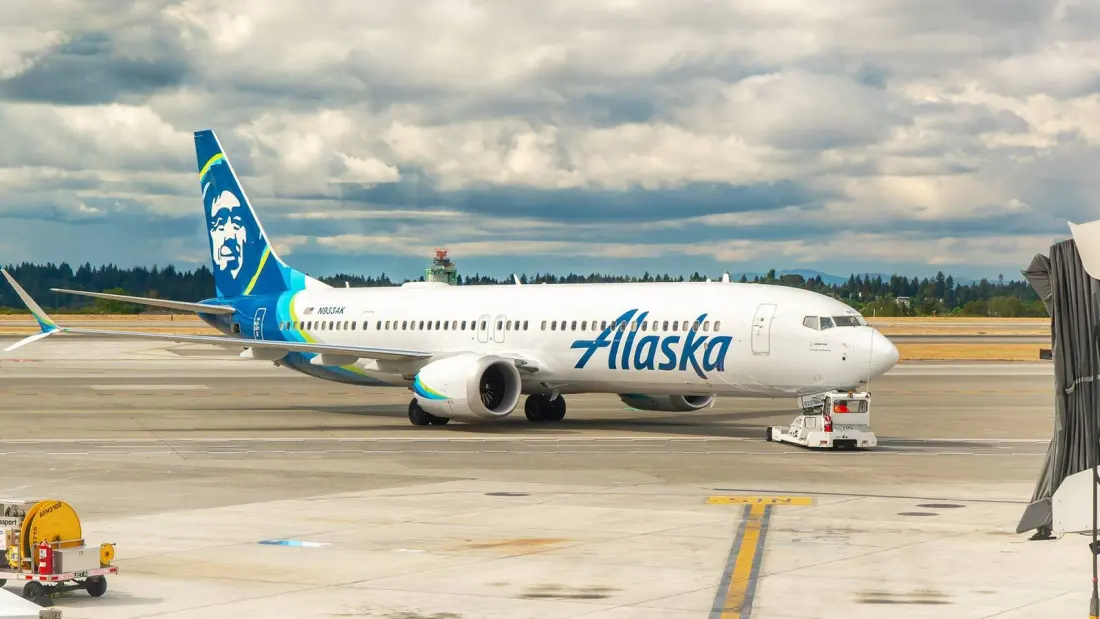
Boarding was underway for Alaska Airlines flight AS1306 from Seattle-Tacoma to Los Angeles on Saturday morning when masked ICE officers moved in on the jet bridge at Gate N9. Two passengers — identified by the agency as Ricardo Larrondo Mendoza and Sofia Hernandez Mejia, both Mexican nationals allegedly overstaying visas — were arrested just steps from the aircraft door, and the scene quickly turned chaotic.
According to passenger Aidan Mendoza, who spoke to Seattle radio station KUOW, roughly 50 travellers were pressed against the jet bridge wall as officers struggled with the pair. He described the Alaska pilot walking back up the jet bridge looking uncomfortable — and never returning. Two flight attendants were reportedly so shaken they asked to be swapped out. The Boeing 737-840 departure to LAX was delayed by more than three hours. Mendoza himself chose not to fly and got a refund.
Alaska Airlines says it received no advance warning of the enforcement action and is reviewing what happened, calling the incident distressing for both employees and guests. The Port of Seattle, which runs the airport, went further: it said it was outraged, stressed that immigration enforcement at SEA happens without its involvement or knowledge, and is now investigating whether agreed protocols were breached. Washington Governor Bob Ferguson labelled ICE completely out of control and is examining both how agents reached the jet bridge and whether they broke a state law banning law enforcement from wearing face coverings.
ICE tells a different story, claiming other travellers obstructed and assaulted officers, and that Hernandez Mejia threw hot coffee at them — she is set to be charged with assaulting a federal officer.
This is not an isolated event. ICE has intensified arrests at US airports since the summer, targeting suspected visa overstays. An Ecuadorian woman was escorted off a jet bridge in Denver in July, and a Southwest flight attendant was arrested while working at Nashville. Airlines largely have no say over immigration actions at the gate — industry group Airlines for America has been negotiating with ICE and the TSA on procedures — while unions like the Association of Professional Flight Attendants, representing over 26,000 American Airlines crew, have warned the tactics endanger passengers and staff.
For anyone flying domestically in the US right now, the practical takeaway is uncomfortable but simple: gate areas and jet bridges are not off-limits to federal agents, and airlines cannot always protect you from — or inform you about — enforcement activity. If you are a traveller on a visa, keep your documents accessible and know your status before heading to the airport. For everyone else, be aware that disruptions like this can happen with little warning, and airlines may offer rebooking or refunds if you feel unsafe boarding. Expect this to remain a live issue as airlines, unions, airport authorities and federal agencies argue over who sets the rules at the gate.