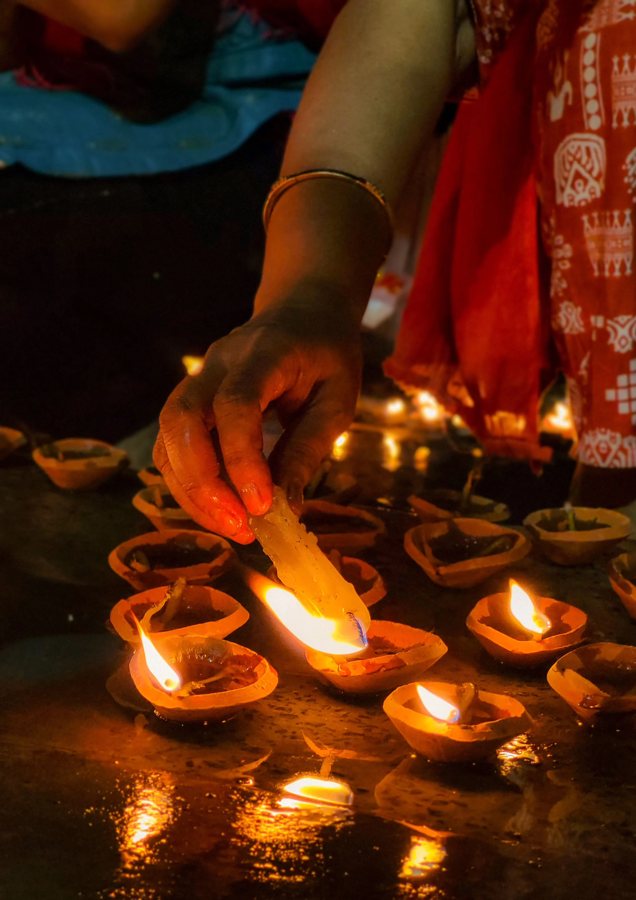
Ask ten people what Deepavali celebrates and you may get ten answers — and all of them can be right. A personal essay from SilverKris traces the festival through one writer's memories of West Bengal and a lifetime of travelling during the festive season, revealing just how varied — and far-reaching — the Festival of Lights really is.
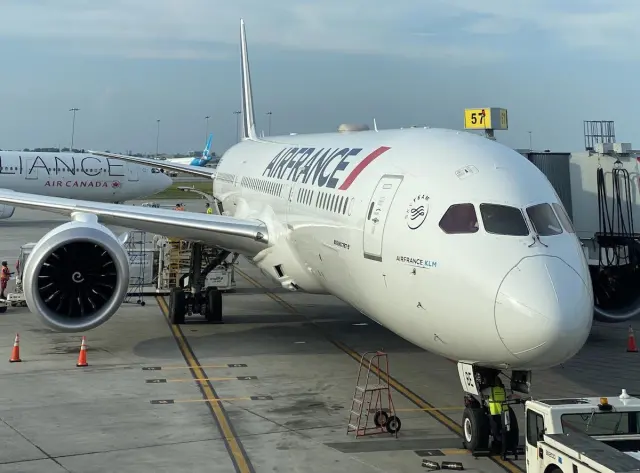
The name itself means "a row of lights" in Sanskrit, and the row is long. From an aircraft window, India's cities glow like clusters of fireflies in the festival weeks. But the light doesn't stop at the border: diaspora communities carry it to Singapore, Thailand, Dubai and cities across Europe and the Middle East, where skylines put on their own dazzling displays each year.
What surprises many travellers is how much the story changes by region. In the writer's home state of West Bengal, the festival takes the form of Kali Puja, honouring the fierce goddess Kali — dark, garlanded with skulls, her tongue out in shame upon realising she stands on her husband Shiva's chest — rather than the gentler deities worshipped elsewhere. The night before comes Bhoot Chaturdashi, effectively Bengal's Halloween, when families place 14 diyas (small oil lamps) at doorways and windowsills — one per forefather — so no wandering spirit finds a dark corner, and eat choddo shaak, a bitter dish of 14 kinds of leafy greens said to ward off what light cannot reach.
Head south or north and the legends shift. Northern India lights lamps for Rama's homecoming to Ayodhya after his victory in Lanka; the south puts Lakshmi, goddess of prosperity, centre stage. Mumbai adds its own flourishes: accountants open fresh ledgers in Lakshmi's name, gold is bought on Dhanteras the day before, and families play rummy and teen patti into the night — a tradition attributed to a legend in which Parvati declared that anyone who gambles on Deepavali will prosper all year (and abstainers risk coming back as donkeys).
Beyond the mythology, the essay's real subject is what the festival does to people. The writer recalls a childhood sparkler, a grandfather's warning from a doorway, a family home no one lives in anymore. Deepavali, they write, returns every year without asking permission, carrying both celebration and grief — and a simple, stubborn act: lighting a flame so that no corner of the house, the year or yourself stays dark.
Why does this matter to a traveller? Because timing a trip to India during Deepavali (usually October or November, depending on the lunar calendar) means seeing the country at its most atmospheric — lamps everywhere, sweets doing the rounds, card games spilling into the street, fireworks over the rooftops. And because knowing the regional variations makes you a better guest: what you'll witness in Kolkata will look nothing like what you'll find in Mumbai, Varanasi or Chennai. Wherever you land, expect warmth, noise and a small flame at the doorway.
SilverKris