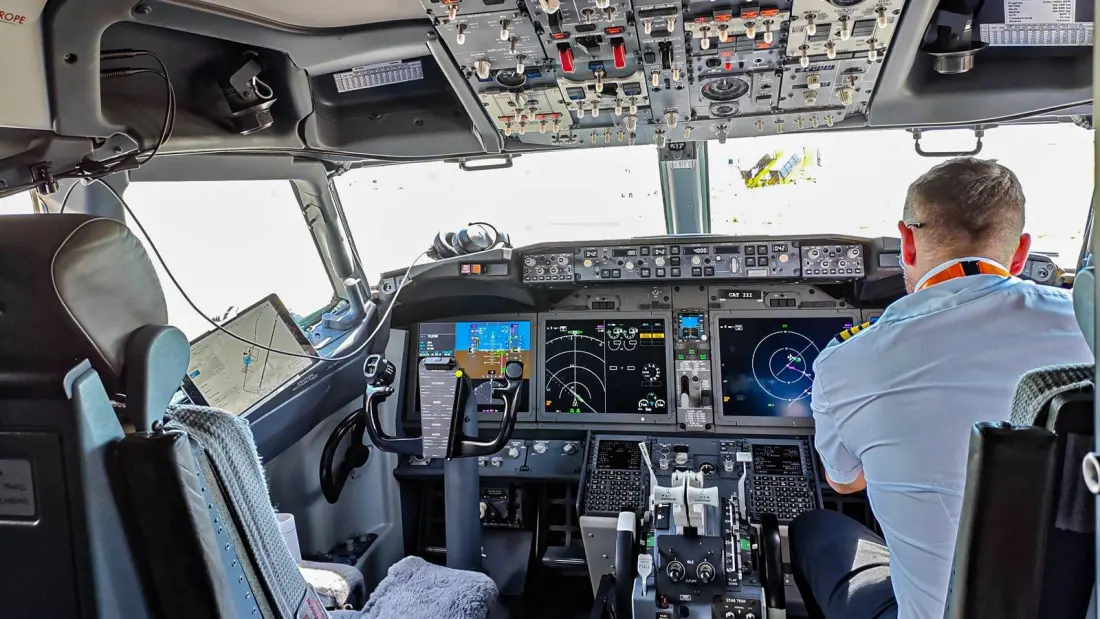
Step onto a 737 MAX flight deck and most of it looks reassuringly familiar to any pilot who cut their teeth on the earlier Next-Generation model. Same overhead panel, same yokes, same throttle quadrant. But behind that familiarity sits a flight deck that has been quietly rebuilt for the digital era — and the details are more interesting than most passengers waiting at the gate will ever realise.
The biggest change is what pilots actually look at. The six square display units that defined the 737NG since the late 1990s are gone, replaced by four huge 15.1-inch landscape LCD screens from Collins Aerospace, using architecture borrowed from the 787 Dreamliner. Everything that once demanded its own gauge or panel space — flap position indicators, backup clocks, engine readouts — now lives on unified high-resolution glass. The result is less visual clutter and faster scanning of critical data during busy phases of flight.
The redesign goes beyond the screens. The landing gear handle and the standby flight display now sit in the central gap between the inboard displays, giving both pilots equal reach and sightlines during emergencies. The autobrake selector has moved forward on the lower console, directly in front of the thrust levers, which streamlines the sequence during rejected takeoffs or landings on wet runways.
Two new tools stand out for safety. The Vertical Situation Display shows a live side-on profile of the aircraft's altitude against terrain, glidepaths and waypoint constraints — handy on steep descents into mountainous airfields. Many operators also fit a Collins Head-Up Guidance System at the captain's seat, projecting flight path and runway alignment cues onto a glass plate in the pilot's line of sight, enabling low-visibility Category III approaches without losing sight of the outside world.
Why not redesign the whole thing from scratch? Because a shared type rating between the NG and the MAX is worth serious money. Airlines can roster pilots across both aircraft after short differences training — computer-based modules plus targeted simulator sessions — rather than expensive full type qualification. Overhead panels, checklists and basic flows stay identical, so thousands of hours of muscle memory transfer directly. For carriers juggling pilot shortages and simulator slots, that commonality is as valuable as any aerodynamic improvement.
Under the skin, the MAX has also gone partly fly-by-wire: roll spoilers are now electronically controlled rather than cable-and-hydraulic, cutting weight and sharpening roll response. And after the 2020 recertification, the MCAS system runs on dual cross-checked angle-of-attack sensors, throws an alert if inputs diverge by more than 5.5 degrees, and can never override the pilot's control column.
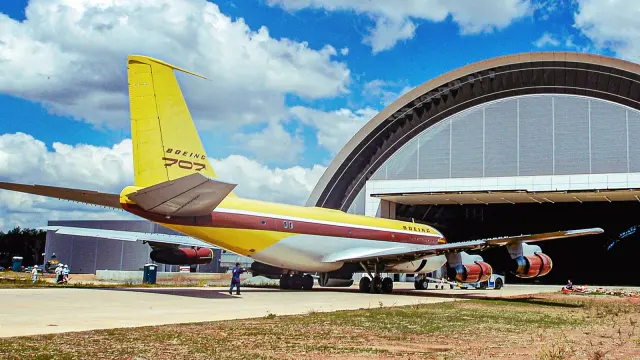
For travellers, this is the aircraft likely beneath you on countless short-haul routes across Europe and North America — a design that proves a 1960s airframe can carry 21st-century avionics without forcing the industry to retrain every pilot who flies it.