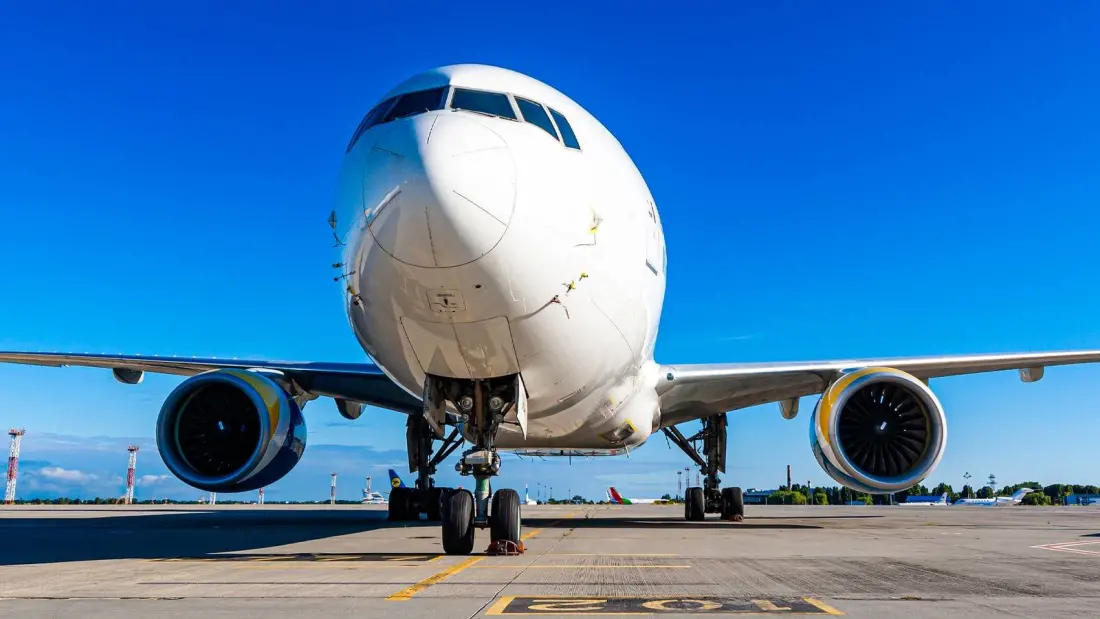
On a long-haul Boeing 777-300ER flight, the pilots who land the plane may not be the ones who took off. Somewhere over the mid-Atlantic, one of them is flat out in a darkened bunk tucked into the ceiling cavity above the forward business class cabin — and most passengers have no idea it's there.
The Overhead Flight Crew Rest module occupies the otherwise unused crown of the fuselage between Door 1 and the forward cabin frame. Access is deliberately low-key: an armoured, keypad-locked door near the forward galley opens onto a steep ladder-style staircase leading up into the aircraft's ceiling. Inside, layouts vary by airline — typically two reclining seats plus two lie-flat bunks — all squeezed into a space under 1.8 metres high, with heavy insulation to dull the roar of the GE90 engines below.
To qualify as a Class 1 rest facility under FAA rules, this attic suite has to meet strict standards: bunks at least 198cm long and 76cm wide, independent climate controls, dimmable lighting, smoke detectors, dedicated interphones to the flight deck, and per-bunk emergency oxygen masks linked to their own supply. Full-body harnesses keep sleeping pilots strapped in during clear-air turbulence. There's even a backup escape hatch in the floor, letting crews drop into the cabin if the main staircase is blocked.
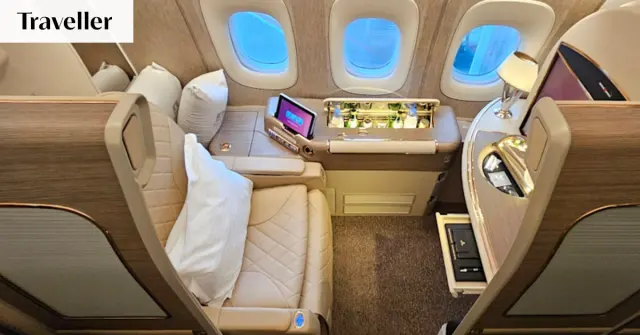
The economics are just as interesting as the engineering. Older widebodies put crew bunks on the main deck or in cargo containers, eating into revenue space. Moving rest quarters into the ceiling frees up enough floor area for four to six extra business class suites — worth millions per airframe annually across a large long-haul fleet.
Crewing rules scale with flight length. Routes over roughly 12 hours carry three pilots; anything beyond 14 hours gets a four-pilot heavy crew, effectively two full teams rotating between the cockpit and the bunk room. Dispatchers structure cruise into rest blocks aligned with sleep cycles — no audible alarms allowed, so sleeping pilots wake to vibrating wrist devices or quiet interphone calls. The trickiest moment? Waking up. Sleep inertia can impair reaction times for up to 20 minutes, so UK CAA guidance requires a 30-minute buffer of hydration, data review and handover briefings before a pilot touches the controls again.
For travellers, this is a quiet reassurance: the crew landing your plane after 15 hours aloft has been managed like any other critical system, with certified sleep, structured rotations and recovery time built in. And as airlines push toward 19-hour nonstops on the 777X and A350-1000ULR, regulators are already weighing whether these ceiling suites need better soundproofing, more bunks or circadian lighting. The humble 777-300ER loft set the standard they'll have to beat.