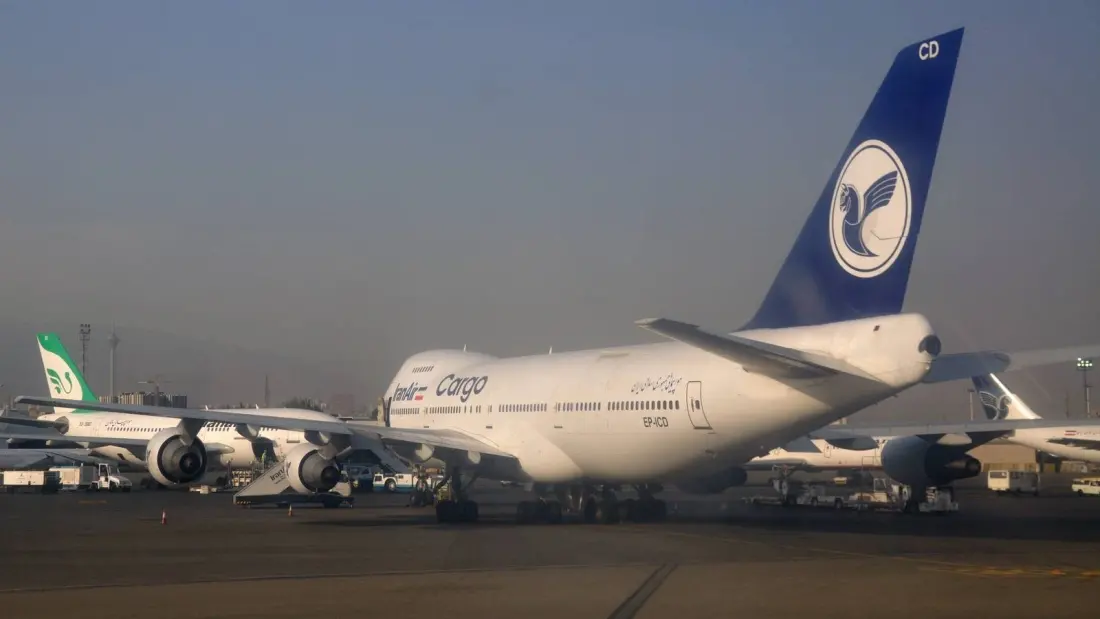
Iran Air's last remaining Boeing 747 is out of service, and the work being done to it is unlike anything the country has attempted before. The aircraft, a 747-200 Combi registered EP-ICD, flew its final trip into Tehran's Imam Khomeini International Airport on 18 September and will now spend months in heavy maintenance after crossing the 20,000 flight-cycle threshold that triggers a D-Check — the deepest inspection regime in commercial aviation. Per aeroTELEGRAPH, this is the first time work of this scale has ever been carried out inside Iran.
The airline's CEO, Taher Abdolhai, announced the plan after a press conference, initially estimating the job at 1.5 to two months. An updated Iran Air schedule, though, stretches that closer to six months, with a hoped-for return to the sky in 2026. Given sanctions restricting access to Boeing parts and technical support, hitting even that timeline is far from guaranteed. Abdolhai was candid about the wider picture: the carrier is dealing with fleet limits, mounting debts, fewer international routes, and a return-to-service pipeline that depends entirely on sourcing parts, money, and meeting safety requirements.
The jet itself has had a remarkably varied career. Built in 1988, it spent nearly two decades with Dutch carrier Martinair — sometimes in all-cargo configuration, sometimes packed with 530 economy seats, including a stint leased to Qantas for mixed passenger-and-freight flying — with brief stops at Ankair in Turkey before joining Iran Air in 2008. Now 38 years old, it has been flying pure cargo for the Iranian flag carrier, most recently shuttling between Tehran and Tianjin in China, with occasional runs to Macau during a busy August.
The maintenance saga sits against a bruising backdrop for Iranian aviation. The sector has been hit this year by military attacks and fresh sanctions; EP-ICD itself was stored in Tehran for months after the late-February attacks before resuming flights via Yerevan in May. For anyone tracking Iran Air's international connectivity — already thin — the grounding of its only 747 further narrows options until the aircraft returns.
Why does this matter to travellers? Iran Air is one of the few bridges between Iran and the outside world, and every grounded airframe means fewer seats, longer routes through hubs like Istanbul or Yerevan, and more uncertainty for anyone planning a trip to the country. The story is also a window into how one of the world's more isolated airlines keeps 40-year-old Western-built jets flying at all. Whether EP-ICD lifts off again in 2026 will say a lot about the carrier's near-term future.