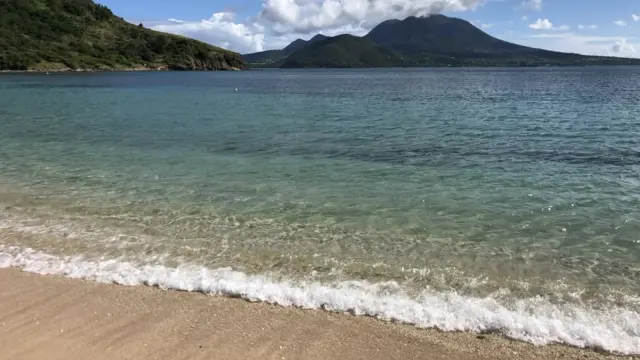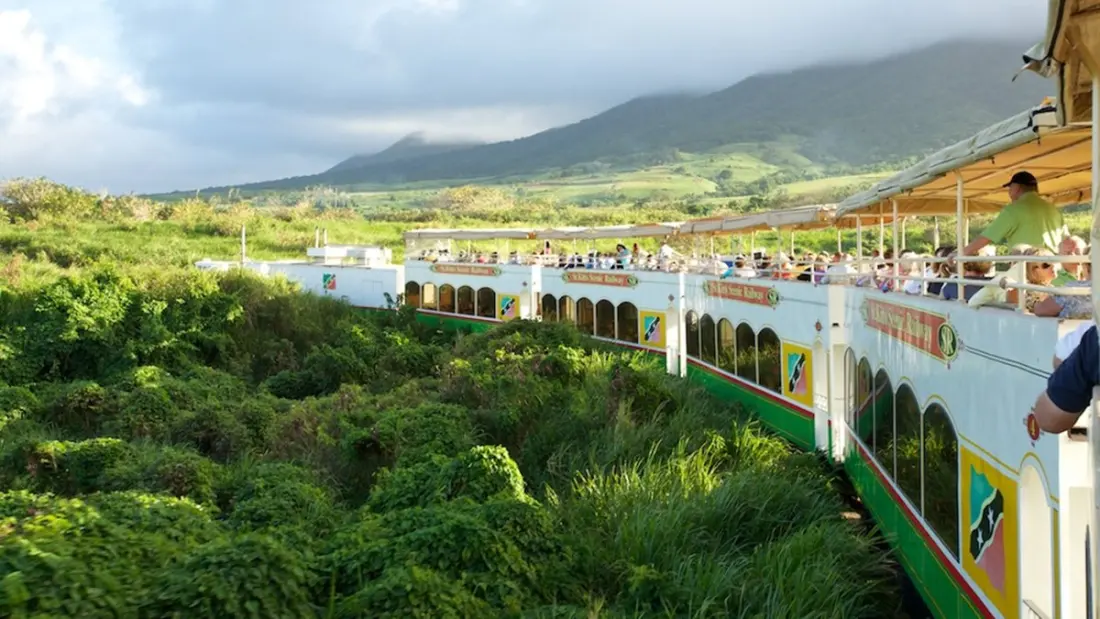
St. Kitts has an odd claim to fame: a narrow-gauge railway built to haul sugar cane, now ferrying tourists with cameras and rum punch along the island's coast. The St. Kitts Scenic Railway runs about two hours on tracks first laid in 1912, hugging the northeastern shoreline where the ocean sits just beyond the rails and the green cone of Mount Liamuiga, a dormant volcano, fills the view inland.
The train itself is a double-decker setup. The open-air upper deck puts you above the vegetation for wide shots of cliffs, villages and sea, while the air-conditioned lower parlor offers rattan chairs, vaulted windows and a bar. Drinks are included — rum punch, frozen daiquiris, juices and water — and a tour director narrates the route, with the railway's own three-voice choir performing Caribbean folk songs and hymns along the way.
The scenery doubles as history. Steel bridges carry the line over deep ravines known as ghuts, and abandoned windmills and estate chimneys dot the fields — leftovers from the sugar economy the railway once served. Construction started in 1912 alongside a central factory near Basseterre and finished in 1926, moving cane from outlying estates until the industry shut down in 2005. Passenger trips began in 2003, two years before the last sugar train rolled in, giving the line its second life.
The standard excursion isn't all rail: you also get roughly 12 miles by sightseeing bus, making the whole outing about three hours. The road leg covers the island's other side, with stops or passes near St. Paul's Village, Old Road Town and Brimstone Hill Fortress — though entry into the fortress depends on your specific package, so read the inclusions carefully. A Rail and Sail option adds about an hour more, pairing the train with a catamaran cruise along the west coast past Brimstone Hill, complete with open bar and light snacks. It's the smart pick if you want to photograph the island from both land and water in one go.
For cruise passengers, bookings go through the cruise line; independent visitors can contact the operator directly. A good strategy if you're staying on the island: take the train early in your trip as an orientation, then use later days to revisit whatever caught your eye — the rainforest trails, the fortress, or the villages you rolled past at 20 miles an hour.