Twenty-two ancient Greek objects — pottery from Athens and Corinth plus a small bronze statuette — are back on home soil. Israel formally returned them to Greece on 13 October 2026 at a ceremony in the National Archaeological Museum in Athens, the first time Israel has ever repatriated archaeological artefacts to Greece.
Israeli Ambassador Pninat Yanay presented the collection to Greek Culture Minister Lina Mendoni, joined by Amir Ganor, who heads the Antiquities Theft Prevention Unit at the Israel Antiquities Authority. The pieces were seized back in 2020, when a joint operation involving the Israel Antiquities Authority, police and tax authority targeted a suspected illegal antiquities operation — searching a gallery, warehouses and apartments across the Greater Tel Aviv area and turning up thousands of objects from multiple countries.
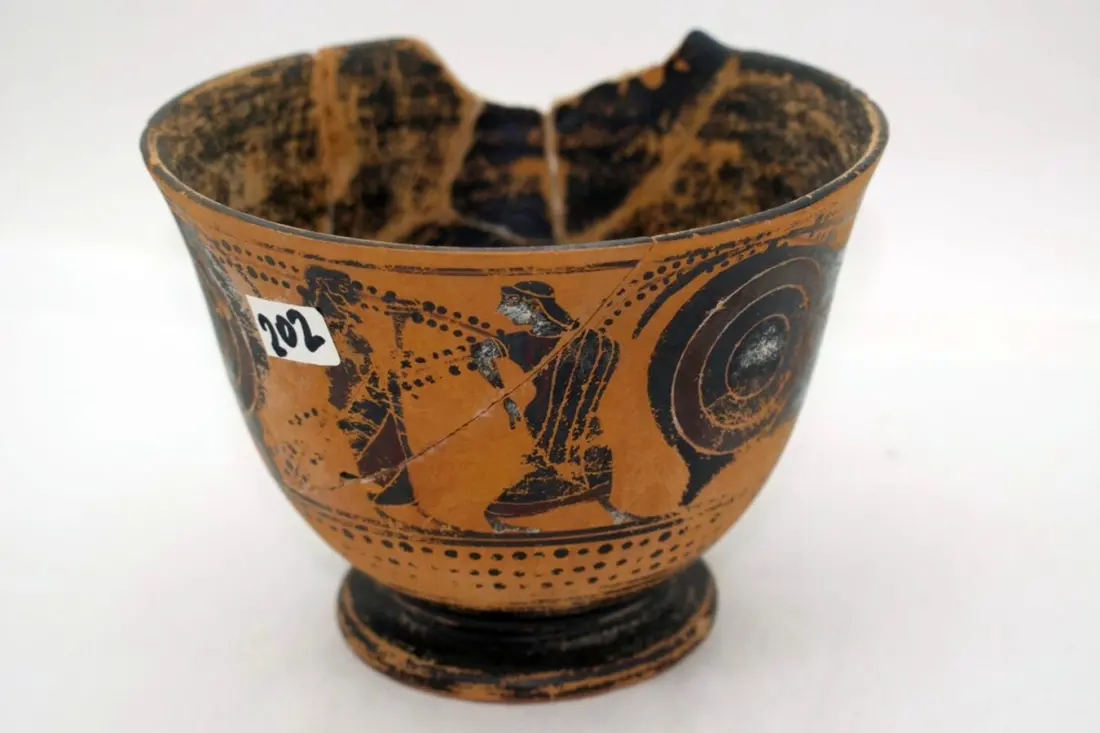
The Greek haul is a genuinely interesting slice of ancient craft. Fifteen vessels come from Attic workshops around Athens: eleven black-figure pieces, three red-figure and one black-glazed. Black-figure pottery paints dark figures on the clay's natural red surface with incised details; red-figure flips that, leaving figures in the clay's own colour against a dark ground. Six more vessels were made in Corinth, a major pottery centre in its own right, and date to the earlier Archaic period. Overall the collection spans roughly 700 to 320 B.C. — the Archaic and Classical eras. The vessels were everyday and ritual objects: oil and drink containers, grave offerings, decorated with mythological scenes and geometric patterns.
The bronze female statuette is the wildcard. Greek officials say it needs further testing before its age and authenticity can be confirmed, so for now it's classed as unverified. It's also worth knowing that authorities never established how these objects left Greece in the first place — who removed them or how they reached the market. The repatriation confirms they're home, but not the full smuggling route.
The ceremony isn't a one-off. Greece and Israel are building a broader cultural-heritage partnership: their enforcement agencies already took part in an international workshop in September 2026 on sharing intelligence, spotting looted objects and tracing smuggling routes, and the two countries are expected to sign a memorandum of understanding on heritage protection soon — terms not yet public.
Why should travellers care? If you're heading to Athens, pieces like these usually end up on display or in study collections at the National Archaeological Museum — one of the world's great repositories of Greek antiquity, and a short walk from the city centre. Seeing black-figure and red-figure pottery side by side is one of the best quick lessons in ancient Greek art you can get: the Attic pieces show Athens at its ceramic peak, while the Corinthian vessels let you compare a different regional style from the same era. It's also a reminder that museum collections everywhere are under scrutiny — restitution cases like this one are reshaping what you see in galleries, and where. Expect more stories like this as Greece pushes harder for the return of its scattered heritage.
Colombia One