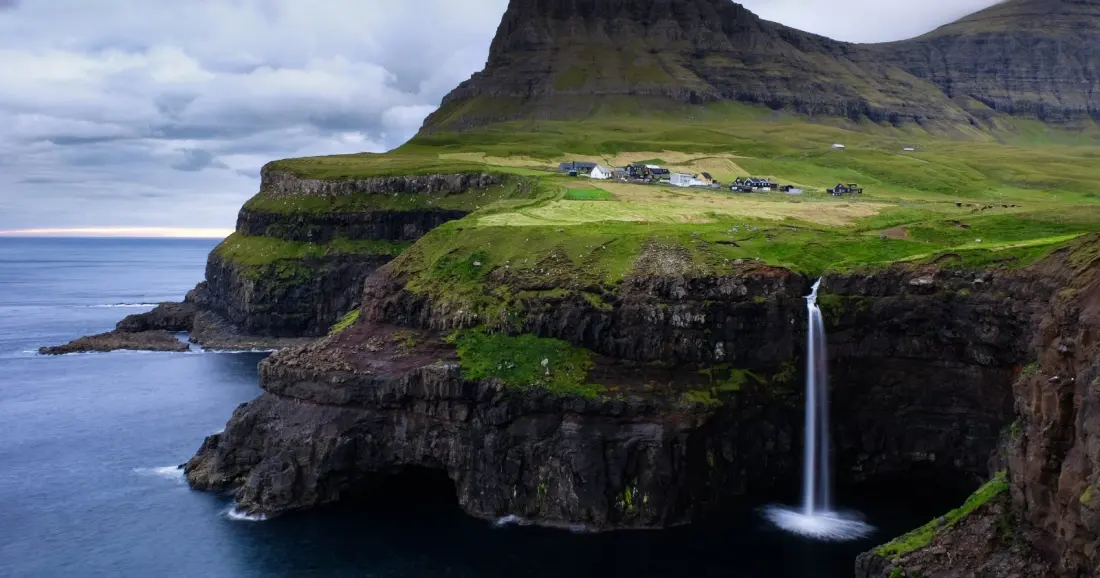
In 2016, the Faroe Islands had a problem: the North Atlantic archipelago was invisible on Google Street View. Google had mapped Mont Blanc and spots above the Arctic Circle, but this remote cluster of 18 islands between Iceland and Norway — home to roughly 50,000 people and 70,000 sheep — remained a blank on the world's default map.
Rather than lobby endlessly, the local tourism board got creative. Durita Dahl Andreassen of Visit Faroe Islands launched Sheep View 360 in July 2016, fitting free-roaming sheep with solar-powered 360-degree cameras in custom harnesses. Starting with five animals, the project captured GPS-tagged panoramas as the sheep grazed and wandered — footage uploaded straight to Google Maps.
The logic was simple. "We have more sheep than people; they are everywhere in the Faroe Islands, they walk the streets, so they were an easy solution," said Guðrið Højgaard, director of Visit Faroe Islands. Even the country's name, meaning Sheep Islands, pointed to the obvious workforce.
What makes the campaign a standout isn't just the gimmick — it's the results. The whole thing cost about $200,000 and, paired with a petition and the hashtag #wewantgooglestreetview, generated an estimated two billion media impressions. Within two months, Google responded on its official blog with obvious delight: "When we herd about the Sheep View project, we thought it was shear brilliance," wrote a Google Maps program manager.
Then came the practical payoff. In 2016 Google loaned the Faroese a Street View Trekker and 360-degree cameras through its camera loan program, letting residents film terrain no car could reach. Official Street View coverage of the islands went live in 2017 when the Google Maps team visited. Sheep View 360 also racked up marketing awards, including the top Travel & Tourism prize at the 2017 World Media Awards, finishing second overall — ahead of Airbnb and Marriott.
The bigger lesson, and the reason this story still gets told, is about how a small place gets noticed. The Faroese didn't just ask to be included; they built a scruffy working version of the thing they'd been denied and let the images do the arguing. For travellers, the happy ending is that one of Europe's most dramatic walking destinations — grass-roofed villages, sea cliffs, and hiking routes — is now fully explorable on Street View before you ever book a flight.