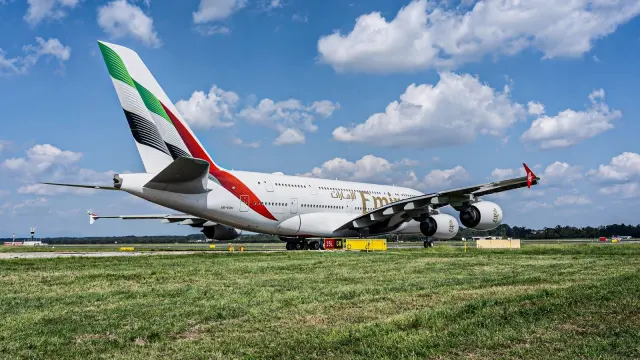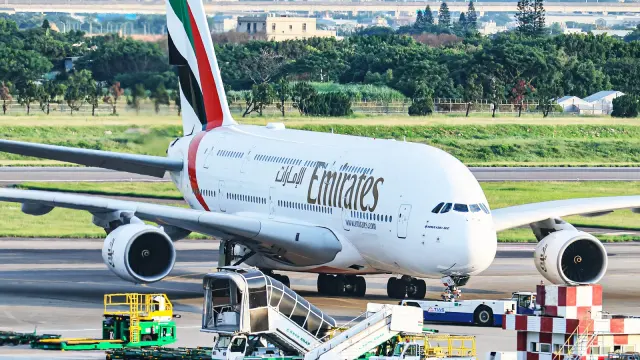
The Airbus A380 is enormous — and so is the team it takes to run one. On a normal long-haul flight, somewhere between 20 and 30 crew members are on board. The legal floor is 16, set not by seats but by the number of emergency exits, and in practice almost no airline flies the superjumbo anywhere near that bare minimum.
Start with the flight deck. The A380 was designed as a two-pilot fly-by-wire aircraft — the old Flight Engineer role was long gone by the time it entered service. So the baseline is just a Captain and First Officer. What pushes the number up is flight time. Under FAA-style rules, duties of up to eight or nine hours need only two pilots; beyond that a relief pilot is added, and flights over roughly 13 hours — think Dubai to Sydney — require four, so crew can rotate through dedicated rest bunks. British Airways crews, for instance, report staffing its A380s with 22 cabin crew plus two to four pilots.
Cabin crew numbers hinge on seat count. The familiar rule of thumb is one flight attendant per 50 installed seats, so a theoretical 853-seat A380 would need at least 18. Singapore Airlines runs the lightest configuration at 379 seats, while Emirates packs in up to 615. Regulators also treat each deck of a double-decker as its own zone and require attendants to be spread across the cabin — so airlines can't skimp on economy and pile staff into business class. When the seatbelt sign comes on, everyone must return to their assigned door station.
Then there's duty time. Cabin crew are capped at around 14 scheduled hours under FAA rules, with one to three extra attendants required as flights stretch toward 20 hours. That's why ultra-long-haul sectors often carry augmented crews even if the headline cabin count stays the same.
Here's the twist: almost none of this is actually governed by the FAA or EASA, because no A380s are based in the US and only a handful in Europe. More than half the world's fleet is registered in the UAE, where the General Civil Aviation Authority sets the rules — and its framework, built around Dubai's 24/7 hub waves and brutal time-zone jumps, can allow lower minimums than Western regulators would.
In reality, every A380 operator is a premium-heavy mainline carrier, so they staff well above minimums: roughly one attendant per 35–50 economy passengers, one per 12–18 in business, and as rich as one per three to six in first. Etihad even advertises a dedicated attendant for its Residence apartment. Emirates typically runs about 26 crew per A380 flight, rising to around 28 with relief pilots on marathon routes like Sydney.
Why should a traveller care? If you love the A380 — and plenty of flyers book around it for the quiet upper deck and space — you're getting one of the most generously staffed aircraft in the sky, especially up front.