MSC Cruises has long been a European giant with a modest American following. That's about to change. In an interview aboard the line's newly unveiled MSC World Asia, CEO Gianni Onorato said the company aims to carry 5 million North American passengers a year within a decade — more than double its current number — and wants North Americans to make up 50% of its customer base, up from roughly 30-35% today.
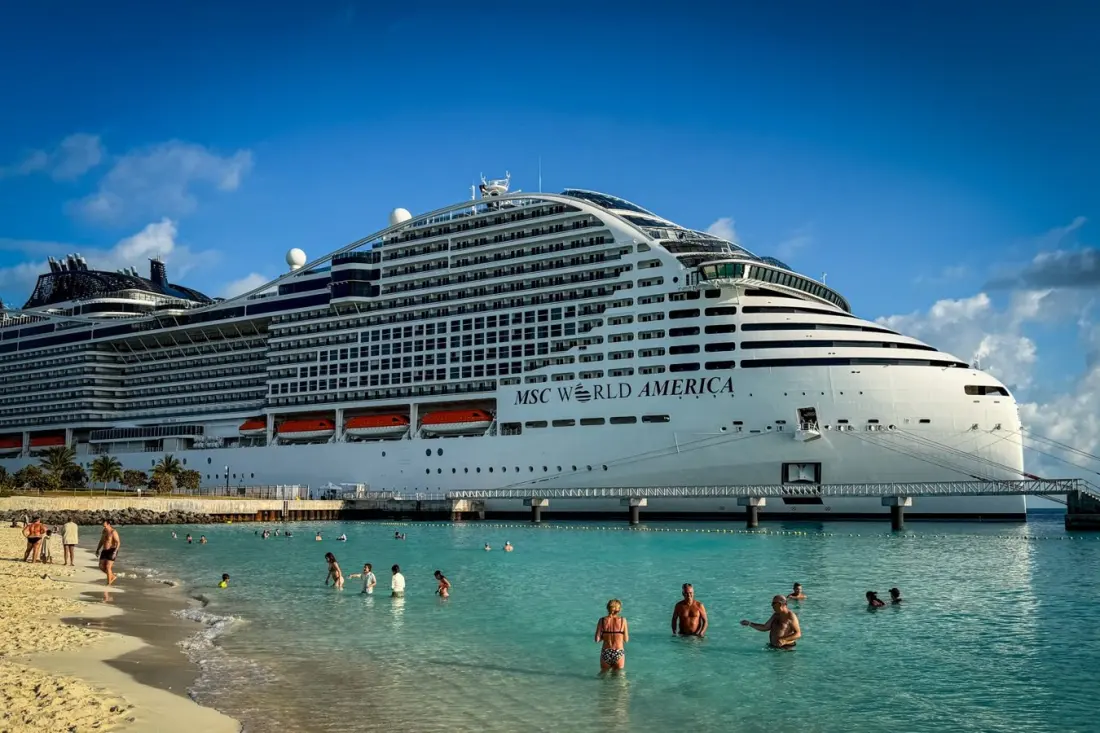
The plan leans heavily on new ships. MSC World Asia, at 216,638 gross tons one of the largest cruise vessels ever built, will sail the Mediterranean first before moving to North America late next year for seven- and 14-night winter itineraries in the Southern Caribbean from Martinique, Guadeloupe and Barbados. It joins its sister ship MSC World America, already sailing from Florida, and MSC World Atlantic, due in late 2027 from Port Canaveral. These World Class ships carry nearly 6,800 passengers each — the first MSC vessels to rival Royal Caribbean's biggest in scale and amenities.
By 2027, MSC expects nine ships in North America: seven from U.S. ports plus two from Caribbean ones. That's a striking jump from 2017, when it had just one ship sailing year-round from the U.S. The expansion also includes the line's first Alaska season, which began in May, and its first sailings from Galveston, Texas, launched in December. Beyond ships, MSC has poured money into port infrastructure and Ocean Cay, its private marine reserve in the Bahamas.
For travellers, the strategy has a second layer: MSC's dominance in Europe makes it unusually useful for Americans sailing there. The line boards passengers in 10 Mediterranean ports — including secondary cities like Marseille, Genoa and Naples — with departures every day of the week, more options than any North American cruise brand offers in the region. Naples, notably, now has daily nonstop flights from the U.S. on United and Delta, making an Eastern Mediterranean cruise easier to reach without flying into Rome.
Globally, MSC is targeting 10 million passengers a year within a decade, up from just over 5 million today. Nine new ships — five more World Class vessels by 2031 and four smaller ships arriving between 2030 and 2033 — will lift capacity by nearly 50%. The line is also growing in Asia, with a second ship heading to Singapore-based sailings from late 2028. Onorato said more U.S. homeports could follow eventually, though not before 2030.
Why should this matter to you? More MSC ships in North America means more competition in the Caribbean and Alaska, which typically pushes prices down across the board. And if you've never considered MSC — historically a European-style line with a different onboard vibe than Carnival or Royal Caribbean — the new World Class ships are explicitly designed for American tastes. For value-focused cruisers and anyone flying to Europe for a Mediterranean sailing, the widening choice of embarkation ports alone is worth a look.