Istanbul's Atatürk Cultural Centre — the striking opera house and concert hall on Taksim Square — recently staged an evening that jumped centuries in a single programme. Built around a corporate anniversary for Turkish construction group Limak, the event turned out to be a genuinely interesting experiment in blending history, music and technology, and it says a lot about what Istanbul's cultural scene is capable of right now.
It opened with an exhibition of repurposed old doors, each one painted by an artist to represent a different project from the company's history. The idea works because a door is such a loaded object: transition, opportunity, a new chapter. Rather than being scrapped, the salvaged doors became canvases — everyday objects given a second life as visual storytelling.
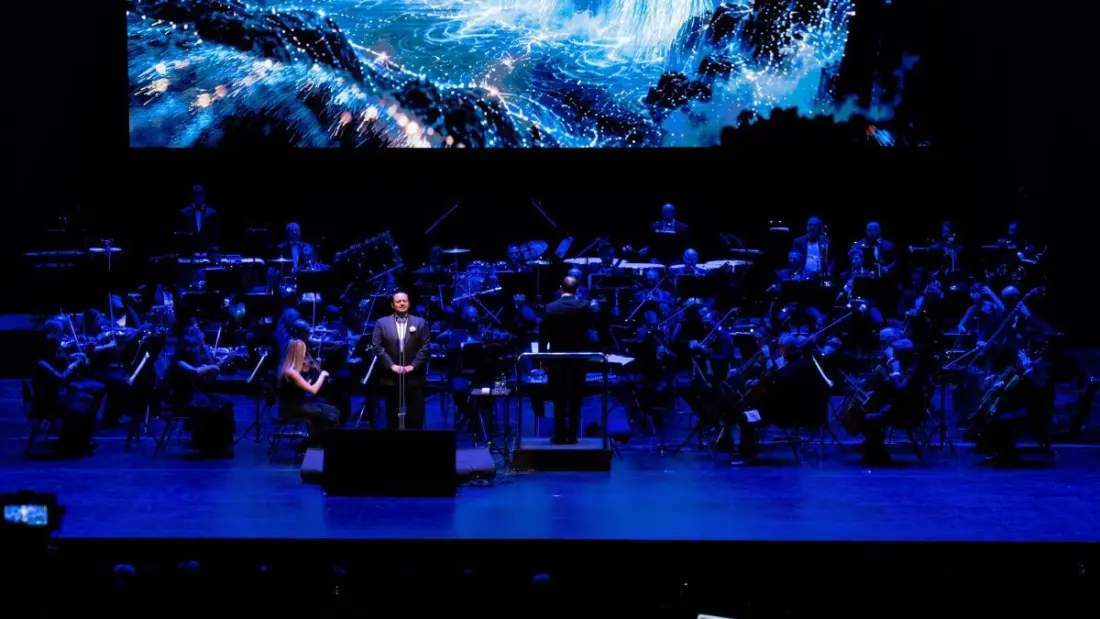
Then came the music. The Limak Philharmonic Orchestra, directed by tenor Murat Karahan, performed much-loved Turkish songs, including pieces associated with Zeki Müren, the iconic singer whose voice still looms large over Turkish popular memory. Karahan's tenor gave the familiar melodies both polish and emotion, and hearing them in a concert-hall setting rather than on a old radio or a family recording gave the songs a fresh frame. For visitors, this is a useful reminder that Turkish classical and popular music sits comfortably in Istanbul's grand venues — you don't need to hunt down a meyhane to hear it done well.
The real talking point, though, was experimental. An artificial intelligence-generated conductor virtually led the orchestra through one piece. Watching an algorithm take on a role built on human interpretation — dynamics, feel, the unspoken relationship between a conductor and musicians — prompted the question the evening seemed designed to ask: is AI becoming part of the creative process, or just another tool? The answer on the night was somewhere in between. The orchestra's emotional weight still came from the players and the songs themselves, but the AI moment hinted at collaborations we'll probably see more of in venues worldwide.
For travellers, the takeaway is twofold. First, AKM is worth your time beyond its architecture — its programme regularly mixes symphonic work, opera and, clearly, more experimental fare. Second, Istanbul keeps proving it can host events that bridge tradition and frontier tech in one evening: reclaimed doors, Zeki Müren classics and a virtual conductor under one roof on Taksim Square. If you're in the city and something similar is on the calendar, it's an easy way to experience several sides of Turkish culture at once. Check the AKM schedule before you go; ticketed events often sell out, and the building's terraces overlooking the square are worth arriving early for.
Daily Sabah Travel