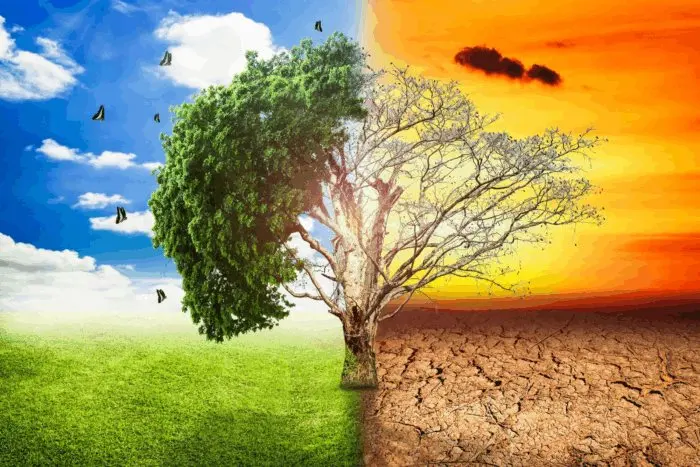
The United Nations Environment Programme has delivered a blunt verdict: the world can no longer keep warming below 1.5 degrees Celsius. Its Emissions Gap Report 2026, published on October 21, says the window for a clean pass of the Paris Agreement's most ambitious target has closed. The new goal is damage limitation — keep the overshoot small and temporary.
Under UNEP's best-case scenario, assuming serious action from 2025, peak warming lands at 1.7 to 1.8 degrees, with roughly even odds that temperatures drift back to 1.5 degrees or below by 2100. Getting there means cutting global emissions 18% by 2030 and 45% by 2035 against 2025 levels — about 5.7% a year — plus removing some 320 gigatons of CO2 from the atmosphere this century. Current national pledges fall far short, promising only 5-8% cuts by 2030. On today's policies, the report projects up to 2.8 degrees of warming; even full delivery of existing commitments points to 2.6 degrees, a worse outlook than last year's, partly due to the US exit from the Paris Agreement.
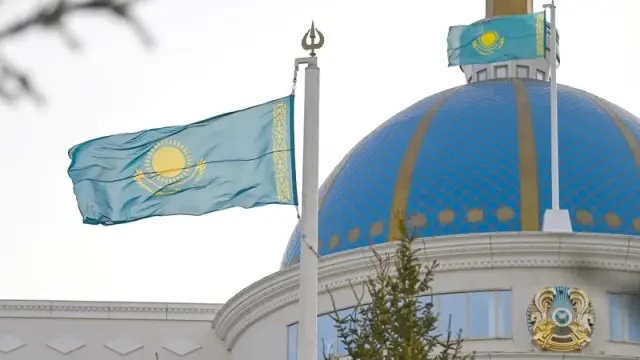
The report takes a specific interest in Kazakhstan, a country that illustrates the problem in miniature. Coal still generates 62% of its electricity and drives 40% of its greenhouse gas emissions; renewables supply just 7%. Kazakhstan's updated pledge targets a 17% emissions cut by 2035 versus 1990 levels (25% with international support), and in 2023 it became the first Central Asian nation to adopt a carbon-neutrality-by-2060 strategy. The government wants renewables at 15% of electricity by 2030 and half by 2050.
There are signs of movement. A platform called QaJET is being developed to channel climate finance toward priority projects, mostly in energy. The European Bank for Reconstruction and Development is helping with methane reduction and the country's emissions trading system, and Kazakhstan's pledge includes a 42% cut in oil and gas methane leaks by 2035. UNEP's broader message supports this direction: solar capacity has grown seven times faster than expected since 2015, yet fossil fuel supply keeps rising — clean technology alone won't fix the problem without a genuine shift away from coal, oil and gas.
Attention now turns to COP31 in Antalya, Türkiye, in November, where UNEP Executive Director Inger Andersen wants countries to raise their ambition and where the second Global Stocktake begins. Her framing was unambiguous: the point of return is now, not later. UN Secretary-General António Guterres put it another way — overshoot is not surrender, but only if the world treats it as a deadline to climb back down, not permission to keep rising.
For travellers, this is less about one destination than about the places that will change most: heat-stressed steppe cities like Astana, shrinking glacier-fed lakes in Central Asia, destinations where the cost of inaction is already visible. Kazakhstan's struggle to move beyond coal is a snapshot of the global energy transition — slow, financed unevenly, but with real targets now on the table. Source: The Astana Times