
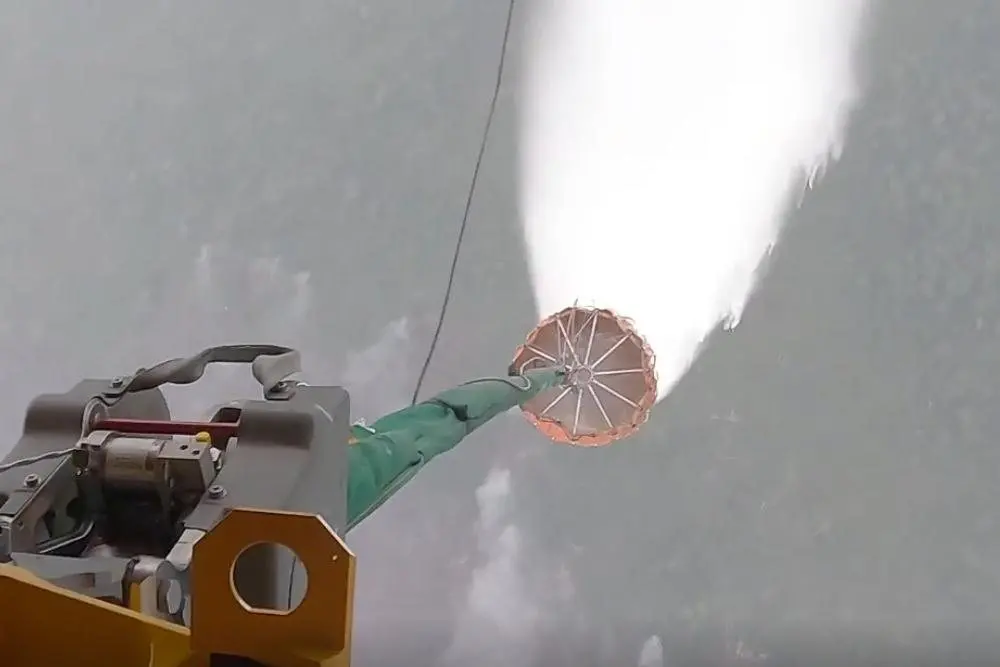
A Chinook helicopter from Japan's Self-Defense Forces has been filmed releasing water over burning forest in Kalimantan, the Indonesian section of Borneo. The video, released by the JSDF and picked up by news agencies, shows the heavy-lift helicopter mid-drop as part of a water bombing operation launched on a Wednesday to help Indonesian crews contain the fires.
It's a striking bit of regional cooperation. Japan's Self-Defense Forces rarely deploy overseas in a firefighting role, so a Japanese military helicopter dumping water over Borneo says a lot about how serious the situation has become. Kalimantan's annual fire season turns vast tracts of peatland and forest into smouldering ground fires that are notoriously hard to extinguish from ground level — water bombing from the air is one of the few effective tools.
For travellers, the relevance is immediate. These fires generate haze that drifts across Borneo, Sumatra and often neighbouring Singapore and Malaysia, pushing air quality into hazardous territory for weeks at a time. Flights get delayed or cancelled when visibility drops, outdoor activities are off the table, and even a beach break in Palangkaraya or a river trip on the Kahayan can turn miserable when the smoke settles in. If you're planning a trip to Indonesian Borneo — whether for orangutans at Tanjung Puting National Park, diving off the coast, or the Dayak culture of the interior — it pays to watch the fire season rather than gamble on it.
The timing matters too. Fires typically peak in the dry months, roughly July to October, and intensify dramatically in El Niño years when the peat lands dry out further. That's usually when you see international assistance like this ramp up.
The bigger takeaway: Southeast Asia's haze is a travel-planning issue as much as an environmental one. A Japanese Chinook dropping water over Kalimantan is the visible edge of a problem that repeats most years, and anyone heading to Borneo or nearby during the dry season should build in flexibility — refundable bookings, travel insurance that covers air-quality disruptions, and a plan B further afield if the smoke rolls in.
Who's this for? Anyone eyeing Indonesian Borneo, or transiting through Singapore, Kuala Lumpur or Jakarta between mid-year and October. The sights are worth it — but check the haze maps before you lock anything in.
Reported by Japan Today.