
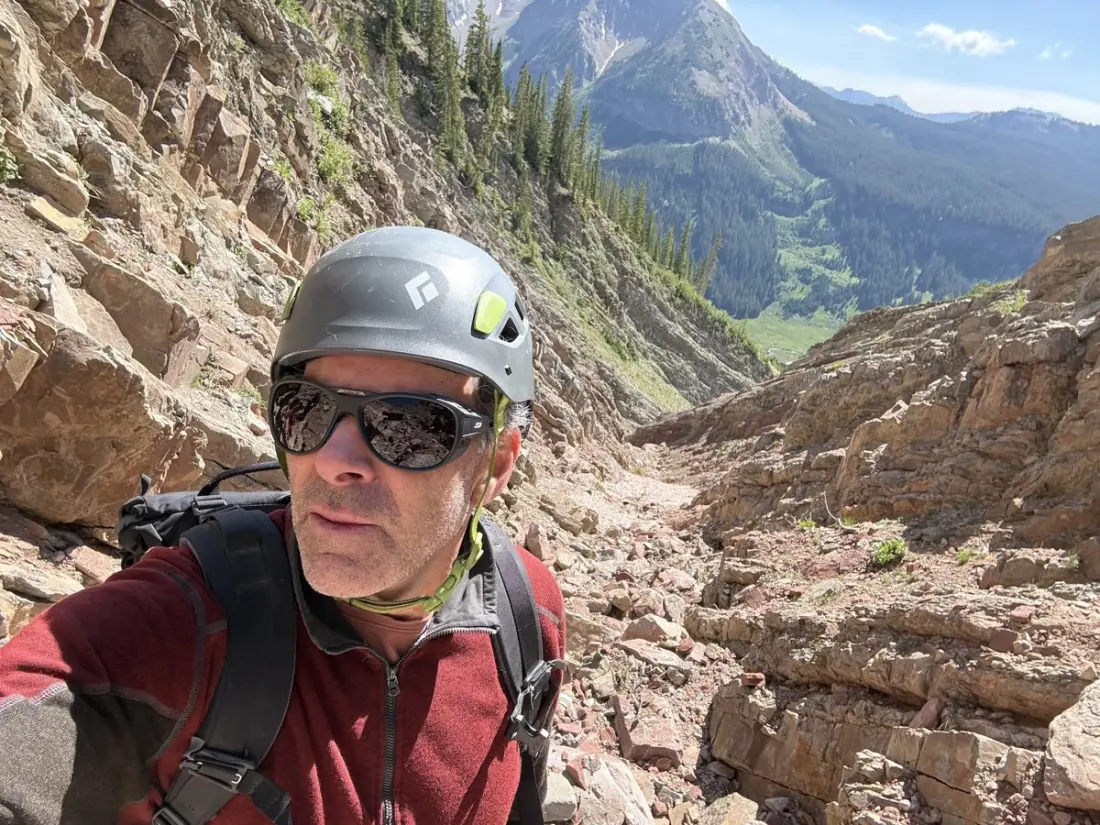
Glacier glasses haven't needed to change much — bright snow, thin air and brutal UV have stayed the same for decades. French brand Julbo has been making dedicated mountaineering eyewear since the 1950s, and its new Explorer 2.0 ($229.95 as tested, with the Reactiv lens) is a refresh of the classic formula rather than a reinvention. After testing at high altitude, reviewer Brian Riepe — who bought his first pair of Julbos in 1991 and still uses them — awarded the glasses Alpinist's Mountain Standards Award.
The spec list reads like a checklist for life above treeline. The temple tips adjust a full 360 degrees, so you can bend them around your ears and tuck the frames under a climbing helmet — Riepe found a quick tweak to the earpieces fixed an early problem with the glasses lifting mid-scramble. The frame uses Rilsan, a bio-sourced nylon, and up front there are vents to keep air moving and cut fogging. A flexible, shock-absorbing nose bridge keeps everything seated while you sweat, and the temples have a soft grippy coating that holds skin without pinching.
Coverage is the other big win. The oversized panoramic lens gives a wide field of view with no tunnel vision, and the removable side shields block glare from the sides and below without making the glasses feel claustrophobic. Every lens option blocks 100% of UVA, UVB and UVC. The kit includes the shields, a retention strap, a soft case and a cleaning cloth.
The interesting decision is between two lenses. The Reactiv is photochromic — it darkens and lightens with conditions, and Julbo embeds the tech inside the lens rather than coating it on, so it adapts faster and across a wider range than most rivals. The catch: photochromic molecules react to UV, and cold slows how quickly they clear. On cold, overcast days with a high UV index — classic alpine-start and shoulder-season glacier weather — the lenses can go darker than you want and stay that way. In hot weather they may never reach full dark tint. If you spend a lot of time in cold, flat-light, high-UV conditions, the fixed-tint Spectron lens might actually suit you better.
One more gripe: the included case is soft, while the 1991 original came in a hardshell — which is partly why it survived 35 years. Julbo sells its hardshell Adventure case separately for an extra $30, and Riepe argues it should just come in the box, especially if the glasses live in a duffel or checked luggage.
For anyone planning a trek or climb where snow glare is a real risk — think Patagonia, the Alps, Iceland or high-altitude routes in Nepal — this is purpose-built kit with few real competitors. The fit, helmet compatibility, adjustability and lens choice make it a top pick for expedition eyewear; just pick your lens based on where you'll actually use it.