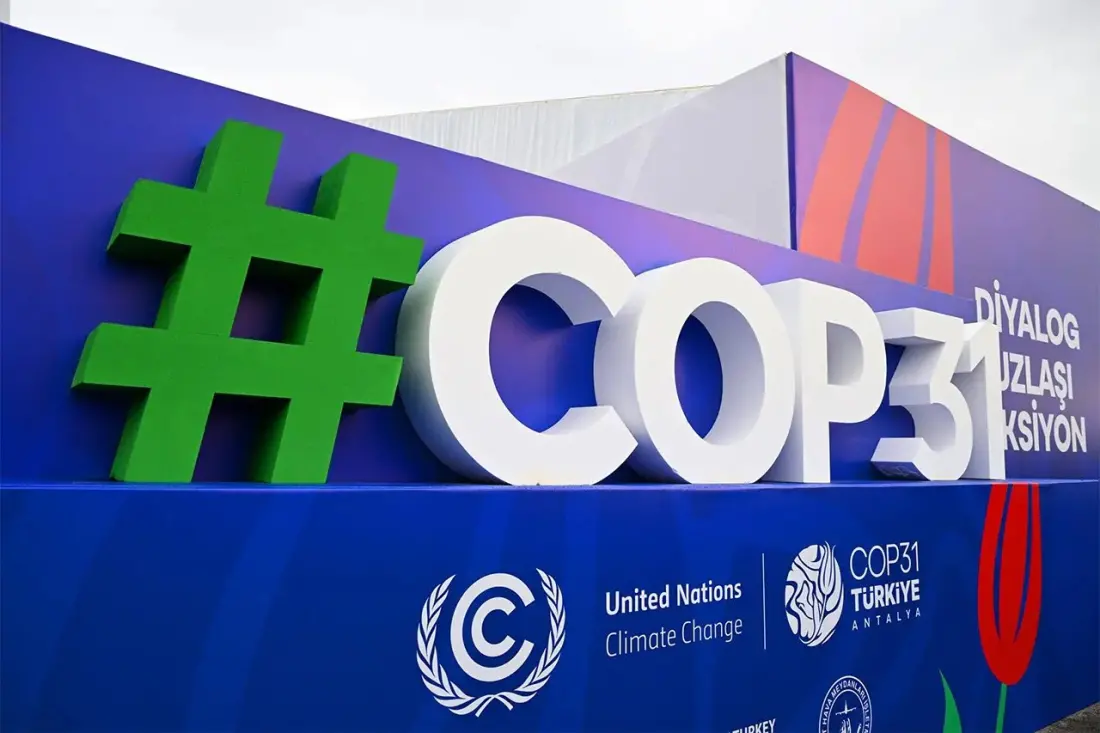
While the world's attention at COP31 in Antalya has been on the big-picture negotiations, Kazakhstan has quietly come away with something more tangible: roughly $1.2 billion in signed agreements for renewable energy and gas infrastructure, announced during the UN climate summit that opened on Nov. 9.
The headline projects are two wind farms — a 150-megawatt facility in the Turkistan Region and a much larger one-gigawatt development in the Kostanai Region — plus a plan to roll out 1.35 million smart gas meters with remote data transmission across the country. Kazakhstan's Ministry of Ecology also signed framework deals on methane leak detection in gas networks and on restoring degraded land in the Almaty Region, both structured under Article 6 of the Paris Agreement, which lets countries cooperate on emissions cuts through carbon markets.
The deals landed at a symbolic moment. On Nov. 18, countries launched the second Global Stocktake, a formal review of collective climate progress that runs until 2028 — two years before the 2030 deadline for global targets. UN climate chief Simon Stiell called it a major opportunity, noting that nearly 90% of countries have already folded the first stocktake's outcomes (tripling renewables, doubling energy efficiency gains, moving away from fossil fuels) into their national plans.
Kazakhstan's pitch at the summit went beyond individual projects. It unveiled its Country Climate Investment Platform, designed to connect government agencies, climate funds and private investors around a priority project pipeline, and promoted QaJET, a just-transition platform developed with the European Bank for Reconstruction and Development that aims to pull in about $20 billion and deliver at least 10 gigawatts of new renewable capacity by 2035. That is ambitious for a country where coal still generates nearly 60% of electricity. Under its updated national plan, Kazakhstan targets cutting emissions 17% below 1990 levels by 2035 (25% with international support) and carbon neutrality by 2060 — a transition the UNDP estimates will cost $71.8 billion.
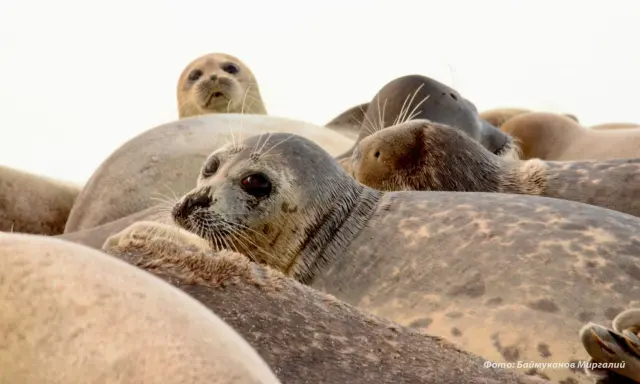
Water is the other thread. With Central Asia's glaciers, rivers and farmland under growing climate stress, Kazakhstan pushed for tighter regional coordination on transboundary water management, restoration of the Northern Aral Sea and protection of the Caspian ecosystem, and proposed a new UN-backed international water organization. It also submitted its second Biennial Transparency Report — one of the first three countries to do so — showing 2024 net emissions running 10.06% below 1990 levels.
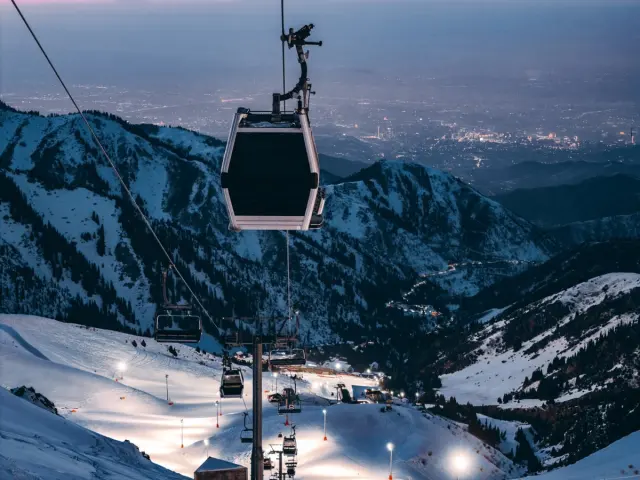
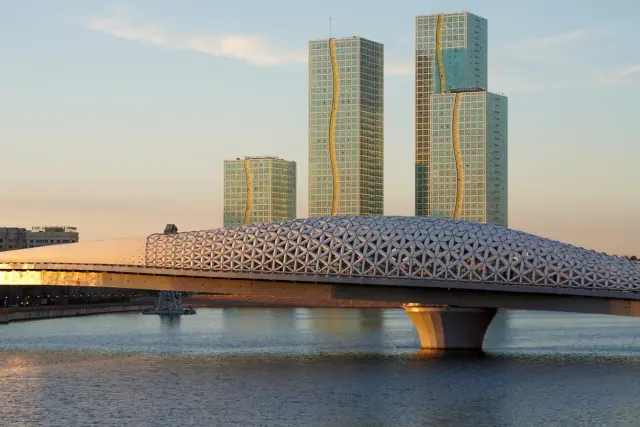
For travellers, this matters in slow-burn ways. Kazakhstan is opening up as an off-the-beaten-path destination — Almaty's mountains, the steppe landscapes of Kostanai, the historic Silk Road cities of Turkistan — and the push to clean up its power grid, fix gas infrastructure and restore degraded land could gradually change what visitors see and breathe in its industrial cities. The Aral Sea restoration work, meanwhile, touches one of the region's most sobering environmental sites, increasingly visited on trips through western Kazakhstan. The country's climate agenda, in short, is partly a tourism infrastructure story in the making.
Reported by The Astana Times.