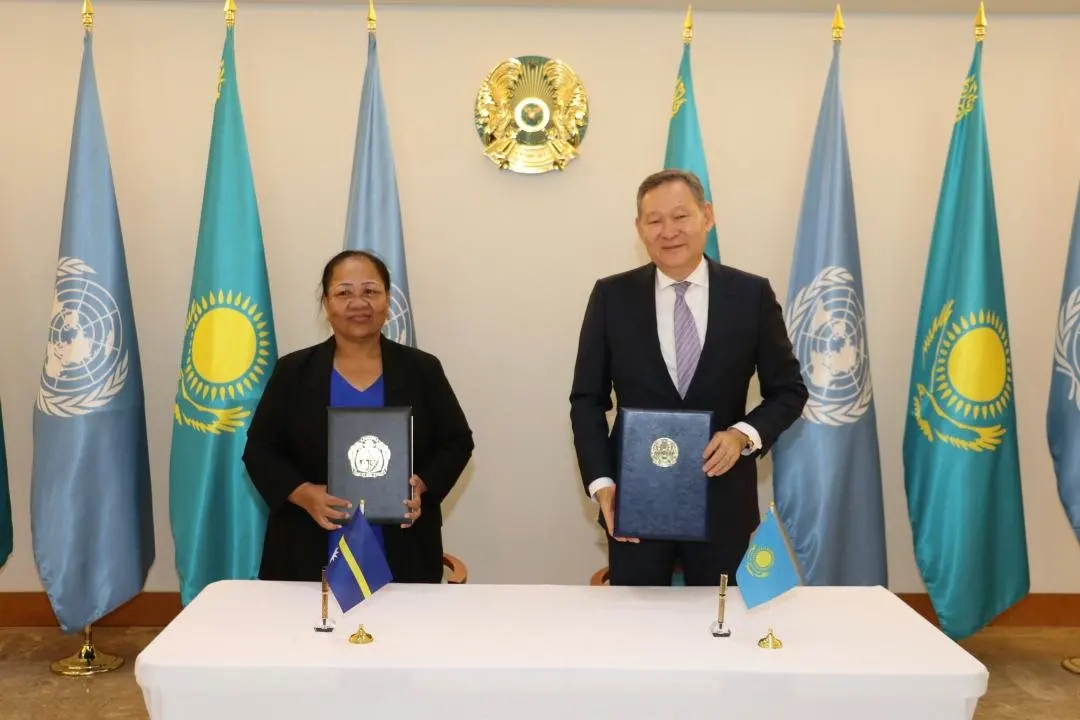
Kazakhstan has wrapped up a three-decade diplomatic project. On October 31, its Permanent Representative to the UN, Kairat Umarov, and Nauru's Permanent Representative Lara Erab Daniel signed a joint communiqué in New York, making the Pacific island nation the 195th and last UN member state to establish formal relations with Kazakhstan.
The document itself is standard diplomatic groundwork — mutual respect for sovereignty, non-interference, equality of states — but the talks behind it pointed to more practical cooperation: trade, sustainable development, digitalisation, human capital and closer links between Kazakhstan and other Pacific countries. Both sides also flagged the UN and other multilateral forums as the natural venue for keeping the dialogue going.
For a country that only joined the UN on March 2, 1992, weeks after independence from the Soviet Union, completing the full set is a symbolic milestone. Kazakhstan has since punched above its weight in the organisation — it held a non-permanent seat on the Security Council in 2017-2018 and has pushed initiatives on nuclear disarmament, regional security and sustainable development. Nauru, with a population of around 12,000, becomes the final name checked off a list that took 34 years to complete.
So what does any of this mean for travellers? On the surface, not much changes tomorrow — no new flight routes or visa announcements came out of the communiqué. But it's part of a broader pattern: Kazakhstan has spent years quietly widening its international footprint, easing entry rules for dozens of nationalities and positioning itself as the accessible gateway to Central Asia. A country that has relations with literally every UN member is a country investing in being easier to visit, trade with and talk to.
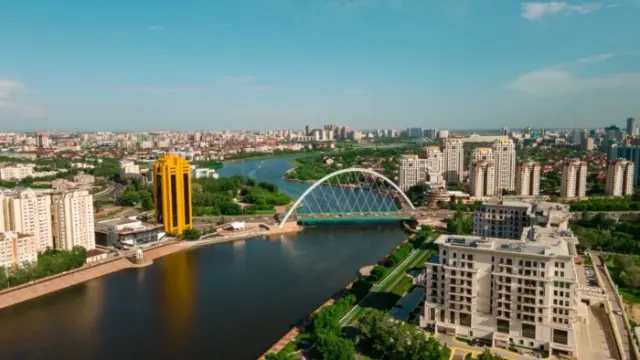
If you haven't considered Kazakhstan as a destination, the fundamentals are strong. Almaty gives you a handsome, tree-lined former capital at the foot of the Tian Shan mountains, with ski slopes at Shymbulak under an hour away. Astana, the futuristic capital, reads like an architecture exhibition — the pyramid-shaped Palace of Peace, the Khan Shatyr tent and the Bayterek tower. Further afield, the Charyn Canyon rivals anything in the American Southwest, while the vast steppe and the Baikonur Cosmodrome offer the kind of travel stories few destinations can match.
Practically, Kazakhstan is already one of the region's easier entries: many nationalities, including most of Europe, the UK and the US, can visit visa-free for up to 30 days, and English is increasingly common in the big cities even though Russian (and Kazakh) dominate. Costs remain friendly by European standards — hearty meals, fast trains between Almaty and Astana, and quality hotels all come in well under what you'd pay in Western Europe.
The Nauru signing won't appear in any brochure, but it captures where the country is heading: outward-facing, stable and actively courting the world. For anyone weighing a Central Asia trip, that's a useful signal. Source: The Astana Times.