The Mekong Delta, Vietnam's rice bowl, is changing how it grows food, and travellers passing through its waterways will notice the difference. On October 28, Oxfam in Vietnam launched the GORICE project with the People's Committee of Can Tho City, a five-year push to make rice farming in the delta low-emission and climate-resilient. Funding comes from Global Affairs Canada, and the work runs from 2025 to 2030 across Can Tho, An Giang and Vinh Long.
The numbers are substantial. By 2030, the project aims to directly reach around 48,200 people, half of them women, with a deliberate focus on rural women and ethnic minority communities. It plans to spread high-quality, low-emission practices across 180,000 hectares, cut carbon emissions by roughly 748,000 metric tons, and benefit about 100,000 consumers. In Can Tho alone, the initiative will roll out across seven communes — including Ho Dac Kien, Thuan Hoa, Dai Ngai and Thanh Phu — backed by about 15 billion VND in non-refundable aid.
Why the urgency? Can Tho's vice chairman Tran Chi Hung pointed to what the delta is up against: rising seas, saltwater creeping into fields, extreme weather and shrinking resources. Add climbing input costs and stricter export markets demanding traceability and lower emissions, and the old ways of farming rice simply aren't holding up.
On the ground, GORICE means smarter water and straw management, circular economy models where waste becomes a resource, demonstration farms showing what climate-smart rice looks like, and digital tools like electronic farm logs and traceable quality control. There's also a market side: better links to buyers, access to green finance and carbon markets, and training in low-emission techniques. Oxfam's Pham Quang Tu added that shifting consumer behaviour and raising the profile of women, youth and ethnic minorities are part of the plan, not an afterthought.
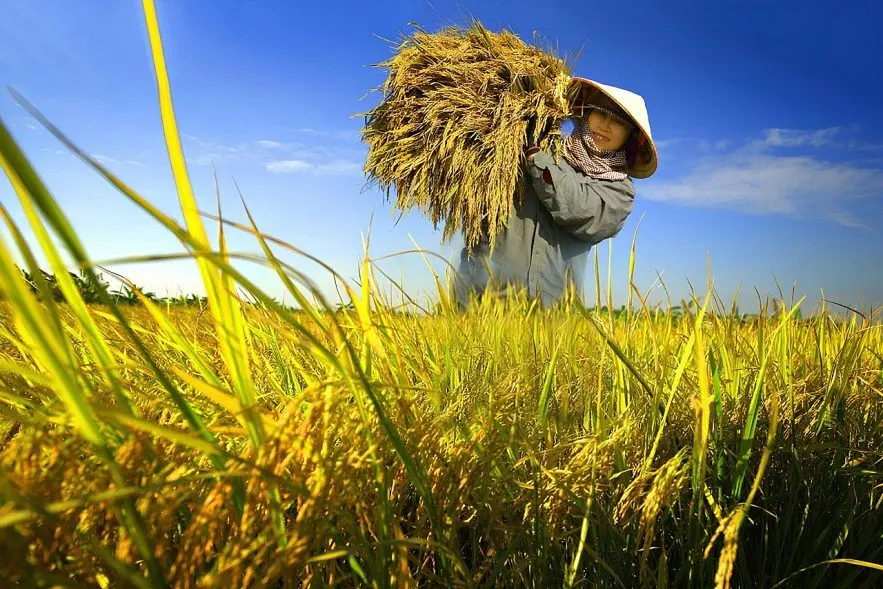
For visitors, this matters more than it might first appear. The delta's rice paddies are a huge part of its appeal — boat trips through the Can Tho floating markets, cycling between emerald fields, homestays with farming families. A shift to climate-smart, cooperative-led agriculture means the scenery you're paddling past is being actively protected rather than slowly lost to salinity and debt. Agritourism operators and community-based homestays in An Giang and Vinh Long are likely to sit alongside these projects, so travellers have a real chance to see sustainable farming up close and put money directly into the communities the programme supports. If you're planning a delta trip in the next few years, you'll be watching one of the world's great rice regions reinvent itself in real time.