A Kazakh baby born prematurely in Thailand is home after one of the longest aeromedical evacuations the country's health system has handled. Aslan Aliyev, just 48 days old and dangerously underweight, was flown from Phuket to Almaty with severe complications. After two months of treatment — including emergency surgery — he was discharged on July 21 weighing 2.5 kilograms, up by 1.2 kilograms from admission.
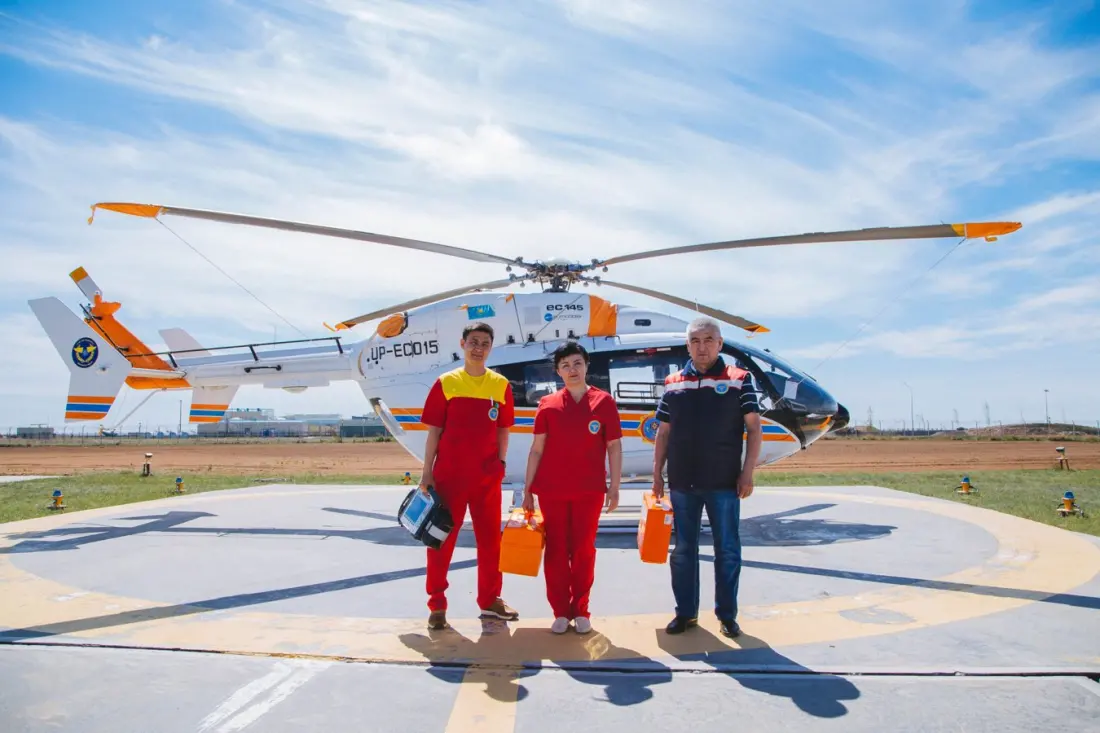
The case is a window into a system most travellers never think about until they need it. Kazakhstan is the world's ninth-largest country, with remote settlements hundreds of kilometres from a properly equipped hospital. Its national medical aviation service, established in 2011, exists to close that gap. In the first eight months of 2026 alone, it moved 1,543 patients on 1,495 flights — a mix of newborns, obstetric cases and serious trauma — and ran 4,703 remote consultations so regional doctors could get specialist advice without moving the patient at all. Teams also deliver doctors to patients and occasionally operate on-site when flying someone out isn't feasible.
The service works internationally too. Nine flights in the first eight months of 2026 brought Kazakh citizens home from Albania, China, Italy, Russia, Thailand, Türkiye and Uzbekistan — all state-funded, with a medical executive committee deciding whether transport is justified. Readiness standards are tight: an aircraft and crew must be airborne-ready within an hour in summer, 90 minutes in winter. Weather is the main limiting factor, causing 236 of 302 cancellations in 2025. The outcomes data looks solid — 92% of transported patients in 2025 had favourable results.
The system has pedigree. Soviet-era local aviation was already hauling patients and women in labour across Central Asia's emptiness, and the modern service has flown nearly 30,000 missions since 2011, helping almost 45,000 people. Eight contract airlines provide aircraft, with ageing An-2s giving way to Kazaviaspas helicopters and Bombardier CRJ-200 jets for long hauls. For comparison: Norway's air ambulance handles roughly 20,000 patients a year from 13 helicopter bases, while Australia's Royal Flying Doctor Service in Western Australia covers an area roughly the size of Kazakhstan. Astana is now signing cooperation deals with Russian and Chinese medical bodies and hosting Turkic-states emergency medicine collaboration.
Why should a traveller care? Kazakhstan is growing as an adventure and off-grid destination — think Altai trekking, the Aral Sea region or Bam canyon country — and much of it is genuinely remote from advanced care. Knowing the country runs a functioning, WHO-aligned aeromedical system is quiet reassurance. And if you're a Kazakh citizen abroad, the state may bring you home by air ambulance when a foreign hospital can't provide what you need. For expats and visitors, the practical takeaway is standard travel insurance with a medical evacuation clause: the system is there, but evacuation from abroad for non-citizens isn't free.