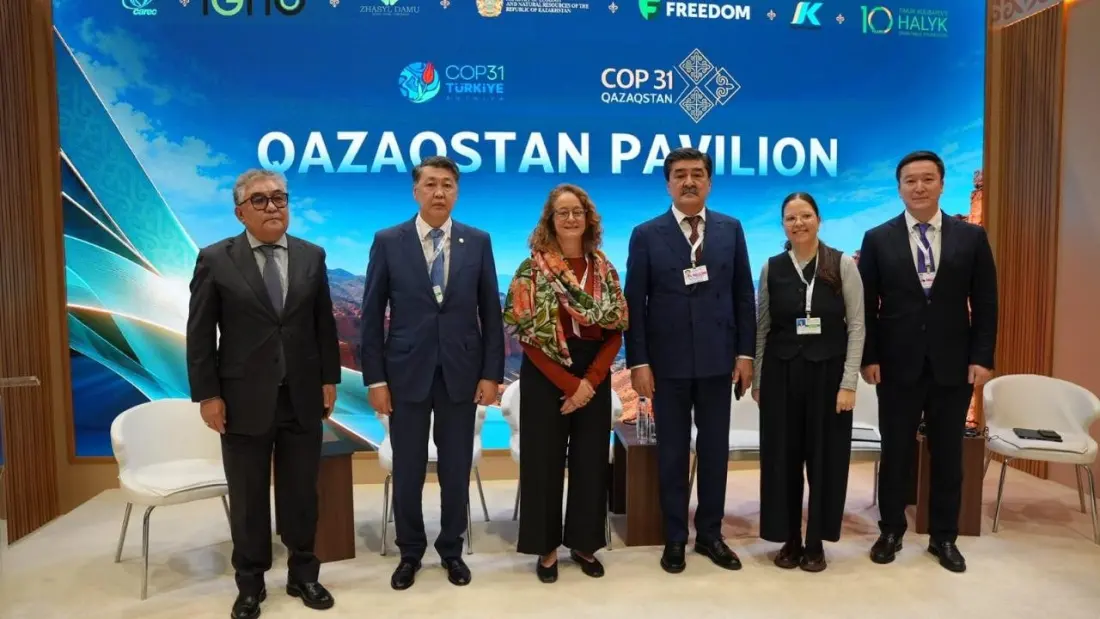
One of the world's most famous environmental disasters is quietly turning into a story of recovery — and Kazakhstan wants the world to know about it. At the UN climate summit COP31 in Antalya, the country used its national pavilion to present what has happened to the North Aral Sea, once written off as a lost cause.
The story goes back decades. Soviet-era water diversion for cotton and rice farming shrank the Aral Sea to a fraction of its former size, leaving behind salt flats, stranded fishing boats and toxic dust storms. But the northern section, which sits in Kazakhstan rather than Uzbekistan, has staged a genuine comeback. The key was the Kokaral Dam, built with World Bank support, which holds water in the North Aral Sea instead of letting it drain into the salt-desert basin to the south.
The numbers back it up. Water volume in the North Aral has climbed from 18.9 billion to more than 23 billion cubic metres in recent years, according to Mansur Oshurbayev, Kazakhstan's Vice Minister of Ecology and Natural Resources, who spoke at the panel. Fish have returned and with them, gradually, the fishing communities that once depended on the sea.
Kazakhstan is also tackling the damage left behind. Between 2021 and 2025, more than 1.1 million hectares of the dried seabed were covered in afforestation work, largely plantings of saxaul — a hardy desert tree that locks down sandy soils and cuts the spread of salt and dust that made life miserable for people across the region.
Oshurbayev framed the wider lesson bluntly: for Central Asia, adapting to climate change is essentially a water question, and the Aral Sea shows exactly what happens when a water ecosystem collapses — land, health, climate and local economies all go down with it. He called for more international cooperation, climate finance and shared scientific monitoring across Central Asia. Kazakhstan is also preparing a substantial package of cooperation agreements covering meteorology, energy transition and climate investment.
So why should a traveller care? The Aral region is becoming one of the most compelling — and sobering — off-the-beaten-track trips in Central Asia. Around Aralsk you can visit the Ship Cemetery at Zhalanash, where vessels rust on what was once open water, and see the returning shoreline of a sea that refuses to die. It's a rare chance to see large-scale ecological restoration firsthand, and as climate tourism grows, this corner of Kazakhstan is likely to draw more curious visitors. Go now, before everyone else reads about it.