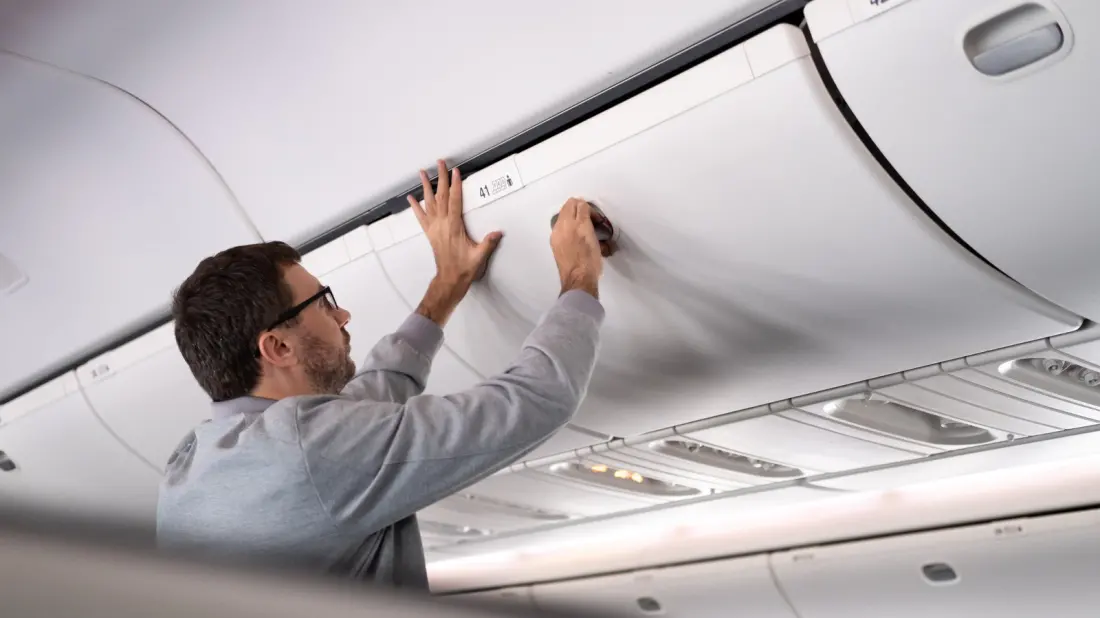
Stowing your laptop in the overhead bin feels harmless enough — but it is one of the riskier moves you can make on a flight, and the reasons go beyond a scratched screen. Fire, theft and damage are all on the table, and once that bag disappears into a crowded bin, you have lost control of all three.
The biggest concern is the lithium-ion battery that powers nearly every laptop. If a battery is damaged, it can go into thermal runaway — a chemical reaction that makes it overheat, smoke and eventually catch fire. In the cabin, crew can spot and handle a smouldering device quickly. Up in a bin buried under other people's luggage, warning signs are far easier to miss. The FAA has logged 82 incidents involving lithium-ion batteries on aircraft between January and September, six of them involving laptops, and asks passengers to alert staff immediately if a device is overheating, expanding, smoking or burning. The FAA does allow laptops, phones and tablets in carry-ons, and individual airlines set their own storage rules — Southwest, for instance, requires laptops of two pounds or more to be stowed under the seat or in a bin for taxi, takeoff and landing. Crew always have the final word, so ask if you're unsure.
Fire is not the only hazard. Bins get jam-packed, and a laptop can easily be crushed by heavier bags, or simply walked away with while you sleep. Airlines generally won't compensate you, either: Delta, like most carriers, states it does not accept liability for unchecked items unless staff have taken custody of them. And the risks aren't theoretical — a United flight from Washington to Rome had to turn around mid-route because a laptop had slid behind a panel, out of reach.
The safer play is simple: keep your laptop under the seat in front of you, where you can watch it and grab it if anything goes wrong. If you must use the overhead bin, put it in a padded laptop bag first. Checked luggage is an option in a pinch, but FAA guidelines say the device must be fully powered off, protected from accidental activation, and compliant with battery capacity limits. Travel insurance is worth considering if you regularly fly with expensive gear.
For anyone flying with a work machine, the takeaway is easy: treat your laptop like a passport, not a coat. Under-seat storage costs you nothing and removes most of the risk.