A Costa Rican court is being asked to temporarily ban shark fishing around Cocos Island, in a case that tests whether a 'protected' stretch of ocean actually protects anything when the fine print is missing.
Environmental attorney Walter Brenes has filed a request with the country's Administrative Court seeking an immediate suspension of both deliberate shark fishing and accidental shark capture by commercial fleets in the Bicentennial Marine Management Area — a vast zone created in 2021 that covers roughly 106,000 square kilometres (40,900 square miles) of Pacific waters around the island.
His core argument: there is no fisheries management plan in place. A general management plan for the area has been published, but that document only sets broad conservation goals and activity zones. The separate, more detailed rules that would govern how fishing actually operates remain unfinished — even though Costa Rica's Constitutional Chamber (Sala IV) ordered the environment ministry and conservation authority SINAC in November 2025 to complete those measures within 12 months.
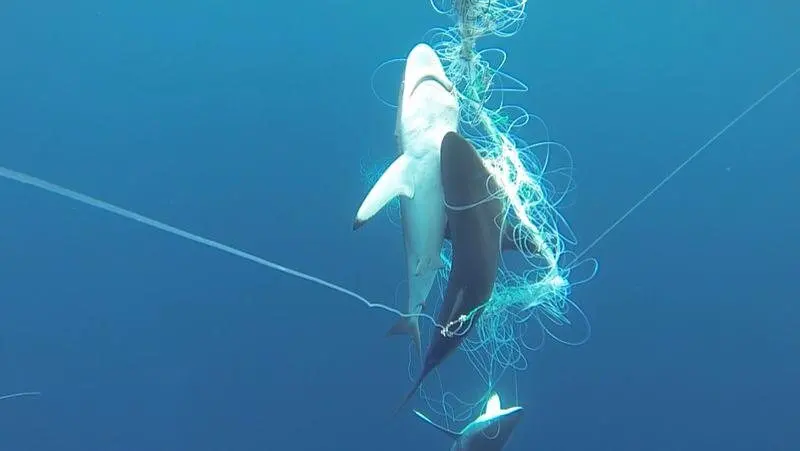
The petition names eight shark categories: hammerheads, silky, blue, blacktip, thresher, Galápagos, tiger and shortfin mako sharks. The main threat comes from longline fishing — lines carrying hundreds or even thousands of baited hooks, aimed at tuna but routinely snagging sharks too. Brenes also questions rules allowing fishing hundreds of metres below the surface, in depths that protected species regularly pass through, and wants a much larger share of the area closed to fishing altogether.
Why it matters: Cocos Island sits more than 500 kilometres off Costa Rica's Pacific coast and is one of the standout marine sites in the eastern tropical Pacific. It draws scientists and divers from around the world, largely for the enormous schools of hammerheads that circle its waters. Sharks are slow to recover from overfishing — they mature late and produce few young — and many roam far beyond park boundaries, so the rules around this area have consequences well beyond it.
There's an economic tug-of-war, too. Shark-watching and diving underpin Costa Rica's reputation as a conservation-led destination, while the fishing industry argues that tighter longline restrictions could cut off access to valuable tuna grounds. A judge has yet to rule, and the filing alone doesn't stop shark fishing; it simply asks for protection while the legal questions are sorted out.
For travellers planning a dive trip to Cocos, nothing has changed on the water yet — but the outcome will shape the health of one of the world's great shark encounters for years to come. If you've ever dreamed of drifting through a wall of hammerheads, this case is worth following.