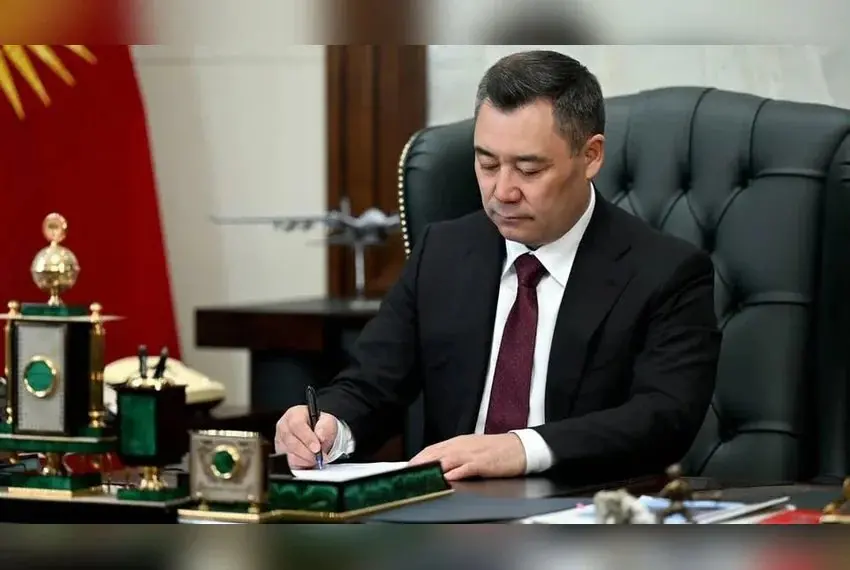
President Sadyr Japarov has signed a decree that bans the demolition, privatisation and sale of Kyrgyzstan's listed architectural heritage, a move that should help keep the country's older streetscapes intact as development pressure grows.
Under the new rules, buildings on a special protection list cannot be sold, swapped, used as loan collateral, folded into company assets or leased out with a buyout option. They also can't be stripped of their status, downgraded in protection category, knocked down or relocated. The order covers everything on the State List of Monuments of History and Culture of National Significance.
The most interesting part is how the decree handles crumbling buildings. Developers have long been able to argue that a decaying structure fails seismic standards, then win permission to replace it. That loophole is now closed: a poor technical condition or weak earthquake resistance can no longer be used as a reason to declare a monument valueless. Instead, owners must carry out emergency stabilisation, conservation and restoration.
New construction within protected sites and their buffer zones is likewise off the table, with one exception — work whose purpose is to preserve the monuments themselves. Even repairs and seismic strengthening need approved scientific and design documentation plus a state historical and cultural assessment, and the finished work must keep the original facades, materials and architectural character.
The Cabinet of Ministers has been told to run a full inventory of listed sites, establish who owns them, check their legal status and physical condition, confirm protection obligations are actually in place, and pull national monuments out of state privatisation programmes. Money for the effort comes from the state budget plus the special fund for heritage preservation and restoration.
For travellers, this matters more than it might first appear. Bishkek and the older towns of the Ferghana Valley and Lake Issyk-Kul region hold a mix of tsarist-era, Soviet modernist and pre-Russian architecture that gives the country much of its character beyond the mountains. Loose protection rules in fast-growing Central Asian cities have meant historic low-rise quarters often vanish under new residential blocks. If this decree is enforced, visitors in the coming years should find more of that fabric still standing — and restored rather than shored up with scaffolding. It's also a signal for anyone planning heritage-focused trips in the region: Kyrgyzstan is starting to treat its built history as an asset, not an obstacle to construction.