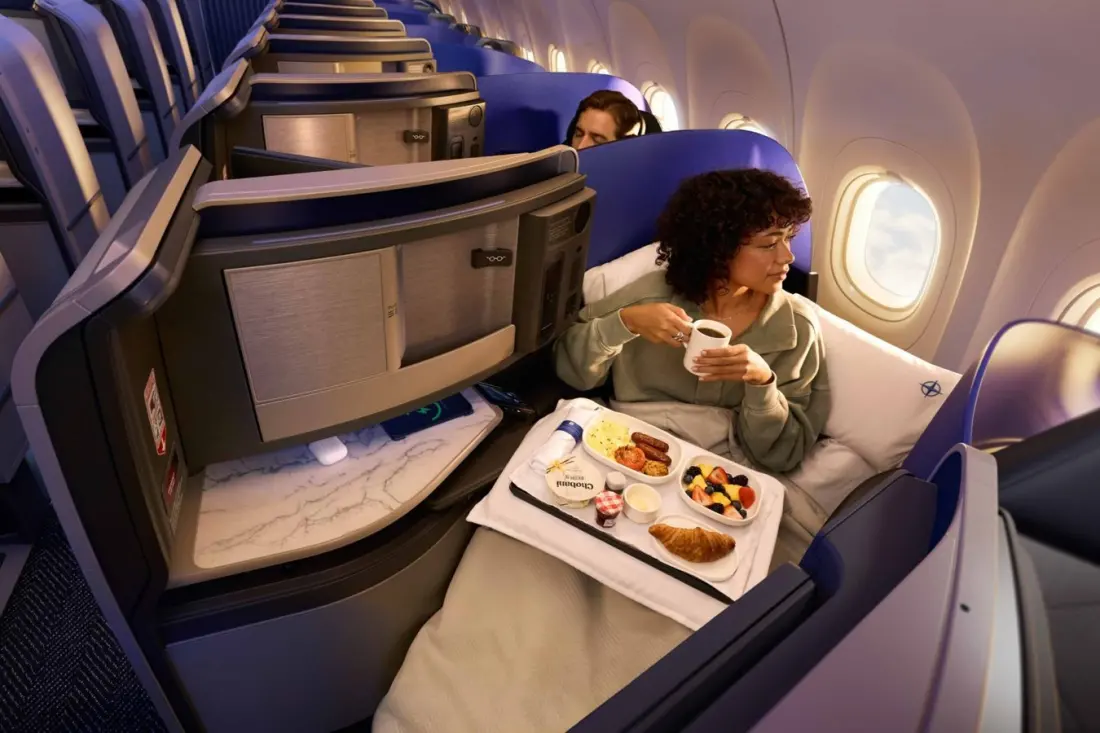
United Airlines is happy with how its stripped-down premium fares are performing, and it has no plans to stop there. On the airline's 21 October earnings call, chief commercial officer Andrew Nocella said the tiered fare rollout had gone well, that more expansion is coming in the following weeks, and that united.com has been redesigned to sell the options more effectively. His summary of customer behaviour was blunt: "The buy-up rates are incredibly high."
The strategy works like this: United now sells a cheaper "Base" version of premium tickets — including domestic first class and some shorthaul international business, after starting with Polaris and Premium Plus. The seat and onboard service are identical. What differs is everything around the flight: Base fares charge for advance seat selection and a checked bag, and they block voluntary itinerary changes entirely. Travellers who want to sit together as a couple, check luggage or keep the ability to rebook must pay roughly 20-30% more for a Standard fare within the same cabin.
Nocella framed this as more choice, comparing it to the introduction of basic economy more than a decade ago, and said fare segmentation in other cabins is still in its early stages. United did not quantify the buy-up rates or the extra revenue, and Nocella did not specify which markets come next — though domestic, transborder and shorthaul international routes look likely to follow.
Critics see something less benign. The argument, laid out sharply by Live and Let's Fly, is that the cheapest premium ticket now simply includes less than it used to, rather than costing meaningfully less. Anecdotally, comparable trips with the same benefits have not gotten cheaper since the tiers appeared. There is a fair case for a genuinely discounted, restricted fare for travellers with firm plans and no bags — but only if the alternative is actually a discount, not a re-bundled version of the old price.
There is also a galling historical footnote. In 2020, United CEO Scott Kirby scrapped change fees, calling them the "number one thing" customers complained about, and promised a break from old airline playbooks after the crisis. Base premium fares that forbid any ticket modification look like change fees reintroduced under a different name — and United accepted $7.7 billion in pandemic bailouts along the way.
None of this makes the strategy a failure commercially. It plainly isn't. But for travellers, the practical takeaway is to read the fare comparison carefully before booking any United premium cabin: the price you see first may not include seat selection, bags or flexibility. If you value being able to change plans, price the Standard fare before committing, and compare against Delta and American, which structure their premium fares differently. Meanwhile, United's genuine investments — Starlink wifi, refreshed interiors, a solid app — still give people reasons to fly it. The question is whether paying extra to modify a first class ticket is the kind of thing that keeps them coming back, or pushes them to shop around every time.